A kitchen is an everyday soundscape
Before a meal has a flavor, it often has a sound. A cupboard opens, water runs into a pot, and a knife meets a cutting board. None of these noises needs to be musical to have a place in the experience. Together, they mark the start of an activity and give a familiar room a different character.
Kitchen sounds vary with the space around them. A wooden spoon against a ceramic bowl produces a softer note than a metal spoon against a steel pan. A small room may make a dropped utensil seem startlingly loud, while a busy household can turn the same sound into part of the background. Listening closely brings those details forward without requiring any special equipment or musical training.
Rhythm begins with repeated actions
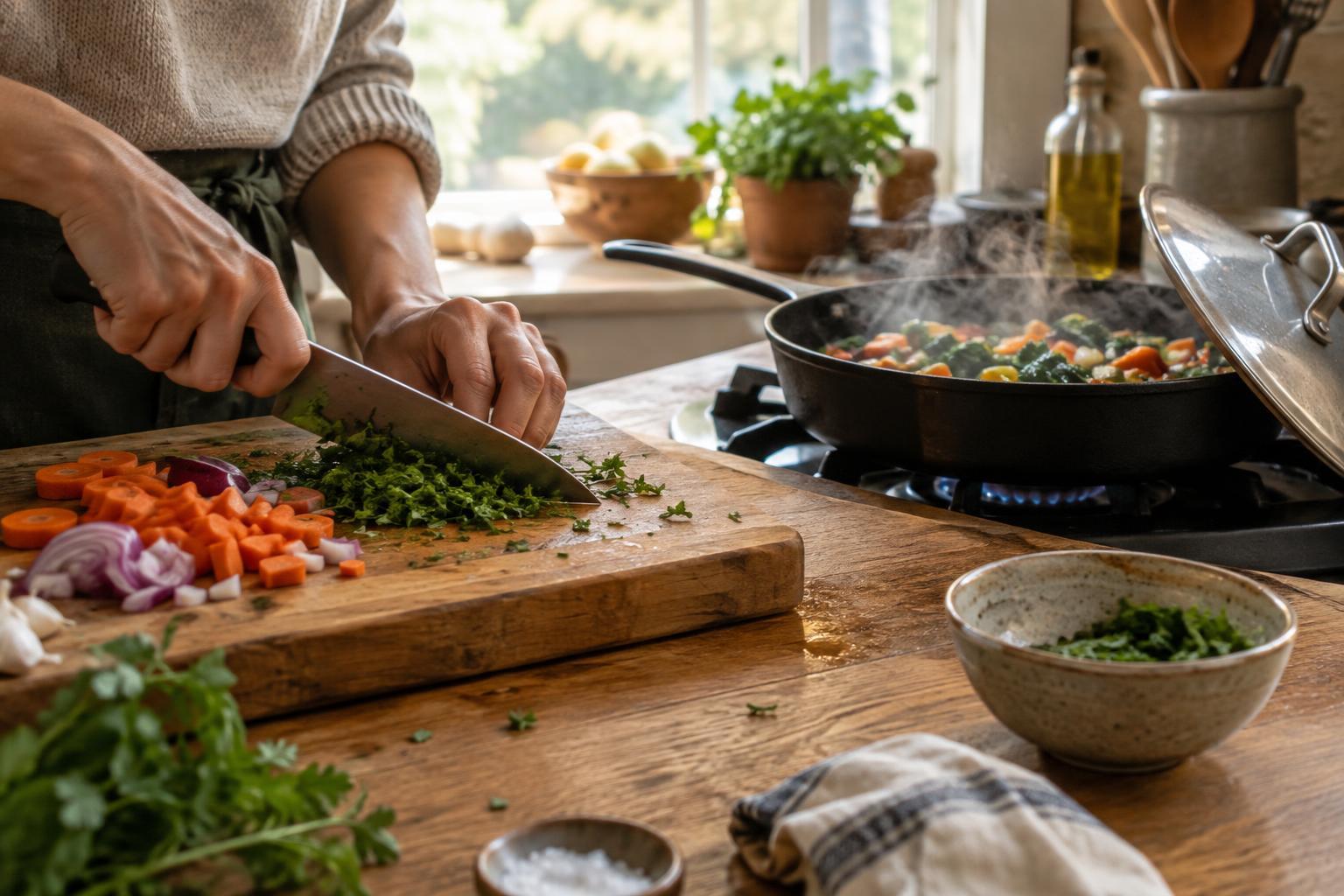
Chopping is one of cooking’s clearest rhythms. The pace may start slowly as a cook finds a grip, settle into a pattern, then pause to move the ingredients aside. Stirring, whisking, kneading, and tapping excess flour from a spoon have their own cycles. These patterns are shaped by the task rather than by a fixed beat, which makes their changes interesting to hear.
The pauses matter as much as the repetitions. A cook might stop stirring to read a recipe, lift a lid, or make room on the counter. When the action resumes, the rhythm feels slightly different. That stop-and-start quality resembles the way a story unfolds: an action establishes an expectation, a pause holds it, and the next sound moves things along. Cooking does not become a performance simply because someone notices its rhythm. Paying attention can, however, make an ordinary sequence feel more vivid.
Texture has a sound, too
Some kitchen noises suggest the feel of a material before it is touched. Dry rice makes a light rattle as it pours into a pot; dough lands on a work surface with a dull thud. A crisp ingredient may snap when broken, while a soft one gives way almost silently. The sounds are not perfect descriptions of texture, but they offer clues that sight alone might miss.
Heat adds another layer. A pan can move from a few isolated pops to a sustained sizzle, and boiling water can shift from scattered bubbles to a more continuous burble. What those changes mean depends on the food, the vessel, and the method, so sound is best treated as one cue among others rather than a universal instruction. Even without using it to judge a dish, a listener can hear the contrast between a sudden crackle and a gentle simmer.
Timing gives the soundtrack its shape
A meal’s sounds change as it progresses. Preparation may be full of short, separate impacts: chopping, opening containers, setting utensils down. Cooking often brings longer sounds, such as running water, a whisk circling a bowl, or food simmering under a lid. Toward the end, plates clink and chairs move. The sequence makes a loose beginning, middle, and end.
Waiting is part of that sequence. During a quiet stretch, the hum of a refrigerator or the faint movement of a pot may become more noticeable. Then a timer rings or someone lifts a lid, and attention returns to the food. These shifts between activity and stillness help explain why a kitchen can feel lively even when no music is playing. Its soundtrack follows what people are doing, not a predetermined arrangement.
Listening without turning dinner into a project
To notice the kitchen’s soundscape, try choosing one ordinary task and following it from start to finish. Hear how washing vegetables differs from cutting them, or how a spoon sounds when it moves through an empty bowl and then through a mixture. If other people are cooking, listen for how their actions overlap: one person sets the table while another stirs. There is no need to record anything or identify every sound.
The point is not to make cooking slower or to treat every noise as a signal. It is simply to recognize that everyday tasks have audible shape. A familiar meal may bring back the memory of a particular kitchen through the clatter of dishes or the hiss of a pan. A new recipe may sound unfamiliar before it looks unfamiliar. In either case, listening adds another way to experience the work, anticipation, and shared activity surrounding food.