A mute changes more than volume
The word “mute” suggests silence, but a muted instrument is still meant to be heard. Mutes alter how an instrument vibrates or how its sound reaches the listener. The result may be softer, but it may also be brighter, thinner, warmer, buzzier or more distant. Those changes give a player another way to shape the character of a phrase.
How much a mute changes the sound depends on the instrument, the type of mute and the way the player uses it. A muted note can remain clear and direct, or it can seem to sit behind the rest of an ensemble. Listening for that difference is often more revealing than asking whether the instrument simply got quieter.
Brass mutes reshape the sound at the bell
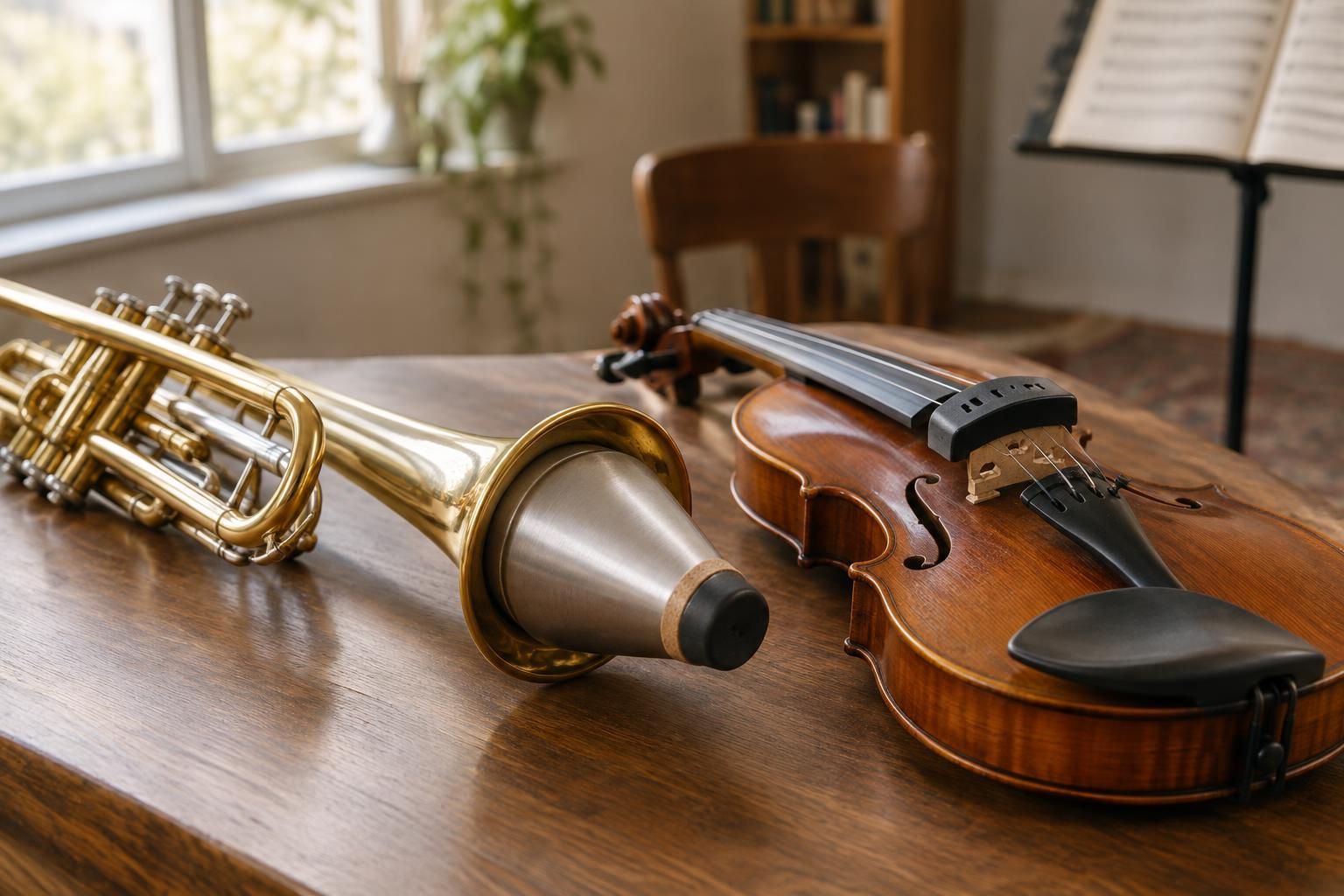
On many brass instruments, a mute is placed in or held near the bell. It changes the path the sound takes as it leaves the instrument, giving each design a recognizable color. A straight mute can lend trumpet or trombone a focused, sometimes sharp-edged sound. A cup mute often produces a more covered quality. These are useful descriptions, not fixed rules: the instrument, room and player all affect what reaches the listener.
Some brass mutes are played expressively in motion. A plunger held near the bell can be moved to create an opening-and-closing effect, making a note seem to speak in changing syllables. Other designs have their own distinct responses. For the player, a mute can also change how notes feel to start and sustain, so a passage may call for adjustments in breath, articulation or tuning. A mute is therefore part of the performance technique, not just an attachment.
String mutes soften vibrations at the bridge
On bowed string instruments such as the violin, viola and cello, a small mute commonly sits on the bridge. The bridge carries the strings’ vibrations to the instrument’s body; adding a mute reduces some of that transfer and changes the balance of the resulting sound. The tone often becomes softer and less brilliant while retaining the recognizable sound of the instrument.
That shift can be especially striking in an ensemble. A string section playing without mutes may have a clear, projecting sheen; with mutes, the same notes can feel more veiled or intimate. A heavier practice mute is made for a different purpose: reducing sound for private playing. It may alter the tone more dramatically than a mute chosen for performance, so the two are not interchangeable musical effects.
Guitarists use “mute” in another sense
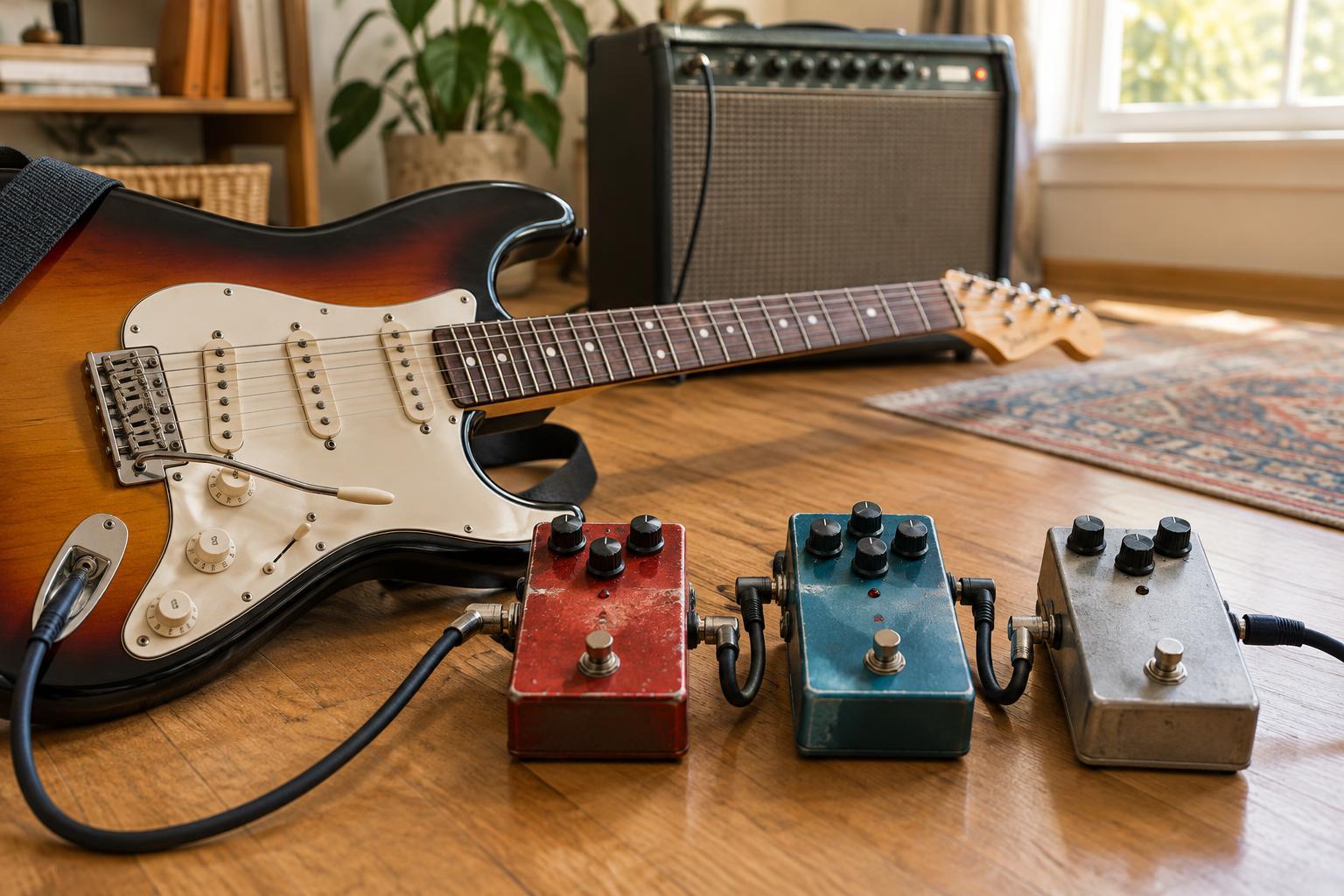
On guitar and other plucked strings, muting often describes something a player does with the hands rather than an accessory placed on the instrument. In palm muting, the picking hand rests lightly against the strings near the bridge while the player strikes them. The notes still have pitch, but their sustain is shortened, often creating a compact, percussive sound.
A player can also touch strings with either hand to stop unwanted ringing or end a note precisely. The amount of contact matters: a light touch may shorten a note, while firmer contact may leave mostly the sound of the attack. Unlike a bowed-string bridge mute, these techniques can change from one note to the next. That flexibility makes muting as much a tool for rhythm and phrasing as for tone color.
Listen for the change in a phrase
To hear what a mute contributes, imagine a short melody played twice: first openly, then muted. Notice the beginning of each note, how long it lingers and whether its tone seems to blend with or stand apart from surrounding sounds. A brass mute might bring a single line into sharper focus even if it does not make it louder. A string mute might let a melody recede without changing its notes.
Those contrasts can support a musical story. An open sound may feel expansive; a muted return of the same idea may feel restrained or reflective. Neither effect carries a single guaranteed emotion, and context matters. The value of a mute is that it lets a musician change how a familiar note is presented—sometimes with a small physical adjustment that makes a passage feel entirely different.