Leave the recorder behind
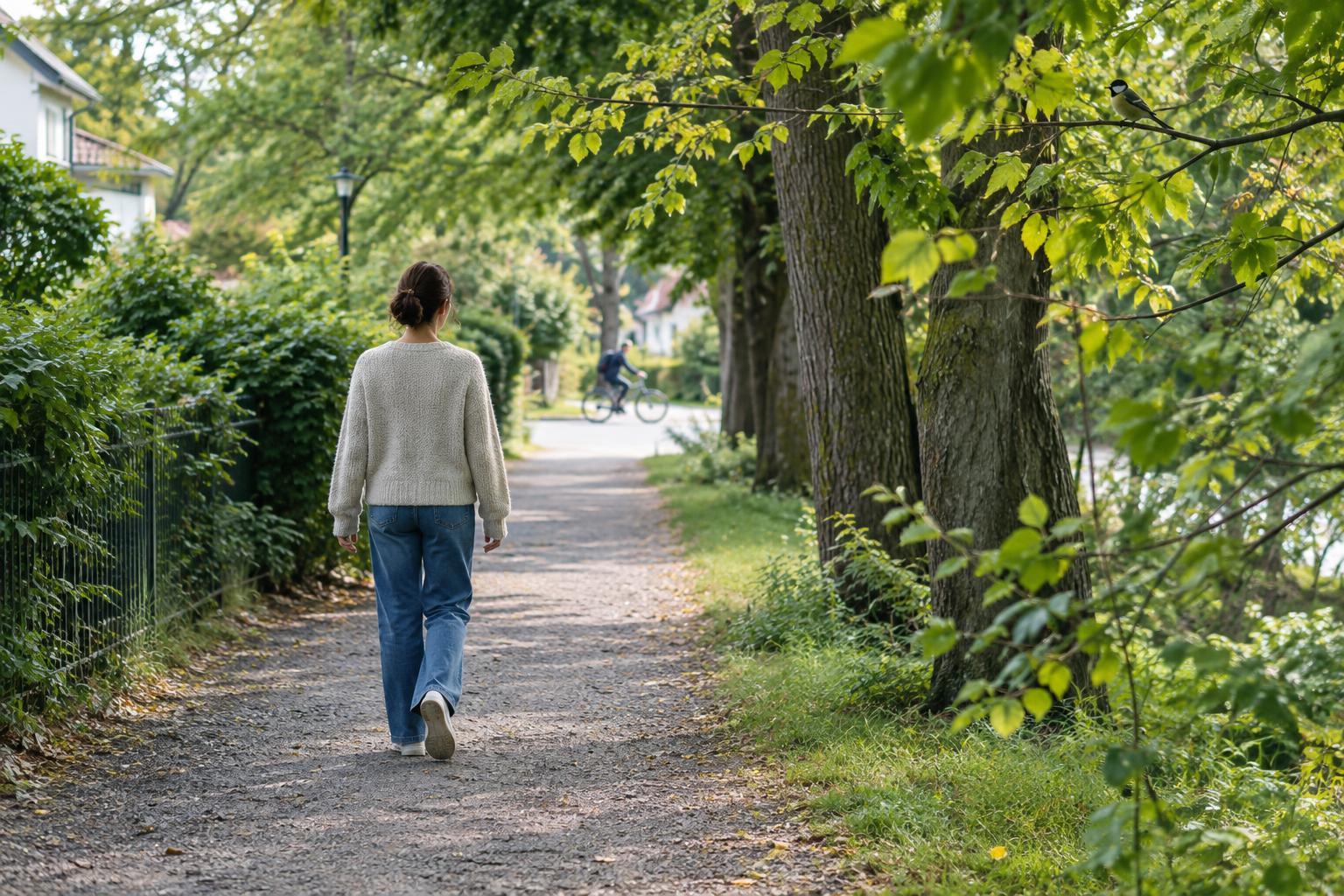
A soundwalk is a walk taken with deliberate attention to what you hear. The route can be as ordinary as a trip around the block, through a park, or along a hallway in your building. Instead of collecting audio files, you listen to the place as it unfolds. A passing bicycle bell, a door closing behind you, and the change in your footsteps from pavement to gravel can all become part of the walk.
Going without a recorder changes the task in a useful way. There is no need to find a perfect microphone position or capture a sound before it disappears. You can let a moment pass, then notice what follows it. You also avoid making an accidental recording of someone else’s conversation. The aim is not to preserve every detail, but to become more curious about the sounds you usually move through.
Choose a small, comfortable route
Start with a route you know well enough to navigate safely. Ten or fifteen minutes is plenty for a first attempt, though you can walk for longer if you like. A loop is helpful because it lets you hear the same place twice: a corner may sound different on your return because traffic has shifted, a shop door is open, or your attention has moved elsewhere.
Keep your usual awareness of your surroundings. Use crossings carefully, give other people space, and avoid stopping where you might block a path. You do not have to close your eyes or wear headphones to listen closely. In fact, leaving your ears unobstructed helps you stay oriented. If a place feels too busy or uncomfortable, choose a quieter route or shorten the walk.
Listen in layers
For the first few minutes, notice the broad sound of the place without trying to name every source. Is there a steady background, such as distant traffic, wind, or ventilation? Then listen for sounds nearer to you: shoes on the ground, leaves moving, dishes from an open window. Finally, notice brief events that interrupt those layers, such as a bird call or a bus pulling away.
You can give yourself one question at a time. Which sound is closest? Which seems farthest away? Does a sound repeat regularly, or does it arrive without warning? Pay attention to how buildings, trees, and open spaces alter what reaches you. A covered passage may make footsteps ring, while a wide square may leave them feeling small. There is no test at the end; these questions simply offer a way to keep listening.
Notice movement and your own response
A walk has a changing point of view. As you approach a fountain, its sound may grow distinct enough to cover voices beyond it. After you pass, those voices may return. Try following one sound for a short stretch and noticing when it fades or is replaced. Then shift your attention to something else. This movement can make a familiar route feel like a sequence of scenes rather than one continuous backdrop.
You may also notice that certain sounds draw your attention more than others. A rhythmic gate might remind you of percussion; a quiet courtyard might make the next street feel especially lively. These are personal impressions, not properties everyone will hear in the same way. If a sound brings up a memory, you can acknowledge it without having to explain or analyze it. Listening is enough.
Bring back a few details
At the end of the route, pause somewhere safe and see what you remember. Perhaps it is the order of three sounds, a repeated rhythm, or the point where the background changed. You can keep those details to yourself or jot down a few words afterward. A note such as “hollow steps, then sparrows, then the low hum by the shop” may be more useful to your memory than an attempt to list everything you heard.
On another day, try the same route at a different time or walk it in reverse. Rather than looking for a better performance, listen for what has changed and what you missed before. Without a recording to replay, each soundwalk belongs to its moment. Its value lies in practicing attention: hearing an everyday place as a setting with texture, movement, and surprises.