Small parts, noticeable changes
A string that no longer rings clearly, a reed that resists a familiar note, or a drumhead that will not tune evenly can change the way an instrument feels. These parts sit where a player’s energy becomes sound, so ordinary wear is easy to hear and feel. Basic care cannot make them last forever, but it can help them perform consistently and make problems easier to spot.
Start with clean hands and a brief look at the instrument before and after playing. Notice new rough spots, cracks, dents, or changes in response. Keep suitable spare parts on hand if you play regularly, and follow your instrument maker’s guidance when it differs from general advice. The aim is not to keep every part looking new; it is to recognize when routine cleaning will help and when replacement is the better choice.
Keeping strings clean and dependable
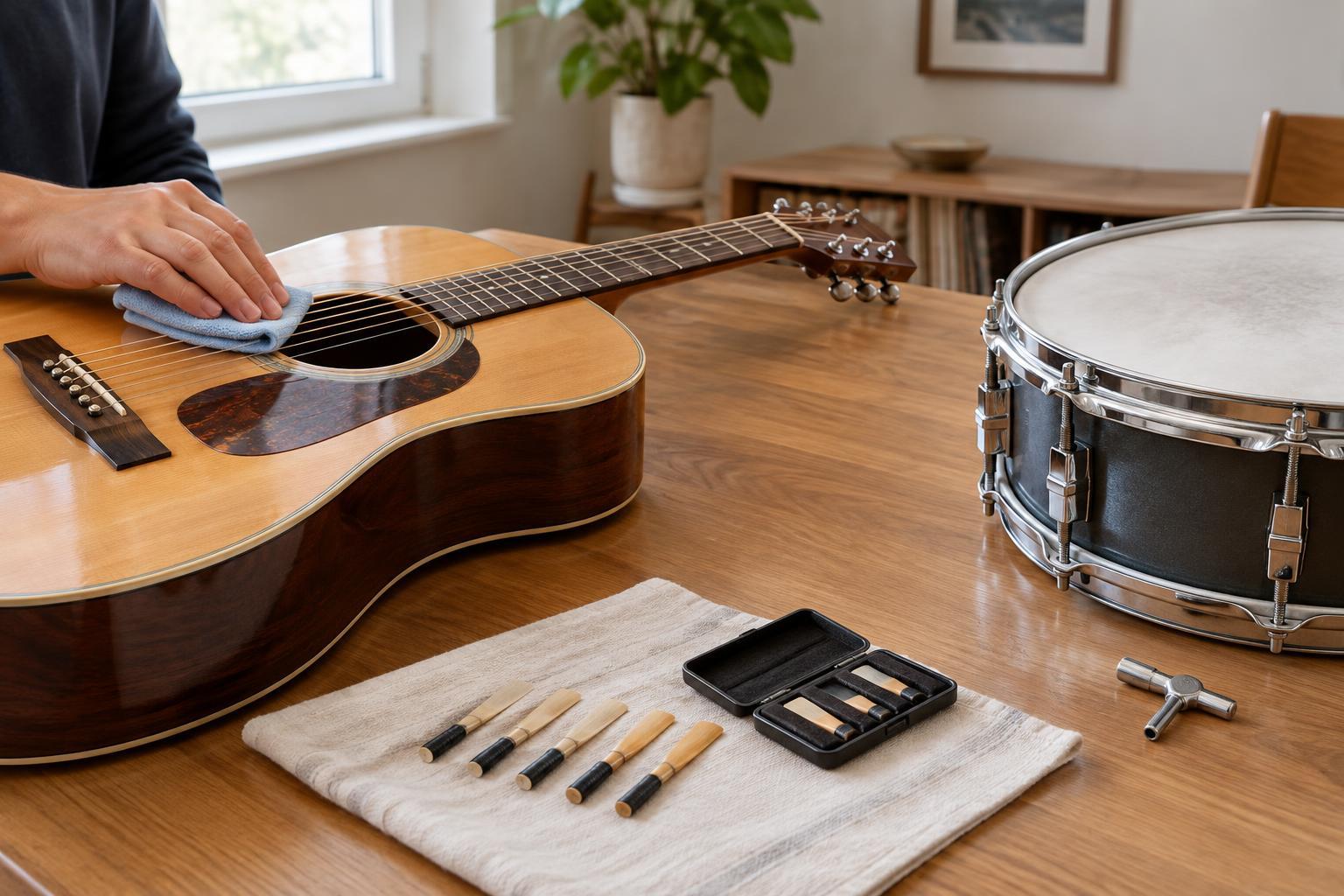
On guitars, basses, and many other stringed instruments, skin oils and dust collect where fingers touch. After playing, gently wipe the strings with a clean, dry, soft cloth, including the areas you can safely reach near the fingerboard. Avoid soaking strings or applying a cleaning product unless it is suitable for both the strings and nearby finishes. A cloth is often enough for everyday care.
Watch for fraying, visible corrosion, persistent tuning trouble, or a sound that stays dull after cleaning. These can be signs that a string needs replacing. Change strings carefully, using the type and gauge recommended for the instrument, and bring them up to pitch gradually. If a string breaks repeatedly at the same point, check for a rough contact surface rather than assuming the string is the only problem. On bowed instruments, string care also means removing loose rosin dust from appropriate surfaces with a soft cloth, while keeping liquids away unless the maker recommends them.
Giving reeds time to dry
Woodwind reeds are thin and responsive, which also makes them vulnerable to chips and warping. Handle a reed by its thicker end, and avoid touching its delicate tip. After playing, remove it from the mouthpiece, gently wipe away excess moisture, and let it dry in a reed case that protects it without trapping it against a wet surface. Leaving a reed on the mouthpiece can expose it to damage and lingering moisture.
A reed may change from one playing session to the next, so one difficult note does not always mean it is unusable. Check whether it is seated correctly and whether the mouthpiece is clean. Replace a reed if its tip is chipped, it has a crack, or it no longer responds reliably despite proper placement. Players who use several reeds can rotate them, giving each one a chance to dry between sessions. Synthetic reeds may have different care requirements, so check the maker’s instructions rather than treating them exactly like cane.
Looking after drumheads and their tuning
Drumheads take repeated impacts and gradually lose their original response. Wipe off dust with a soft, dry cloth, and keep sticks and other equipment from resting against the head during storage. Before tuning, check that the head sits evenly on the drum and that the rim and tension rods are in good condition. Tighten rods in small increments around the drum rather than pulling one area far ahead of the others.
Dents, splits, or a head that remains difficult to tune evenly may point to replacement. A worn head can still make sound, but its tone and feel may become less predictable. When fitting a new one, choose a size and type suited to the drum and the sound you want. If tuning stays uneven after a careful head change, inspect the drum’s hardware instead of continuing to tighten the head.
Store parts for the next session
Good storage supports all three kinds of parts. Keep instruments and spares in protective cases or containers, away from spills, heavy objects, and sharp changes in temperature or humidity where possible. Strings can remain in their packaging until needed; reeds benefit from a suitable case; spare drumheads should lie somewhere they will not be bent or punctured.
Make a habit of noticing how your instrument normally sounds and responds. That familiar baseline helps you distinguish a tired replaceable part from a tuning, setup, or playing issue. A quick wipe, a safe place to dry, and an occasional inspection take little time, leaving more attention for the sound you want to make.