The difference begins before the air enters the instrument
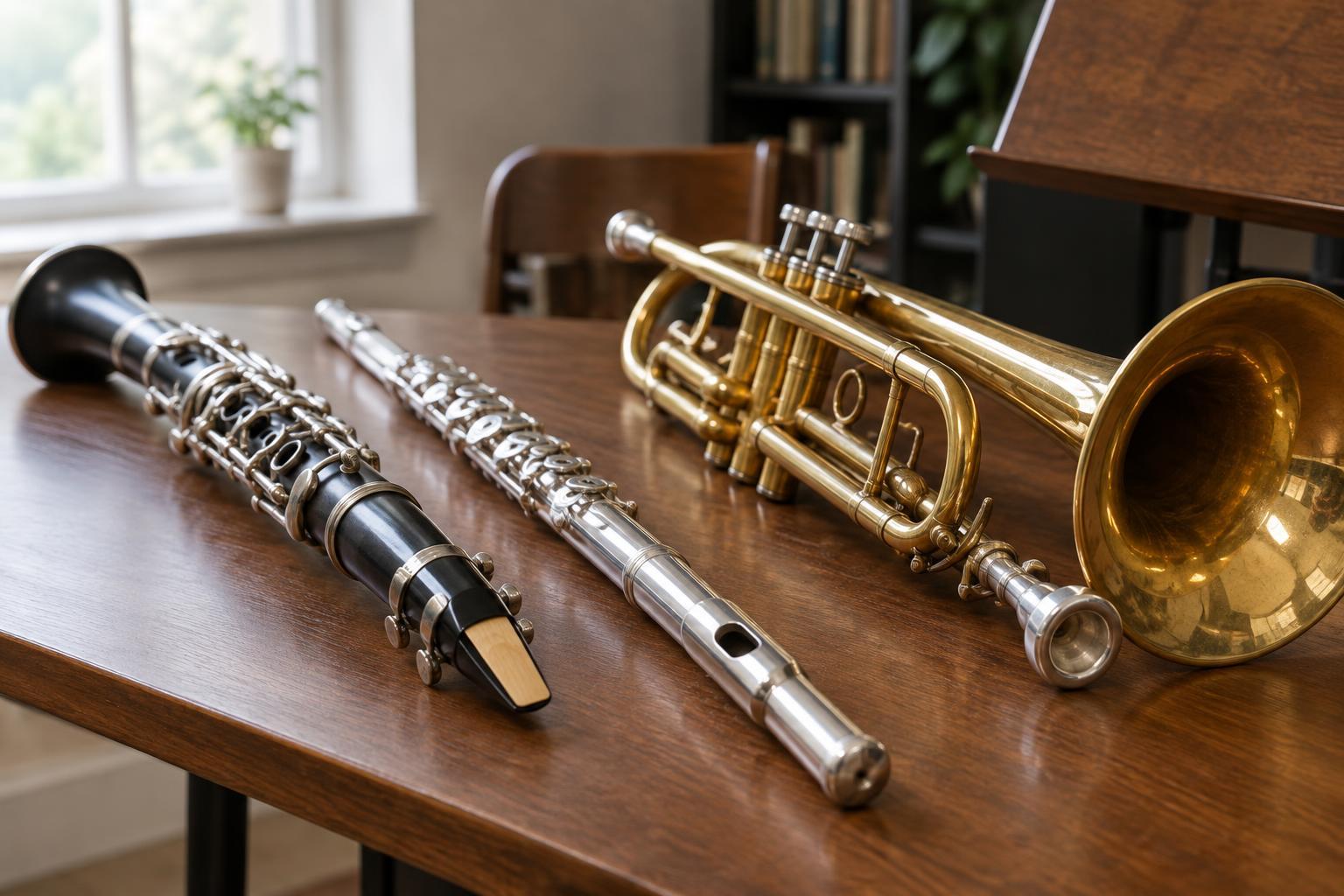
A clarinet and a trumpet can play the same note, yet few listeners would mistake one for the other. Both musicians use a steady stream of breath, and both instruments contain a column of air that vibrates. The crucial difference is how that vibration starts. In most woodwinds, a reed moves or air crosses an edge. In brass instruments, the player’s lips vibrate against a mouthpiece.
The family names can be misleading. A saxophone is usually made of metal but belongs to the woodwinds because its tone begins with a reed. A flute also belongs to the woodwinds, even when it is made of silver or another metal, because the player directs air across an opening rather than buzzing their lips. Brass instruments are commonly made of brass, but their playing method matters more than the material. These categories describe how instruments work, not just what they look like.
How woodwinds set air in motion
On a clarinet or saxophone, a single thin reed rests against a mouthpiece. As the player blows, the reed flexes, repeatedly interrupting the airflow. An oboe or bassoon uses two reeds that vibrate against each other. The player shapes the sound through breath pressure, the position of the lips and mouth, and the way the reed responds. Small changes can make a note feel gentler, brighter or more insistent.
The flute takes another route. Its player aims a narrow stream of air across the edge of the embouchure hole, much as someone might blow across the top of a bottle. Not all the air goes into the instrument; the moving stream interacts with the edge and helps sustain vibration inside the tube. This helps explain why a flute can sound distinct from a reed instrument even though both are woodwinds.
Woodwind players usually change notes by opening and closing tone holes, often with the help of keys. Doing so changes the effective length of the vibrating air column. The layout of holes, the shape of the tube and the player’s technique all contribute to each instrument’s characteristic voice. A clarinet’s rounded low notes, for example, offer a different color from the more penetrating sound an oboe can produce.
How brass players create a buzz
A trumpet, trombone, horn or tuba begins with the player’s lips. Held against a cup-shaped mouthpiece, the lips open and close rapidly as air passes between them. This buzz excites the air inside the instrument. The instrument amplifies and shapes the resulting sound, but the player remains closely involved: breath support, lip tension and mouth shape all affect the note that emerges.
Brass players can produce several pitches without touching a valve or moving a slide. By adjusting their lips and airflow, they select from a series of notes that the tube readily supports. Valves on a trumpet or tuba add lengths of tubing, allowing other notes. A trombone player moves a slide to change the tube’s length more directly. In either case, changing the instrument’s length works alongside changes made by the player.
The bell also helps shape what reaches the listener, though it does not create the initial buzz. Brass can sound warm and blended or sharp and brilliant depending on the instrument, register and playing style. A low tuba note and a high trumpet note demonstrate how varied the family can be.
Why two instruments can play the same pitch but sound different
Pitch tells us which note we hear; tone color, often called timbre, helps us recognize who or what is playing it. When an instrument sounds a note, we typically hear more than a single, pure vibration. Higher components accompany the main pitch, and their relative strength varies with the instrument and the way it is played. The beginning of a note matters, too: a breathy flute entrance, a reed’s firm articulation and a trumpet’s clear attack can make the same written phrase feel different.
Instrument design adds further variety. Tube shape, bore, mouthpiece or reed, and the way sound leaves the instrument influence its character. No family has just one emotional meaning. A brass line need not be triumphant, and a woodwind melody need not be delicate. Composers and performers can use dynamics, register, rhythm and context to change how either family comes across.
A simple way to listen for the difference
Choose a recording with an exposed wind melody and listen first to the start of each note. Does the sound seem airy, reedy or lip-buzzed? Next, notice how the player moves between pitches. A trombone slide may make a continuous glide especially recognizable, while a keyed woodwind may give a run of notes a nimble, clearly articulated shape. These are clues, not infallible tests: skilled players can soften attacks, blend colors and imitate qualities associated with other instruments.
Finally, listen to what happens when instruments play together. Woodwinds and brass can reinforce one another, trade phrases or create contrast simply by presenting a melody in different colors. Understanding how breath becomes tone gives you another way to follow that conversation, whether you are listening to an orchestra, a small ensemble or a single player.