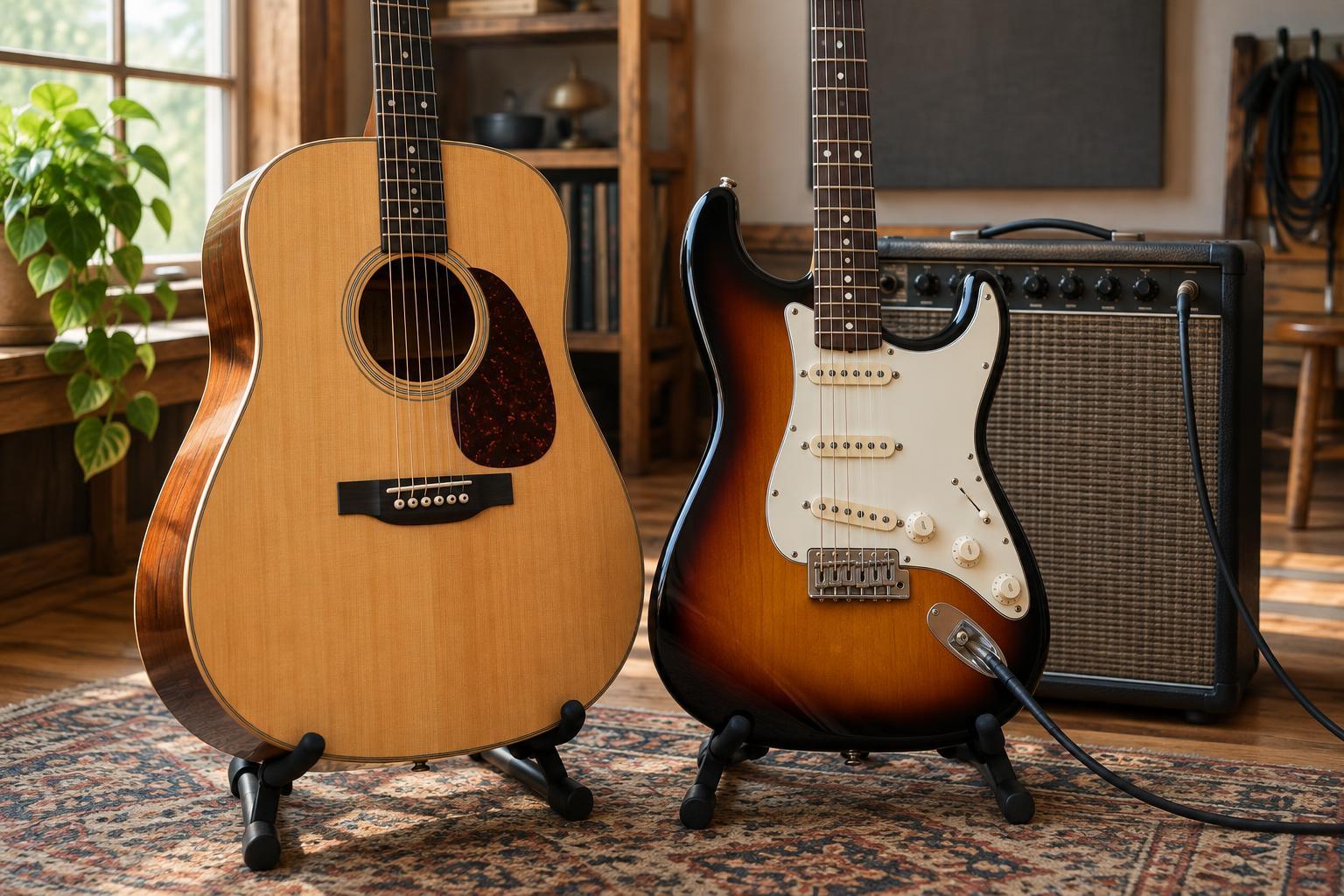
Every instrument begins with movement
Pluck a guitar string, strike a piano key or blow across a flute, and something begins to vibrate. Those vibrations disturb the surrounding air. When the changing air pressure reaches our ears, we hear sound. The main difference between acoustic and electric instruments is how that movement becomes audible: an acoustic instrument radiates much of its sound directly into the room, while an electric instrument relies on an electrical signal and usually a speaker to make its sound heard at performance volume.
The distinction describes a sound-making path, not a division between expressive and mechanical music. In either case, a player’s touch matters. A gentle pluck and a forceful one set a string moving differently; the instrument’s design then determines how much of that difference reaches the listener.
How acoustic instruments project sound
An acoustic guitar offers a clear example. Its strings vibrate when plucked, but thin strings alone move relatively little air. Vibration travels through the bridge to the guitar’s top, which moves a larger area of air. The hollow body and its opening also contribute to the sound we hear. Change the string, the playing position or the construction of the body, and the result can change in pitch, volume and tone.
Other acoustic instruments use different vibrating parts. In a flute, the player’s breath sets a column of air vibrating. In a drum, a stretched head vibrates after it is struck. An acoustic piano uses hammers to strike strings, with the soundboard helping project their vibrations. Rooms play a part, too: a hard-walled space may reflect more sound back to the listener than a room filled with soft furnishings.
Acoustic does not mean quiet, and it does not mean untouched by technology. An acoustic violin can be heard across a room without an amplifier, but a microphone may still be used to make it audible in a larger venue or a recording. In that situation, the microphone captures an acoustic sound; it is not what first creates that sound.
How electric instruments turn vibration into a signal
An electric guitar still begins with vibrating strings. Its pickups convert aspects of that vibration into a changing electrical signal. Common magnetic pickups sense the motion of metal strings within a magnetic field. The signal can then travel through cables, effects and an amplifier before a speaker moves air for the listener. Without that final step, a solid-body electric guitar makes only a modest sound on its own.
An electric bass follows a similar path. Some other instruments use piezoelectric pickups, which respond to pressure changes and can capture vibration from a bridge or another contact point. The type and placement of a pickup affect what it detects. An amplifier and speaker add further character, so the audible result is shaped by the whole chain rather than by the instrument alone.
Electric is not quite the same as electronic. An electric guitar uses the physical vibration of a string as its starting point. A synthesizer can generate an electrical signal without a vibrating string or drumhead. Both may send signals to speakers, but the source of those signals is different.
Why the same note can have a different character
Pitch tells us roughly how high or low a note is, but it does not tell the whole story of its sound. Two instruments can play the same note and still be easy to tell apart. Each has a characteristic mixture of vibrations, along with a way the sound starts, changes and fades. The sharp beginning of a plucked string, for instance, feels different from the gradual swell of a bowed one.
An acoustic instrument’s body and materials help shape those details before the sound enters the room. With an electric instrument, pickup choice, signal processing, amplifier settings and speaker design offer additional ways to shape them. Neither route guarantees a particular mood: an acoustic guitar can sound bright and percussive, while an electric guitar can sound soft and restrained. Technique and musical context are just as important as the equipment.
Listen for the path the sound takes
To hear the distinction, compare a few sustained notes or simple phrases on an acoustic guitar and an electric guitar. Listen first to the start of each note: is there a clear pick sound, a rounded beginning or a sudden burst of volume? Then notice how the sound changes as the note fades. If you can hear the instruments in person, move around the room and pay attention to how the sound reaches you.
It is also worth noticing the instruments that sit between the two categories. An acoustic-electric guitar has an acoustic body that makes sound in the room, plus a pickup for amplification. A digital piano uses electronics and speakers while offering keys that invite piano-like playing. Asking what vibrates first, what captures or shapes that vibration, and what finally moves the air gives a more useful answer than any label on its own.