A useful distinction, not a hard boundary
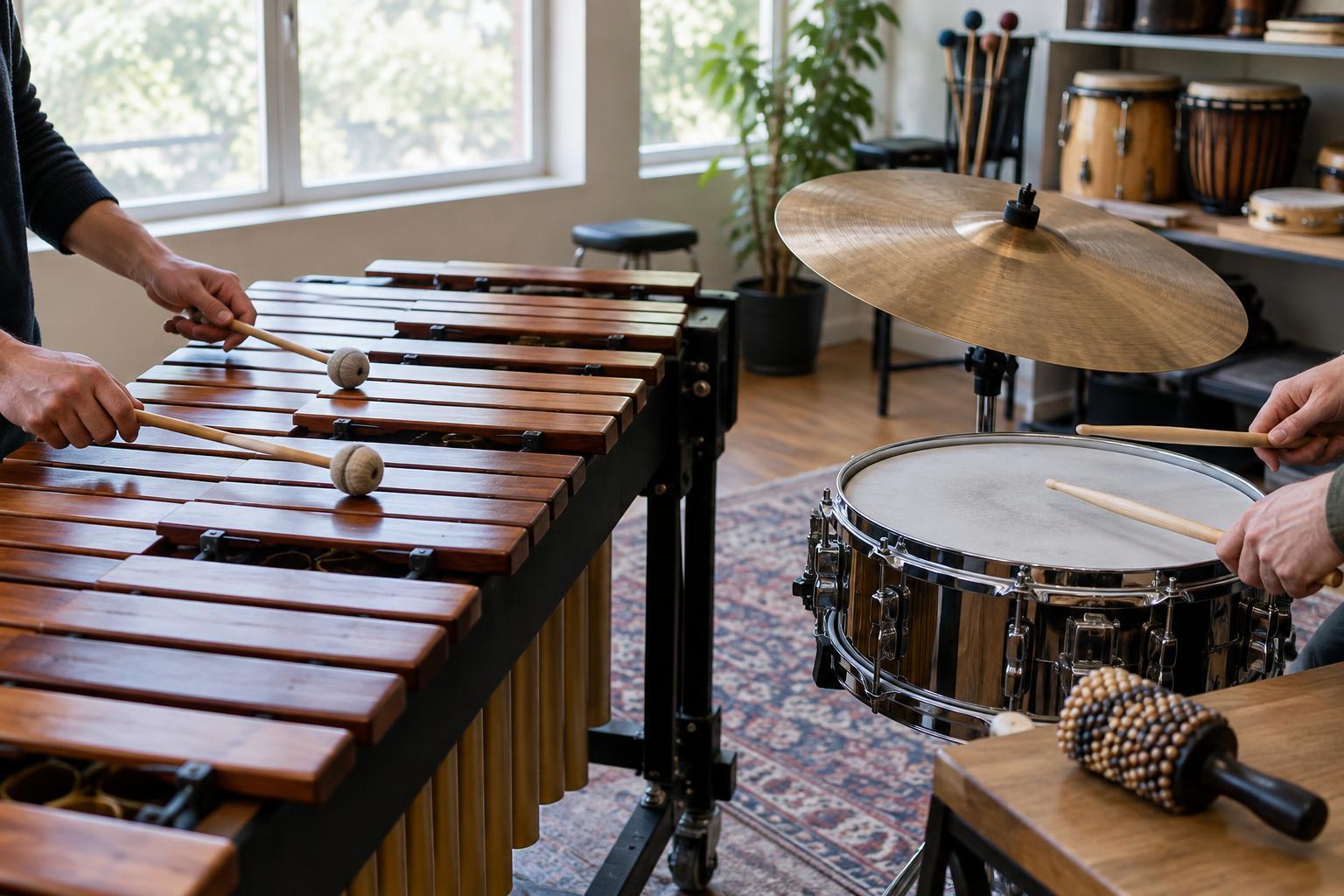
Percussion begins with an action: something is struck, shaken, scraped, or rubbed to make a sound. Within that broad family, pitched percussion produces notes that listeners can usually identify and arrange into melodies or chords. A marimba, xylophone, vibraphone, or set of timpani can be played at specific pitches. Unpitched percussion is heard less as a sequence of notes and more as a sequence of attacks, colors, and durations. A snare drum, tambourine, or cymbal commonly serves this role.
The labels describe how an instrument is used as much as what it is. A snare drum has a resonant character and can be tuned, yet its sound does not usually suggest one stable musical note. A cymbal can have a low or high character without giving a player a dependable note for a melody. Conversely, a tuned drum can provide both a clear pitch and a powerful rhythmic accent. Thinking in terms of a spectrum helps: some sounds invite us to sing them back, while others invite us to notice their shape, energy, or placement.
What pitched percussion adds
Pitched percussion can carry a tune while keeping the crisp beginning of a struck sound. On a marimba, a short series of notes can sound nimble and distinct; on a vibraphone, notes may linger and overlap. Those differences affect more than volume or speed. The length of each sound determines whether a phrase feels like a chain of separate steps or a connected, shimmering line.
It can also reinforce harmony without taking over the melody. A few carefully placed notes might echo the bass, outline a chord, or answer a singer between phrases. Timpani can emphasize particular notes beneath a larger ensemble, making a change in harmony feel more pronounced. Because each strike has a noticeable attack, even a sparse part can draw attention. A composer can use that clarity to mark a turning point, add brightness, or give a musical idea a new voice.
What unpitched percussion adds
Unpitched percussion gives music ways to organize time that do not depend on melody. A bass drum can mark a broad pulse; a snare can give a pattern a sharp reply; a shaker can divide the space between beats into smaller motions. These sounds help listeners sense where they are in a phrase. They can also change the perceived weight of a passage: a single low hit may feel decisive, while a light, repeating rattle may keep it moving without making it feel heavy.
Its other strength is texture. A cymbal roll can build from a faint wash into a bright arrival. A woodblock can cut through a busy arrangement with a brief, dry sound. Silence matters here too: removing a steady percussion pattern can make the next note seem unusually exposed. When the pattern returns, it may feel like the music has found its footing again. Unpitched does not mean expressionless; choices of instrument, force, spacing, and duration give these sounds a wide range of character.
How the two work together
Consider a simple passage built from a repeating marimba figure and a quiet shaker. The marimba gives the ear notes to follow, while the shaker makes the pace feel continuous between strikes. Add a cymbal at the end of the phrase, and the same figure gains a sense of arrival. None of the parts needs to be complicated. Their different jobs make the combined sound richer than any one part alone.
These roles can also trade places. A pitched instrument might repeat one note so insistently that it functions mainly as a pulse. An unpitched drum might play a distinctive pattern that becomes the part everyone remembers. In an arrangement, it is often more helpful to ask what a sound is doing than to ask which category it belongs to. Is it guiding the tune, marking the beat, filling the background, or calling attention to a change?
A simple way to listen more closely
The next time you hear a piece with percussion, follow one sound at a time. First, notice which sounds you could hum or match on another instrument. Then listen for sounds you would describe instead by their timing or texture: a crack, a thump, a hiss, a sustained shimmer. Pay attention to what happens just before a new section. Does a drum fill create anticipation? Does a pitched accent make the new harmony easier to hear?
Try imagining the piece without one of those sounds. Removing a tuned bell might leave the rhythm intact but take away a memorable hook. Removing the snare might preserve every note of the melody while changing the sense of forward motion. Pitched and unpitched percussion offer different ways to shape musical attention. Their value lies not in a strict dividing line, but in the choices they give musicians for making a sound feel clear, lively, spacious, or complete.