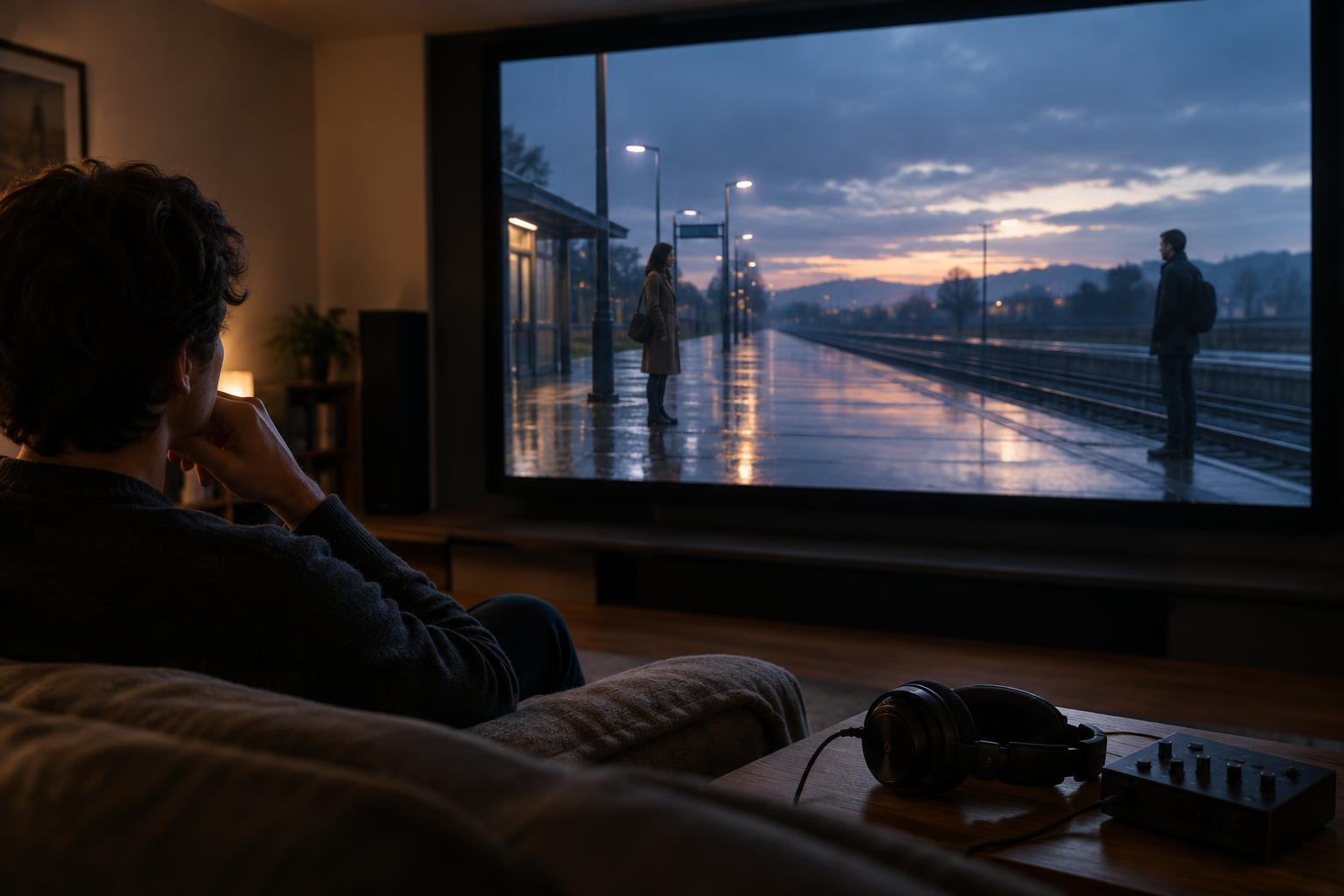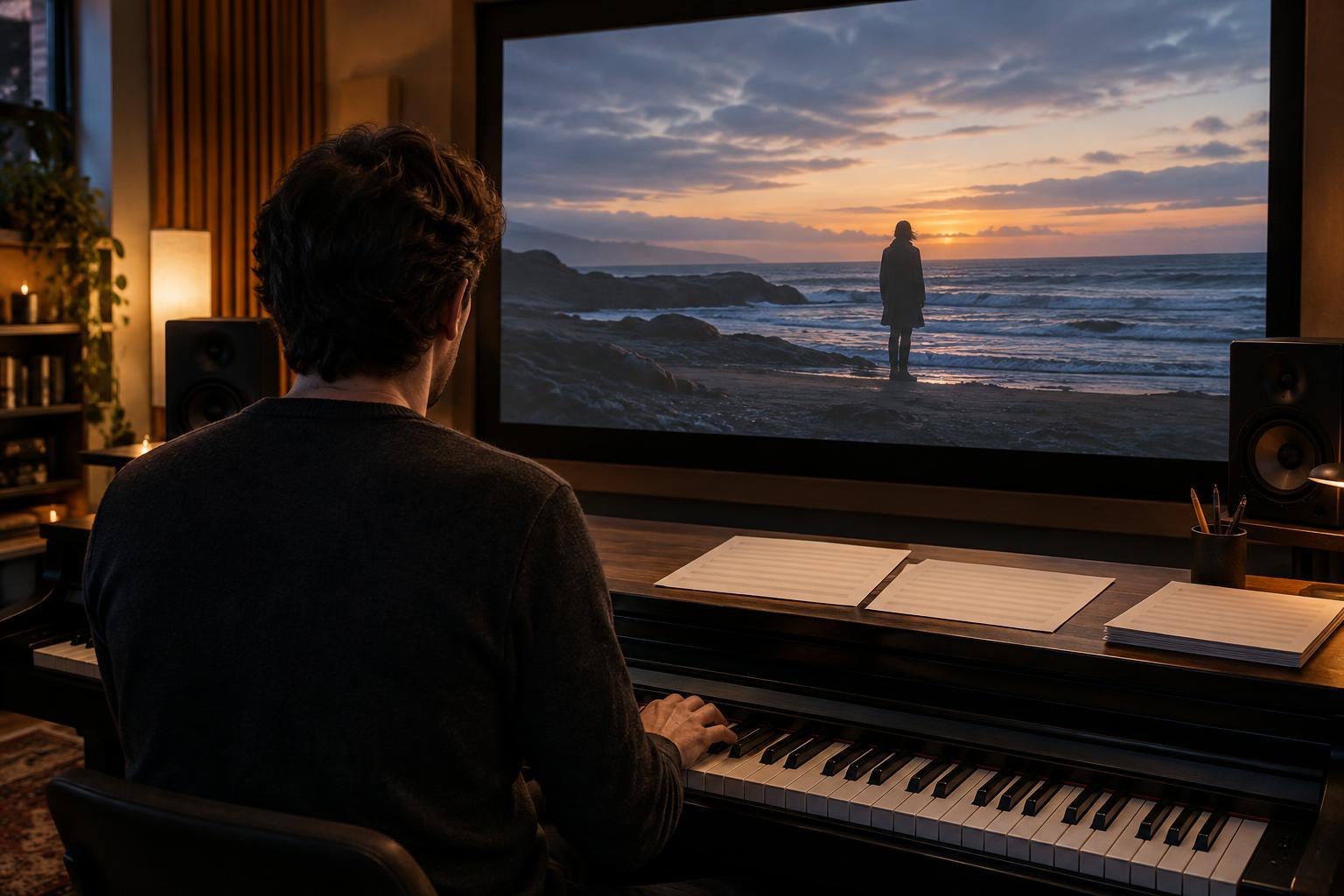
What is a film score?
A film score is music created or selected to accompany the action on screen. It may sit beneath dialogue, fill a scene with sound, or disappear for long stretches. People sometimes use “soundtrack” to mean all the music in a film, including songs. A score usually refers more specifically to the instrumental or otherwise composed music that helps shape the film’s dramatic flow.
Not every musical cue has an obvious message. A low, sustained note might make a quiet room feel uncertain, while a gentle melody might give a brief glance more weight. The images and performances still matter: music works alongside them rather than replacing them. The same passage can suggest different things depending on what the camera shows and what the audience already knows.
How music shapes a scene
One of a score’s jobs is to guide expectation. Quick, repeated sounds can make a moment feel as though it is moving toward something; slow, widely spaced notes may invite us to linger. Changes in volume, rhythm, pitch and instrumentation can mark a shift before a character speaks. A cue can also work against the image. Cheerful music over an uneasy scene, for instance, might create irony rather than comfort.
Music can direct attention without pointing to a specific object. If a cue grows tense as someone opens a door, we may watch that action more closely. Yet the effect is not automatic. Viewers bring their own associations to sounds, and a cue’s meaning depends on its place in the story. Asking “What changed when the music entered?” is often more useful than trying to assign a fixed emotion to an instrument.
Themes help stories remember
A score can connect moments that are far apart in a film. A short melody, rhythmic pattern or distinctive sound may return when a person, place or idea becomes important again. This recurring musical idea is often called a motif. It need not repeat exactly: it might be played more slowly, moved to a different instrument, or reduced to just a few notes.
Those changes can make a return feel meaningful. A theme first heard during a confident arrival might sound fragile later, inviting us to notice how the situation has changed. Music can also recall something that is absent from the screen, such as a relationship or an earlier choice. To hear this at work, listen for familiar sounds and then ask what has stayed the same and what has changed around them.
The music characters hear—and the music they do not
Film music can belong to the world of the story. A song coming from a car radio or a musician playing in a room can be heard by the characters as well as the audience. By contrast, music heard only by the audience can offer a perspective the characters do not have. A scene may move between these kinds of music: a tune playing in a room might continue after the film cuts away, becoming part of the broader score.
This distinction opens up storytelling possibilities. Music from a character’s surroundings can reveal something about the setting or what that character chooses to play. Music outside the scene can link that moment to the film’s larger pattern. Neither approach is inherently more emotional or more realistic. What matters is how the choice helps us understand where we are and whose experience we are following.
Why silence matters, and how to listen
A score does not have to play constantly. Withholding music can leave room for footsteps, breathing, traffic or the sound of a space itself. When music returns after a quiet passage, its entrance may feel more noticeable. Silence can also resist telling us how to feel, allowing an uncertain or complicated moment to remain open.
On your next viewing, choose one short scene and listen to it twice. First, notice when music begins and ends, and whether it changes as the action develops. Then pay attention to what you hear in its absence. You do not need to identify instruments or know musical terms. A simple question—“What does the sound encourage me to notice?”—can reveal how a score participates in storytelling while leaving room for your own response.