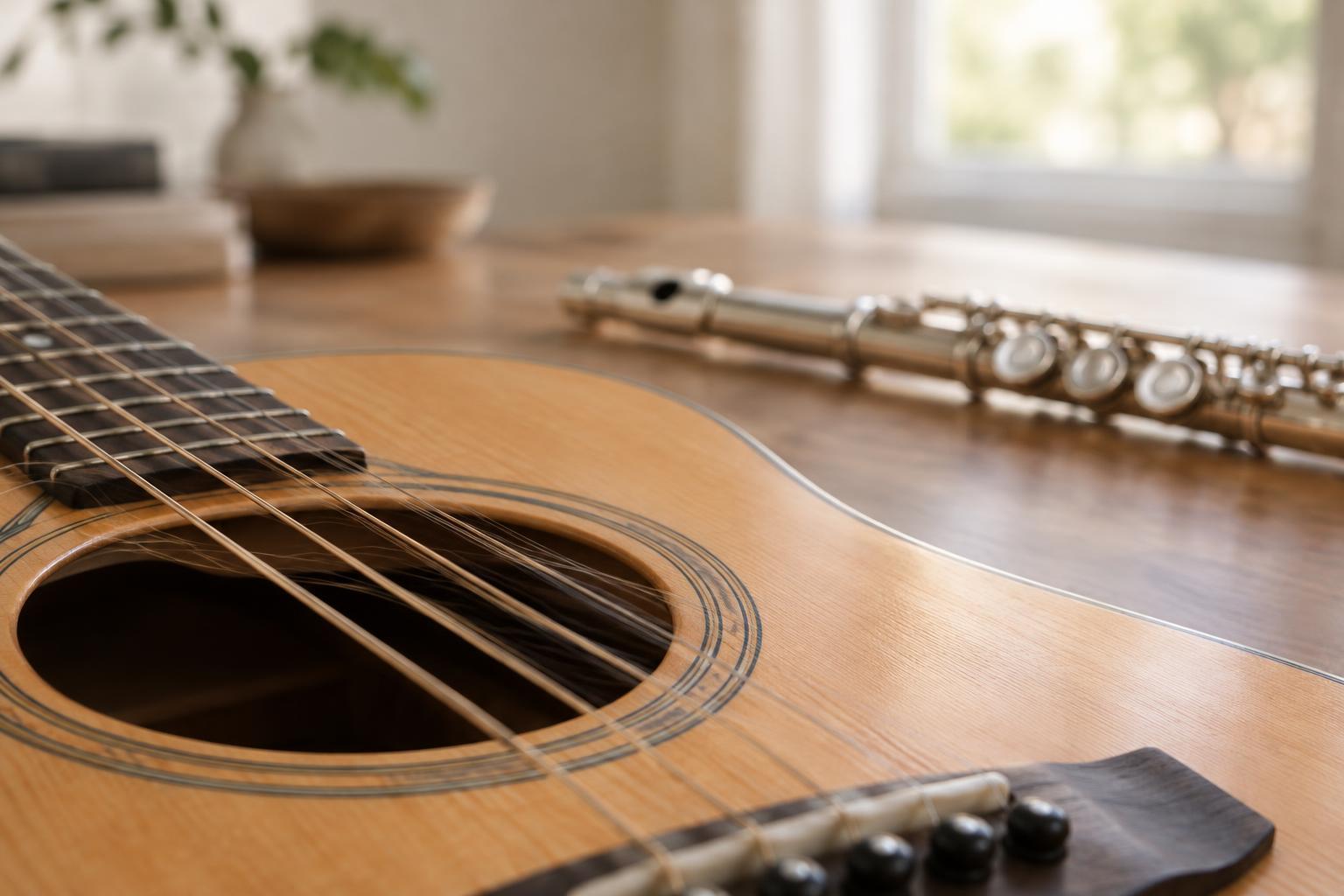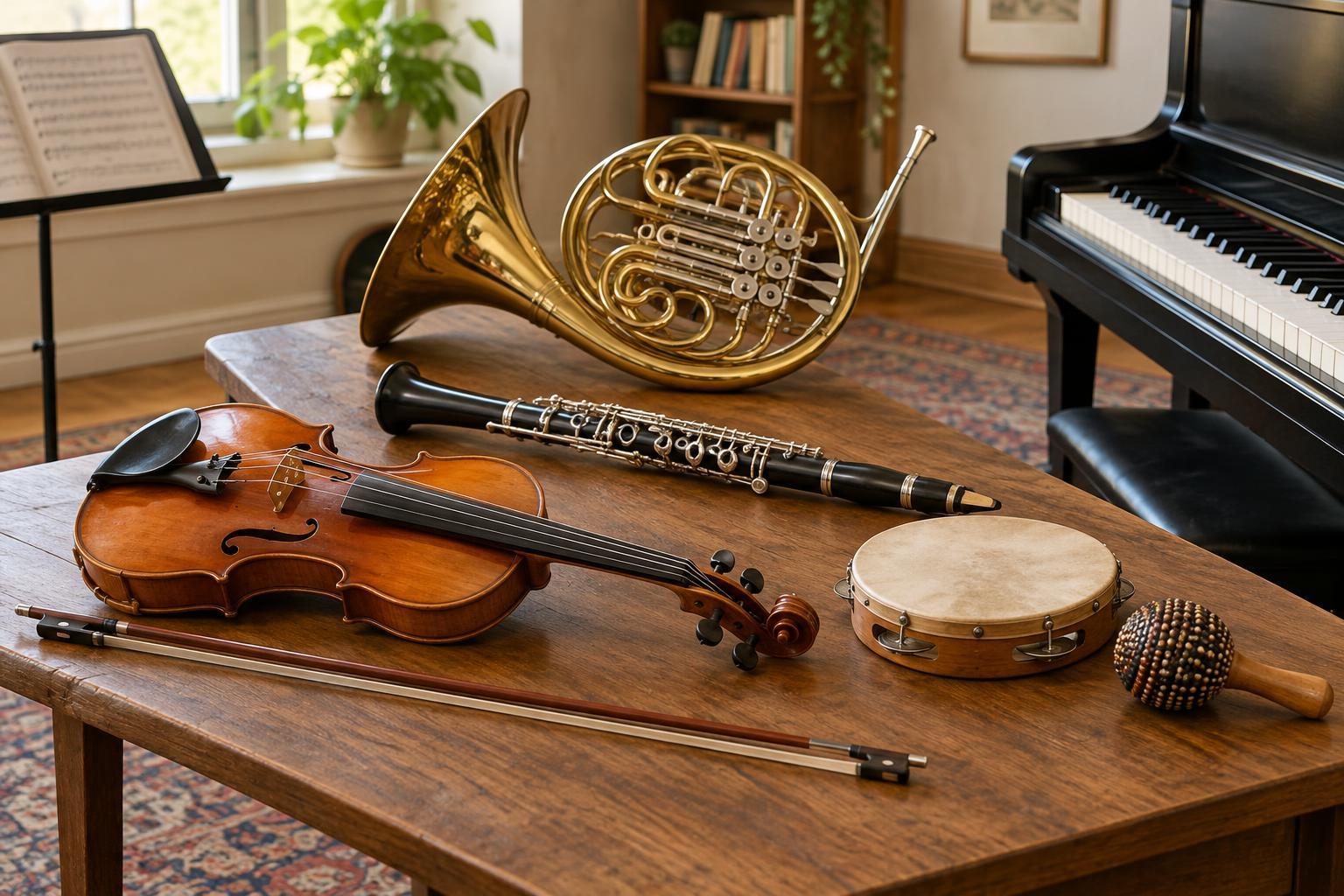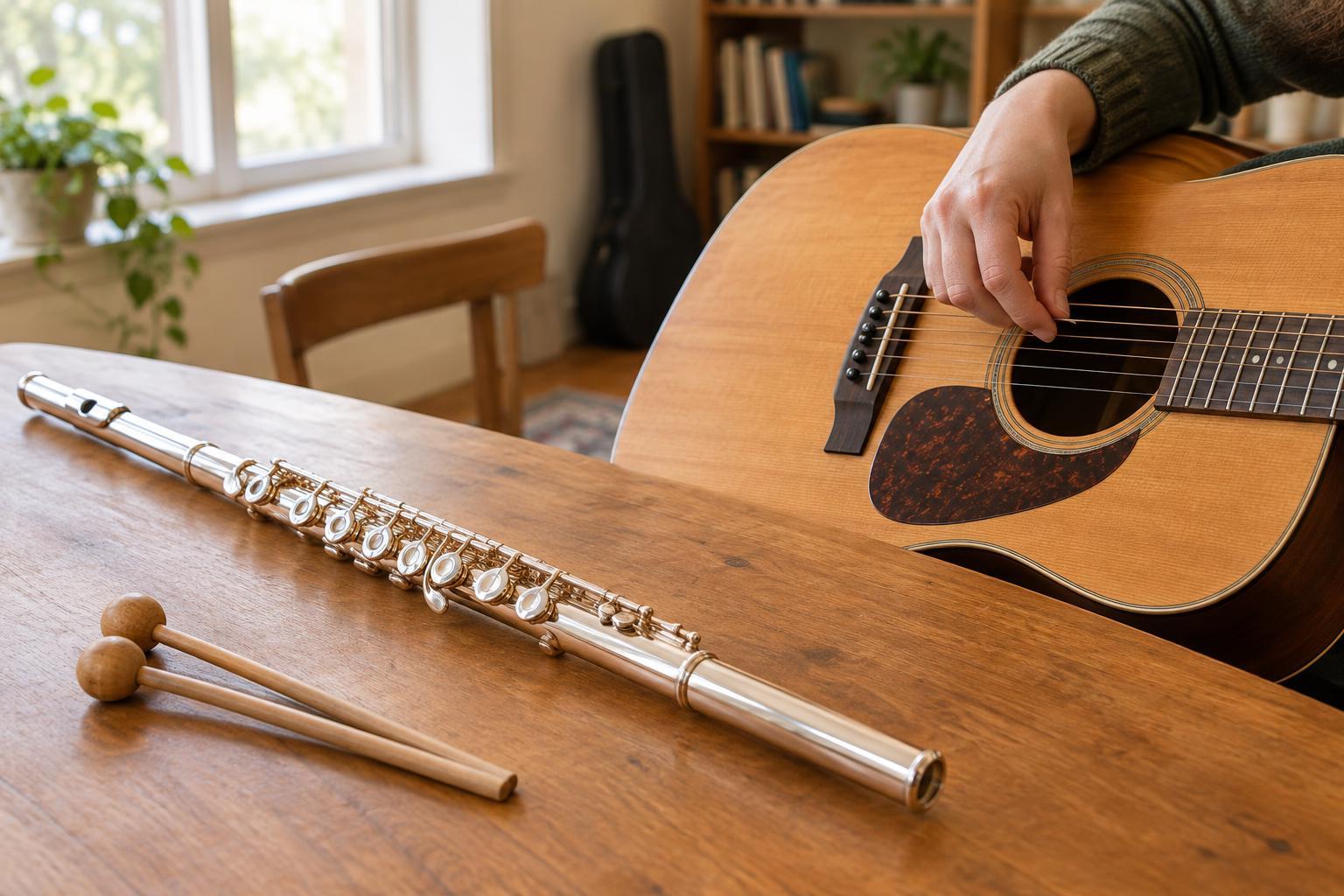
Three questions to ask about a sound
When an instrument catches your attention, you might call it bright, deep, soft, or sharp. Those words are useful, but they can point to different features of the sound. Three basic questions can make your description clearer: How high or low is the note? How loud does it seem? What gives it its particular character? These questions lead to pitch, loudness, and timbre.
The three qualities often change together, but they are not the same thing. A violin can play a high note quietly or a low note loudly. A piano and a trumpet can play a note at roughly the same pitch and loudness while remaining easy to tell apart. Learning to separate these qualities gives you a practical vocabulary for listening, playing, and talking with other musicians.
Pitch: where a note sits
Pitch is the sense that one note is higher or lower than another. On a piano, notes generally rise in pitch as you move to the right. A bass guitar often plays lower pitches than a flute, though the ranges of different instruments can overlap. Pitch helps shape a melody: you can hear a tune climb, fall, repeat a note, or leap between notes even if you do not know their names.
A vibrating object sets nearby air in motion. In many musical sounds, the rate of a repeating vibration is closely related to the pitch we hear: faster repetition usually means a higher pitch. Real instrument sounds are more complicated than a single vibration, and some percussion sounds do not have one clear pitch. You do not need to identify a precise note to use the idea. Try asking whether a sound moves up or down, stays steady, or sits above or below another sound.
Loudness: how strong a sound seems
Loudness describes how strong a sound seems to a listener. A musician can strike a drum gently or firmly, and a player can make a sustained note grow or fade. This changing loudness is part of musical expression. A quiet phrase may invite close attention, while a sudden loud entrance can interrupt or emphasize what came before.
Loudness is related to the strength of sound vibrations, but the experience also depends on context. Your distance from an instrument, the room, and other sounds playing at the same time can affect what you notice. A quiet bell may stand out in a sparse passage but be difficult to hear in a busy one. When describing loudness, it helps to say whether you mean the sound itself is changing or its place in the overall mix is changing.
Timbre: why equal notes sound different
Timbre is the character that helps distinguish sounds even when their pitch and loudness are similar. Imagine a guitar and a piano playing the same note. You may recognize each instrument partly because the note begins, develops, and fades differently. The guitar string might be plucked and left to ring; the piano note begins with a hammer strike and then decays. Those patterns are part of timbre.
The blend of vibrations within a sound also matters. Many pitched instruments produce a main pitch alongside higher components, often called overtones. The balance of those components helps give a sound qualities we might call warm, bright, hollow, or buzzy. Such words are impressions rather than exact measurements, so two listeners may use them differently. Descriptions become more helpful when you add a concrete detail: “bright, with a crisp attack” says more than “bright” alone.
Timbre can change within one instrument. A guitarist can pluck near the bridge or closer to the middle of a string. A wind player can alter the way a note begins. Different playing techniques, materials, and recording choices can all affect the character you hear. An instrument therefore has a range of sounds, not one fixed sonic identity.
A simple way to practice listening
Choose a short passage with one instrument you can follow. Listen once for pitch: does its line rise, fall, or hover in a small range? Listen again for loudness: where does it become more prominent or pull back? On a third listen, focus on timbre. Notice whether notes start sharply or gently, ring out or stop quickly, and sound smooth, breathy, metallic, or rough.
Then compare two sounds. If a piano and a singer hold roughly the same note, try to ignore their identities for a moment and describe only what differs. You might notice that one sound fades after its initial attack while the other can swell. There is no need to find a perfect adjective. The goal is to connect the words you choose to something you can hear.
These distinctions are especially useful when making music with others. “Play higher” concerns pitch; “play more quietly” concerns loudness; “give the note a softer beginning” concerns timbre. In actual music, players may adjust all three at once. Knowing the difference lets you ask for, notice, or create a more specific sound.