Strings: Sound from vibration
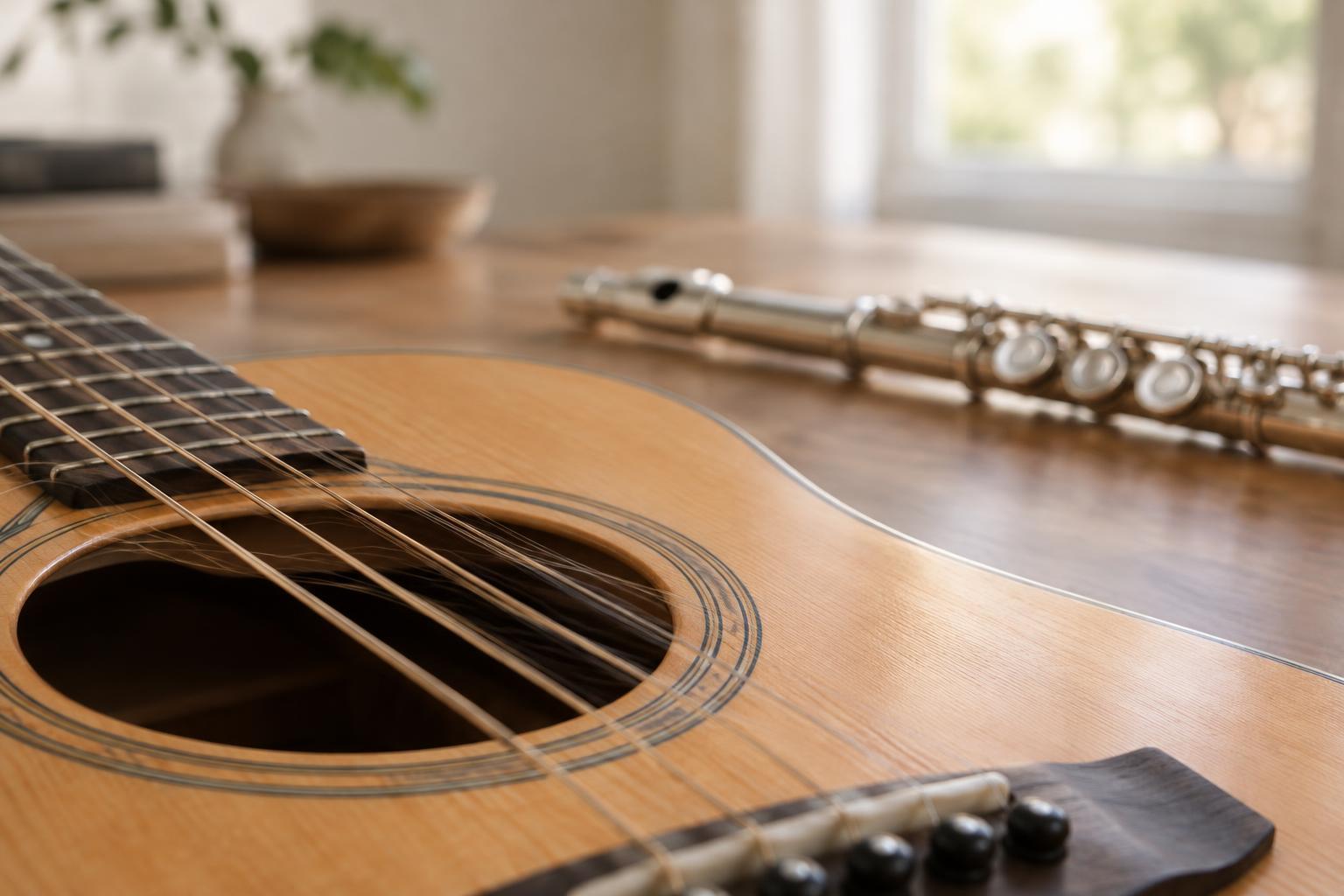
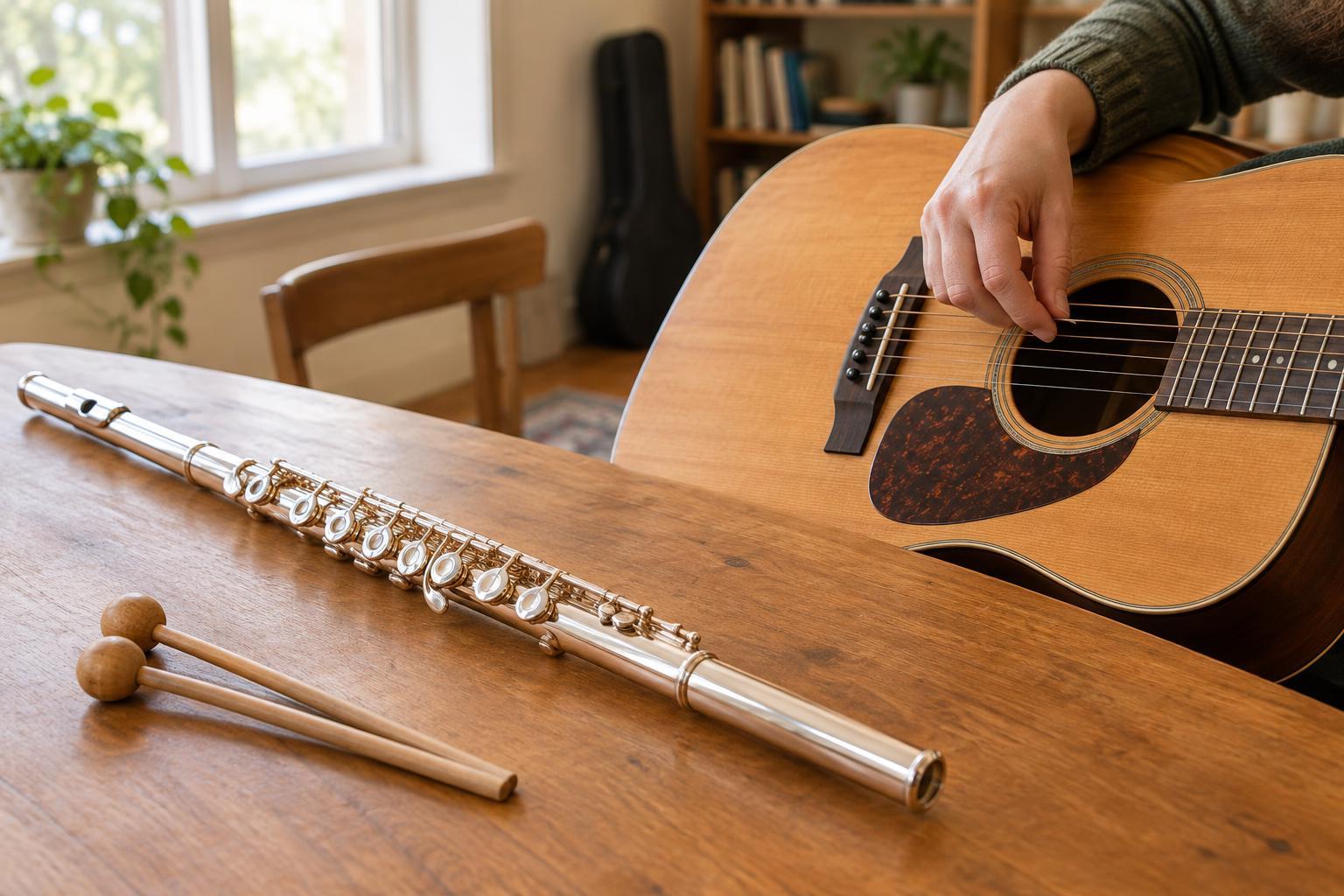
An instrument family groups instruments by how they produce sound, not simply by how they look. For strings, the starting point is a vibrating string. A player can pluck it, strike it, or draw a bow across it. The instrument’s body then helps that vibration become audible. A violin, guitar, harp, and cello all belong to this family, even though they invite different playing gestures.
Strings can sustain a note or give it a quick, clear beginning. A bowed violin can carry a long melody, while a plucked guitar note naturally fades after its initial attack. Listen for the moment a sound begins, then notice whether it holds steady, swells, or falls away. That shape often tells you as much about the instrument as its pitch does.
Size and construction matter, too: a cello and a violin share a basic method of sound production but occupy different ranges and have distinct tones. In an ensemble, strings can form a continuous background or step forward as a single expressive voice.
Woodwinds: Breath through an opening
Woodwinds make sound when a player sends air into or across an opening. A clarinet and saxophone use a single reed; an oboe and bassoon use two reeds; a flute directs air across an edge. These different starting points help explain why members of the same family can sound so unlike one another.
Despite the name, woodwinds are not defined by being made of wood. A modern flute is often metal, and a saxophone is typically metal as well. Their place in the family comes from how the air is set in motion and how the instrument is played. Keys and finger holes change the length of the vibrating air column, allowing different pitches.
When listening, pay attention to breath and articulation. A flutist might let a phrase float gently into view, while a clarinetist can make a sharply outlined entrance. Woodwinds often bring a sense of individual character to a melody, but they can also blend into a soft, shifting group texture.
Brass: Buzzing lips and resonant tubes
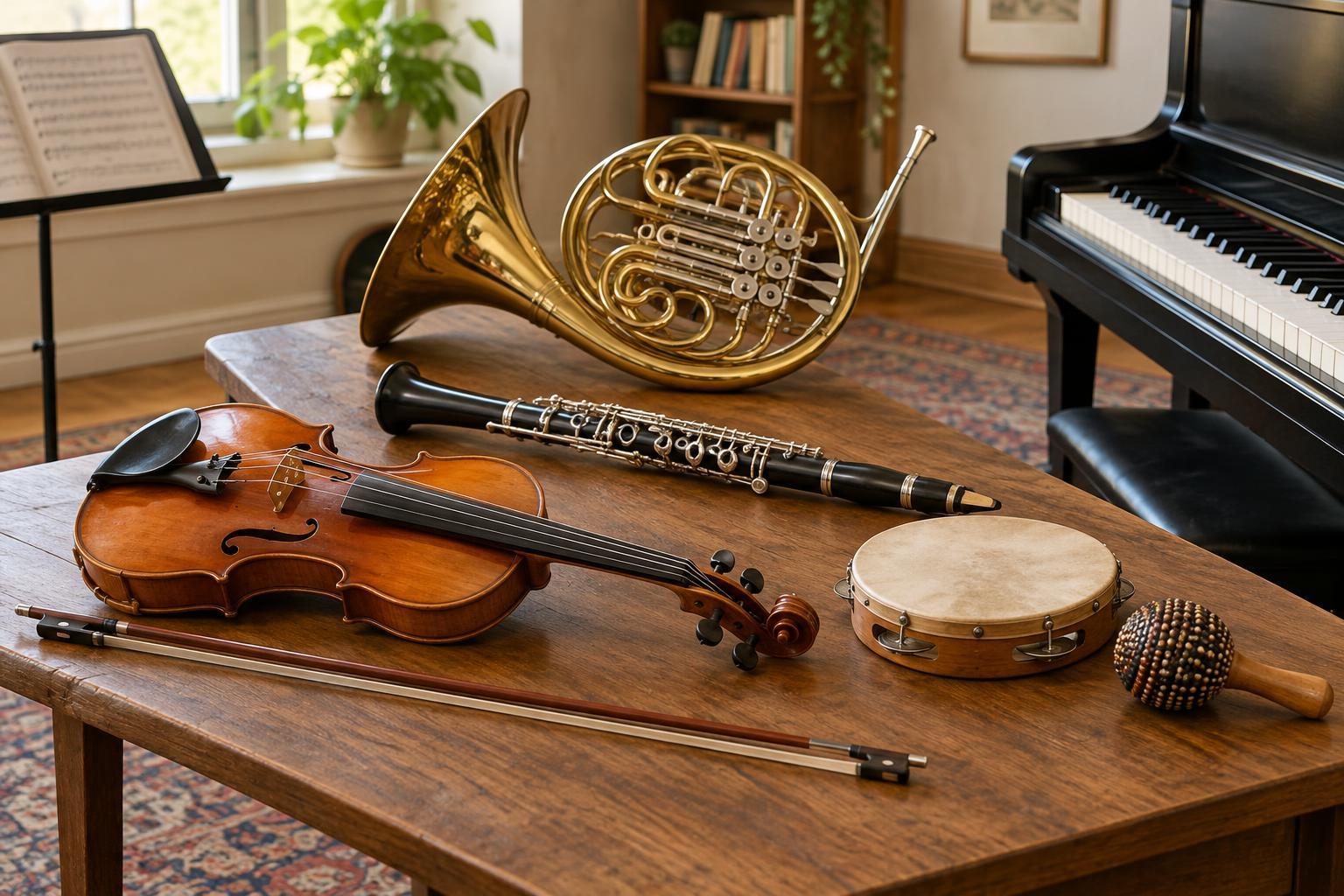
Brass instruments begin with the player buzzing their lips into a mouthpiece. That vibration travels through a tube and out through a bell. Trumpets, trombones, French horns, and tubas use variations of this approach. Their valves or slides change the available tube length; the player’s breath and lip control also help select the note.
Like woodwinds, brass instruments are classified by sound-making method rather than material alone. Their tone can be bright and forceful, but volume is only part of the story. A softly played horn can sit behind a scene with warmth, while a low tuba line can give an ensemble a grounded pulse.
Try listening to how a brass note enters. It may arrive with a crisp edge or emerge smoothly from silence. Then notice what happens when several players sound together: separate lines can combine into a broad chord, creating a very different impression from a single trumpet melody.
Percussion: Striking, shaking, and scraping
Percussion is a broad family built around actions such as striking, shaking, or scraping. Drums, cymbals, tambourines, xylophones, and triangles all qualify, though they do very different jobs. Some, such as a xylophone or timpani, can play recognizable pitches. Others are often used mainly for rhythm, texture, or emphasis.
It is tempting to hear percussion only as a beat, but its sounds can shape the space around a melody. A quiet shaker adds motion without drawing much attention. A cymbal can mark a transition or leave a shimmering trail. A drum’s short attack can make a musical moment feel decisive.
To appreciate this family, listen beyond the initial hit. Does the sound ring, rattle, or stop almost immediately? Those differences in decay help percussion establish atmosphere as well as timing.
Keyboards: A layout that crosses families
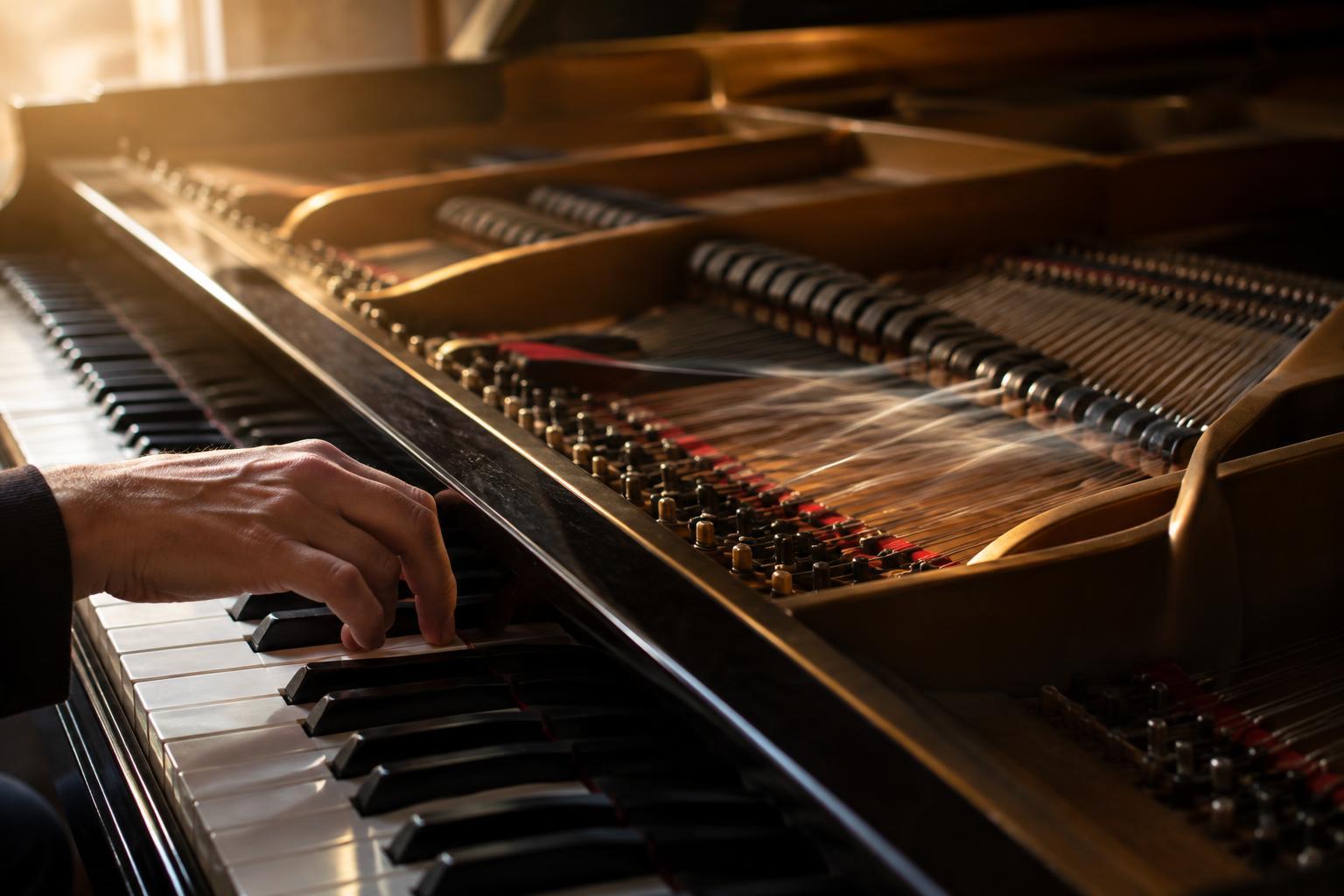
Keyboards are especially useful to think of as a playing interface rather than one sound-producing method. On a piano, pressing a key triggers a hammer that strikes strings. On an organ, keys control the flow of air through pipes or another sound source. An electronic keyboard can trigger synthesized or sampled sounds. Similar-looking keys can therefore produce sound in very different ways.
This overlap is a reminder that instrument families are guides, not rigid boxes. A piano has strings and hammers, so it shares features with both strings and percussion. Calling it a keyboard tells you how a player encounters it; looking inside tells you more about its sound.
The next time you hear an unfamiliar instrument, ask three questions: What starts the vibration? What keeps the note going or lets it fade? What changes its pitch? Those questions make it easier to recognize instrument families—and to notice how musicians combine their contrasting sounds to tell a story.