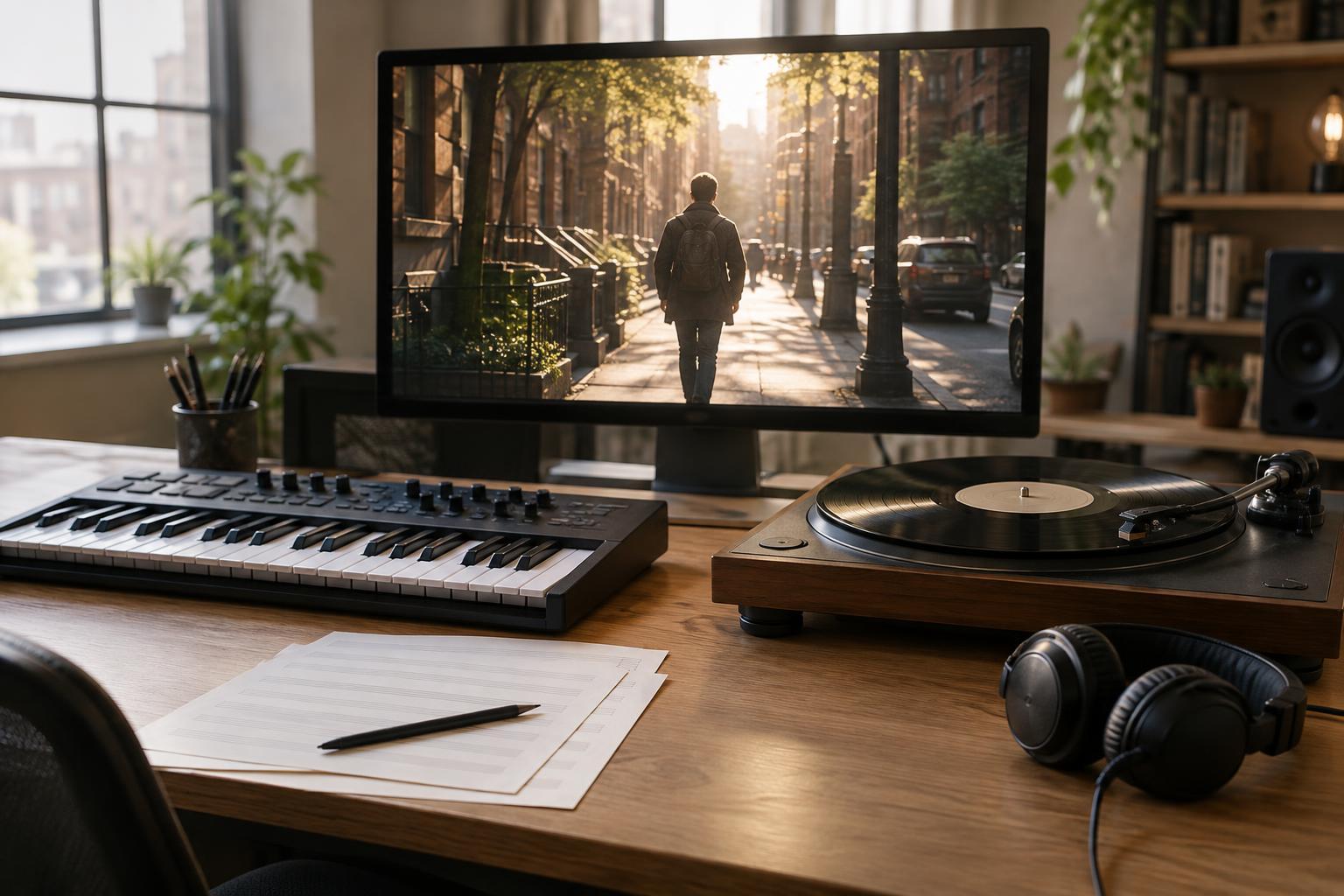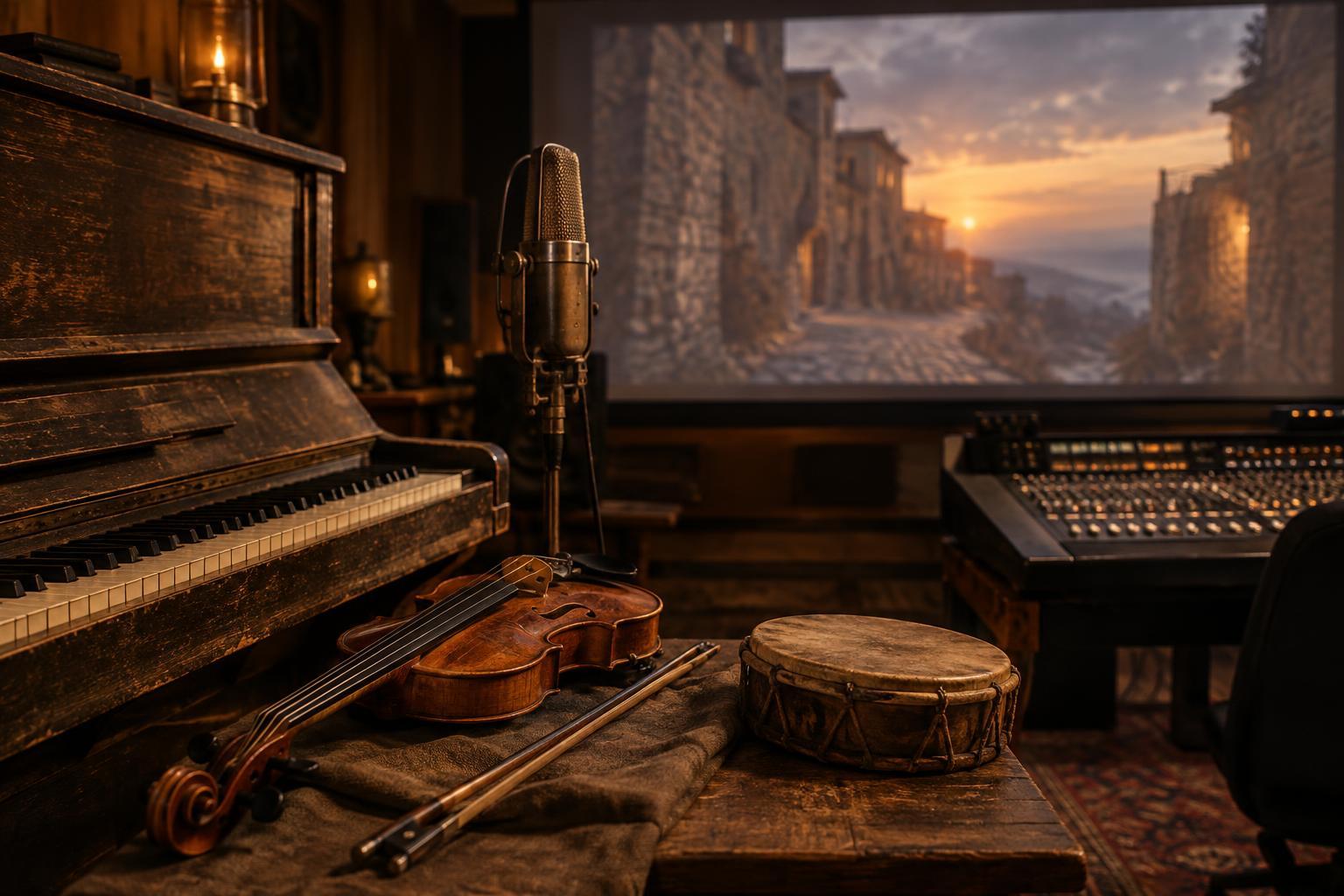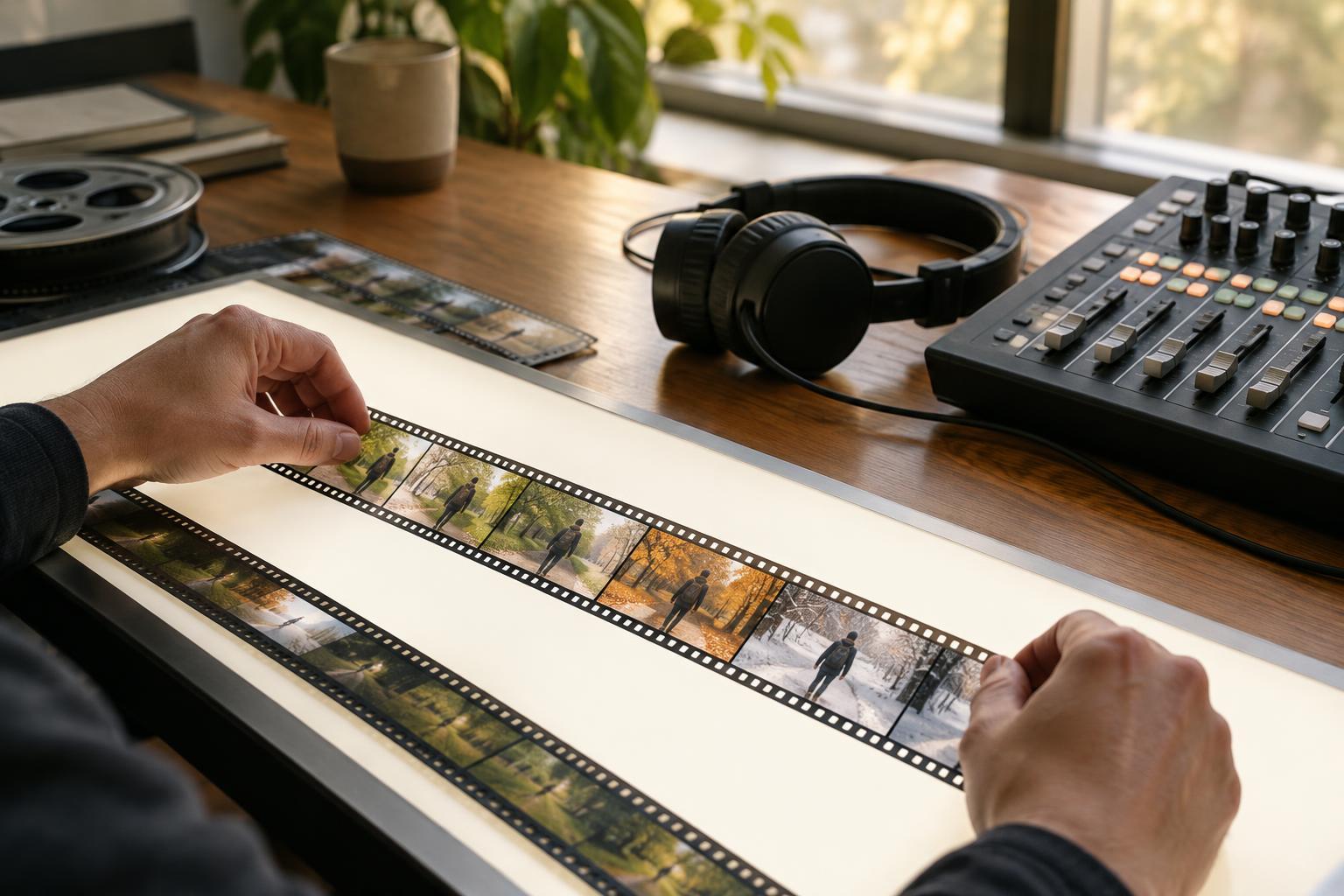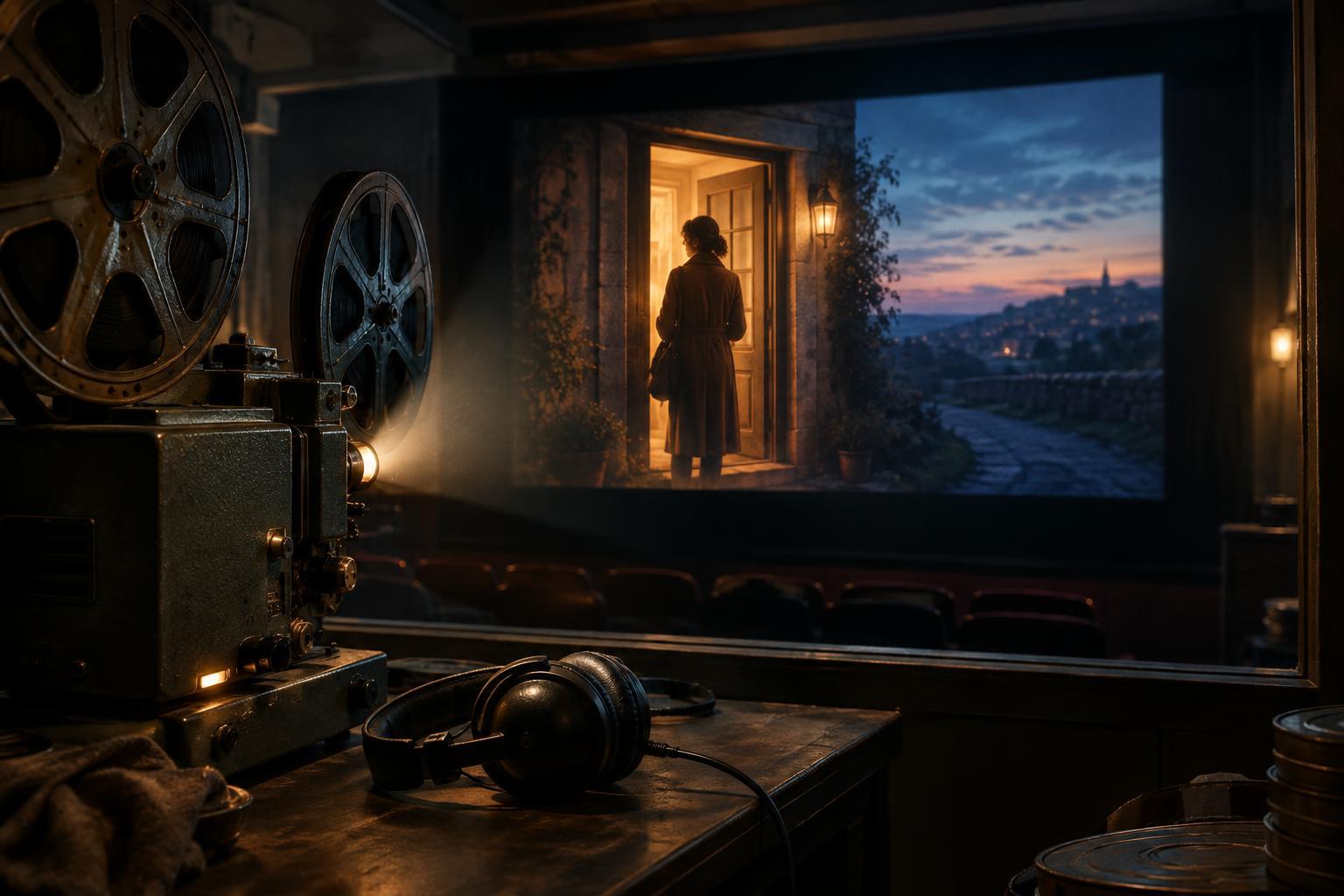
Two thresholds, two different jobs
Credit music sits at the edge of a film, but the two edges face different directions. An opening sequence meets viewers before they know much about the characters or the world. An ending follows everything they have seen. That difference changes what the music can do. At the start, it may offer a first clue about the film’s energy, setting or point of view. At the end, it can give the audience a way to remain with the story—or gently step away from it.
Neither placement has to summarize the whole film. A bright opening cue might conceal a darker story, while a quiet end-credit cue might follow a noisy finale. What matters is the relationship between the sound and the moment at which it arrives. The same piece of music can feel like an invitation at the beginning and a recollection at the end.
Opening music makes a promise
Before a film has established its rules, viewers listen for orientation. Tempo, instrumentation and the amount of space in a cue can suggest what kind of attention the film asks for. A steady pulse may encourage anticipation; a sparse melody may draw attention to small visual details. If titles appear over images of a place, the music can help make that place feel welcoming, unfamiliar or unsettled without explaining why.
An opening can also establish a musical idea for later use. A short rhythm or melodic shape heard during the credits may become recognizable when it returns in a different scene. Its first appearance does not need to announce a theme loudly. Sometimes a modest musical detail gives viewers something to notice only in hindsight.
The promise need not be literal. Playful music over severe images, for example, can create a question rather than a clear answer. Such contrast asks viewers to keep listening and watching before deciding how to read the film. Used without care, though, an opening cue can narrow expectations too soon. If it signals one mood forcefully and the film immediately moves elsewhere, the shift should feel intentional rather than accidental.
End music shapes the departure
By the time end credits begin, the audience has context. A sound heard earlier may now carry the weight of a character’s choices or a changed relationship. Repeating an opening theme can create a sense of return, but it does not have to sound identical. A slower pace, a different instrument or a simpler arrangement may let familiar material register differently after the final scene.
End-credit music also affects the handoff from story to ordinary surroundings. An immediate, energetic song can release tension or keep momentum moving after a decisive ending. A restrained cue can leave room for unresolved feelings. Silence before the music starts can be meaningful, too: it allows the last image or line to linger before the credits offer another point of focus.
There is no requirement to provide emotional closure. If the story ends with uncertainty, end-credit music can respect that uncertainty rather than smoothing it away. The most fitting choice may be one that gives viewers time to form their own response.
The transition matters as much as the track
Credit music is not experienced in isolation. At the beginning, consider what precedes the titles: a silent screen, a brief scene, ambient sound or a sudden cut. A cue that begins before the first image can make viewers listen closely for what will appear. One that arrives after a scene can instead comment on what they have just witnessed.
At the end, the cut from the final scene deserves equal attention. Does the music enter under a last look between characters, begin on a black screen or wait until names appear? Each entrance places a different amount of emphasis on the ending itself. Volume and texture matter here as well. A dense track that starts abruptly may be exhilarating in one film and intrusive in another.
Credit typography and pacing give the music a visual partner. Long-held cards make space for sustained tones; quick changes can sit naturally beside a strong beat. The goal is not to synchronize every movement. It is to make the sound and images feel as though they belong to the same threshold.
A simple way to listen more closely
Next time you watch a film, notice what you know when the opening music starts and what you know when the ending music begins. Ask what each cue encourages you to expect, remember or question. Listen for any musical idea that appears at both ends, and pay attention to how the final scene leads into the credits.
This comparison reveals the value of placement. Opening-credit music can prepare an audience to enter; end-credit music can help them carry something out. Between those points, the story changes what the audience hears—even when the notes themselves stay the same.