A sound can be a setting cue
A film has many ways to establish its setting: architecture, clothing, dialogue, and light all offer clues. Music can add another before the camera shows much at all. The dry pluck of a small string instrument, the weight of a pipe organ, or the brightness of a brass band may lead listeners to imagine different spaces and eras. These associations are useful to a filmmaker, but they are not fixed meanings. What an audience hears in an instrument depends on its musical context and on what that audience already knows.
An instrument rarely does the job alone. A lone fiddle playing a spare melody creates a different impression from a fiddle joining a dance ensemble. Tempo, harmony, rhythm, and the space around the sound can make a familiar instrument feel ceremonial, intimate, playful, or unsettling. For a composer, the productive question is not simply “What instrument belongs here?” but “What should this particular moment tell us about this place?”
Suggesting a period without making a museum exhibit
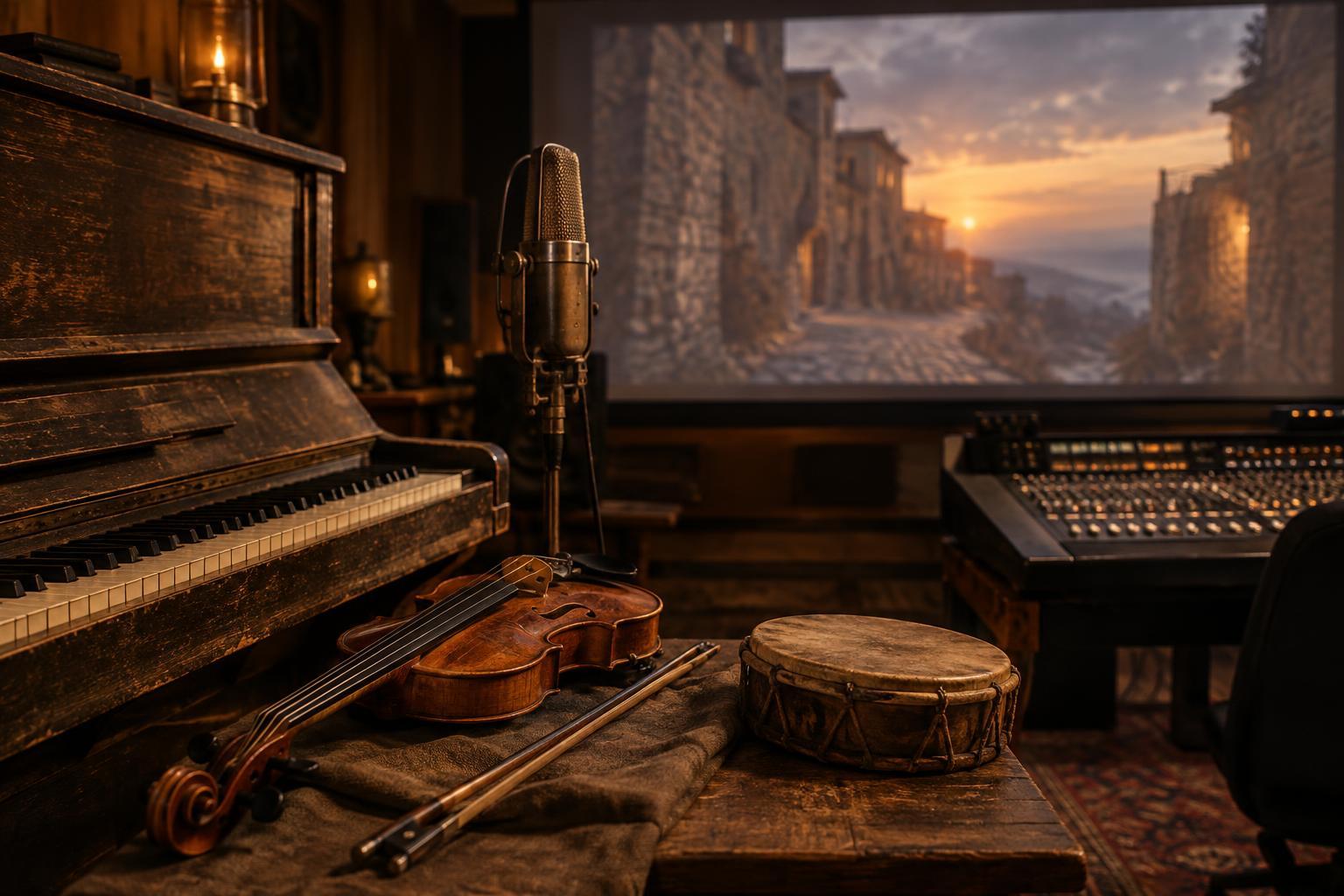
Period settings invite recognizable musical choices, yet a film score is not obliged to reproduce every detail of music from its era. A harpsichord, for example, may quickly evoke an older European setting for some listeners. Whether it suits a scene depends on more than the instrument’s age: its phrasing, the notes it plays, and its relationship to the images all shape the result. Used alone in a quiet scene, it might suggest precision or unease rather than grandeur.
Arranging can make the period cue more specific. An instrument played in a style associated with the depicted setting may feel more grounded than the same instrument carrying a modern-sounding theme. Conversely, a filmmaker may deliberately combine older and newer sounds to keep the characters emotionally close to a contemporary audience. That contrast can work when it feels purposeful. A period film need not sound like a historical demonstration, but its musical choices should support the world the story builds.
Place is more than a signature instrument
Film music sometimes uses a single timbre as shorthand for a region. That may orient an audience quickly, but it can also flatten a varied musical culture into one familiar sound. A more attentive approach considers ensembles, playing techniques, rhythms, and the situation in which music would be heard. Is the story in a home, a market, a place of worship, or a public celebration? Those settings may call for very different sounds even within the same city.
It also helps to distinguish between music heard by the characters and music heard only by the audience. A street musician visible in a scene has a different storytelling role from an instrumental theme laid over a landscape shot. The first belongs to the characters’ immediate surroundings; the second can express memory, expectation, or a feeling the images leave unspoken. Making that distinction gives filmmakers more options than assigning one instrument to one location.
Performance and recording complete the illusion
Two recordings of the same instrument can point toward different worlds. Close-miked strings may expose the scrape of a bow and the movement of a player’s hands, giving a scene a private, human scale. The same passage recorded with a sense of distance may seem to occupy a large hall—or feel like something recalled rather than happening now. Neither approach changes the instrument, but each changes how the audience relates to it.
Small performance decisions matter just as much. A steady, polished ensemble can suggest formality, while a loose group with audible breaths and imperfect entrances may feel spontaneous. Composers and sound teams can also decide how an instrument sits among dialogue, footsteps, traffic, or room tone. If the music blends with the surrounding sounds, the setting may feel continuous. If it cuts sharply across them, it may signal a change in time, viewpoint, or emotion.
Listen for choices, not just labels
The next time a film introduces a new place or jumps to another period, listen before naming the instruments. Notice whether the music feels close or distant, solo or communal, restrained or busy. Ask what changes when a character enters the scene. Does the instrument continue as part of the world, or does it give way to another sound? These questions reveal more about the storytelling than identifying a timbre alone.
Effective instrument choices give an audience a foothold without reducing a setting to a cliché. They can make a room feel inhabited, bring a past moment into focus, or hint that a character experiences a familiar place differently from everyone else. The strongest cue is often not the most obvious instrument. It is the one whose sound, performance, and placement make the scene feel particular.