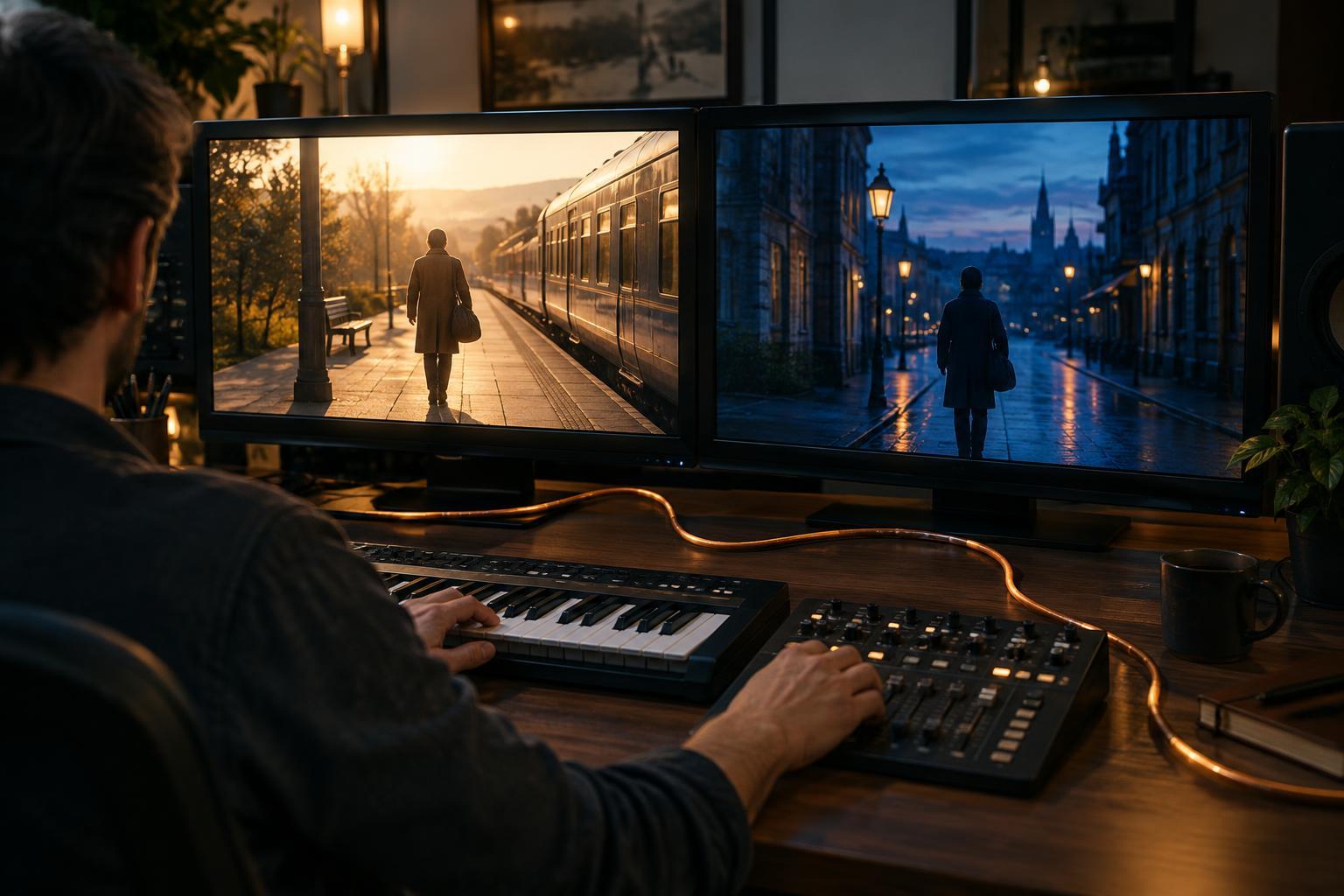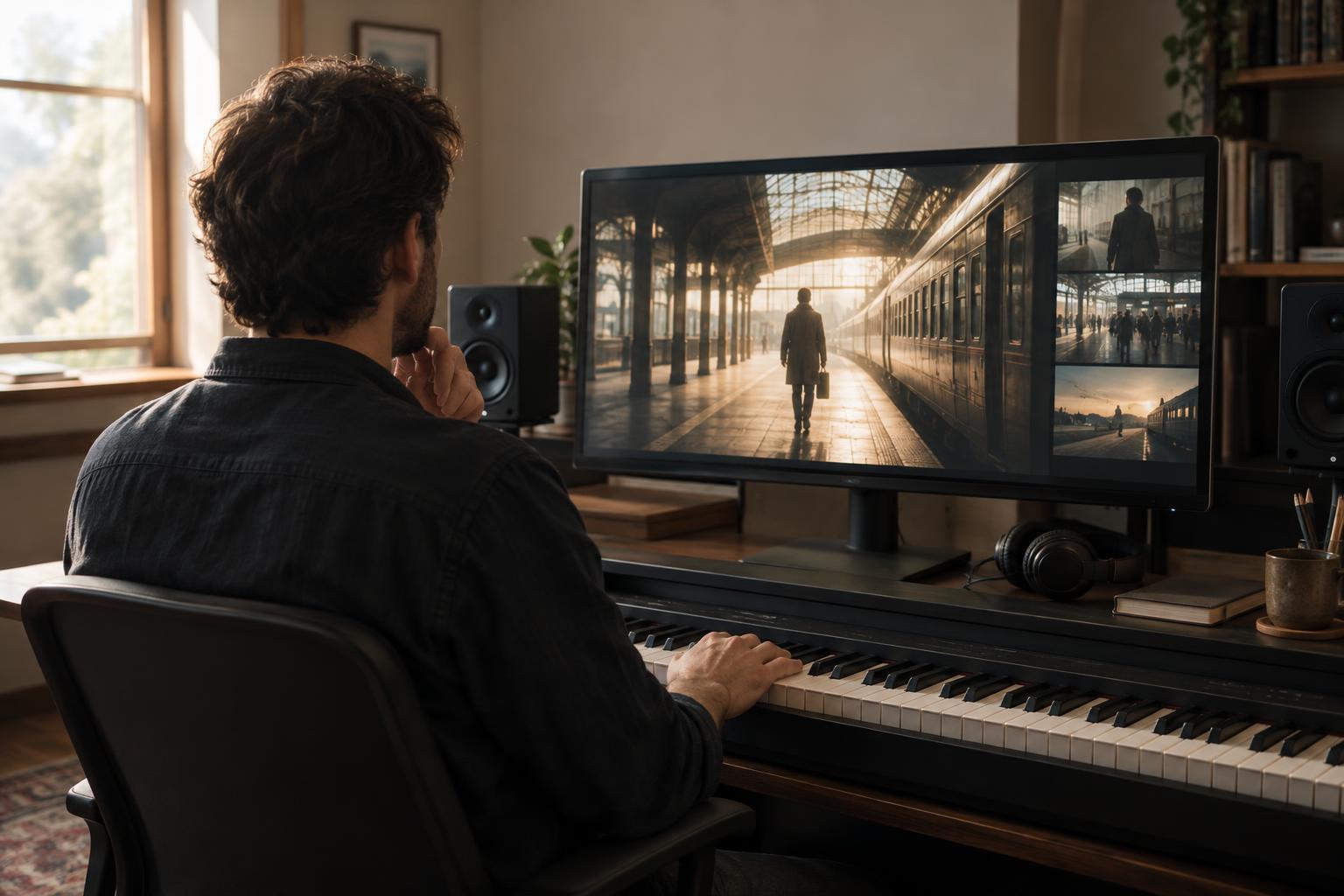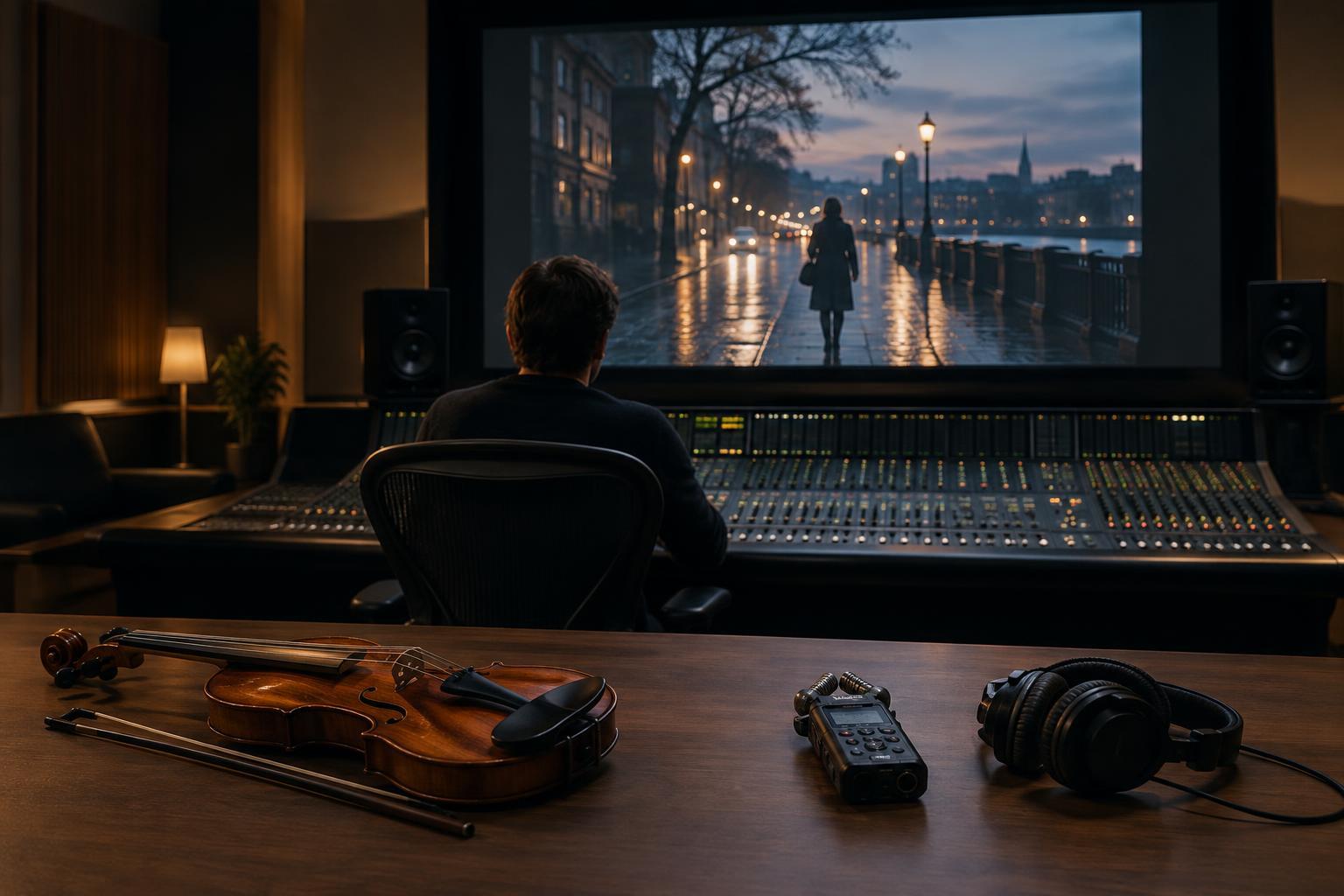
Two ways of shaping a scene
In a film, music and sound design often work on the same moment. A character opens a door: we might hear the latch, the room’s low hum and a sustained musical note. Each sound affects how the entrance feels, but each may have a different job. The latch gives the action weight. The hum suggests the space. The note can connect the moment to an emotion or an idea beyond the room.
Music is usually organized around musical relationships such as rhythm, melody, harmony or recurring textures. It can build an arc across shots and return to an earlier idea. Sound design shapes the film’s audible world through effects, ambience and created sounds. It can make a location recognizable, clarify an action or draw attention to something outside the frame. These are useful distinctions, not firm rules: a score can create a sense of place, and an environmental sound can carry meaning throughout a story.
The border is something the film can play with
Consider a train passing beneath a conversation. Its wheels make a repeating pattern that begins to feel like a beat. If a composer adds a pulse at the same pace, the train may seem to become part of the music. Reverse the process, and an electronic note might blend into the station’s machinery until it is hard to say whether it belongs to the score or the setting.
Films can use that uncertainty for storytelling. A ringing tone might first seem to come from a device in the scene, then continue after the image cuts elsewhere. A song playing on a car radio might fade into a fuller arrangement as the camera leaves the car. The source has changed, but the sound connects the two moments. Instead of asking which department owns it, a more revealing question is what the shift asks us to notice.
How music and sound design guide attention
A score can suggest continuity when the image changes. A familiar musical phrase heard in a new setting may invite us to connect two characters or remember an earlier scene. Sound design often anchors us in immediate events: a floorboard creaks behind someone, or distant traffic makes an otherwise quiet room feel exposed. Either approach can build anticipation without announcing exactly what will happen.
Their effects also depend on what is left out. If a busy street suddenly loses its usual ambience, the absence may become more noticeable than any added sound. If music stops just before a character speaks, the voice may feel unusually close. Silence in film is rarely a simple lack of work; it is a choice about which sounds remain and how much space they receive.
Neither music nor sound design has to tell viewers what to feel. An uneasy texture can complicate a cheerful image, while a gentle melody can make an ordinary action seem worth remembering. The strongest choice for a scene may be a sound that leaves room for more than one interpretation.
Making room for both in a film mix
Because dialogue, music and designed sounds share the same listening space, their relationship is practical as well as expressive. A delicate musical passage might disappear beneath rain or footsteps. A sharp effect might interrupt a phrase at exactly the point the scene needs a jolt. Filmmakers can adjust timing, volume, frequency range and texture so that the important detail reaches the audience without every element competing for attention.
Planning that relationship early can open up creative options. A recurring mechanical sound might inspire a rhythmic part of the score, or a musical drone might be designed to resemble the room’s ventilation. In other scenes, keeping the elements distinct is more effective: the music carries a character’s private perspective while the sounds of the location keep the action grounded. The aim is not to blend everything, but to choose when sounds should meet and when they should stand apart.
A simple way to listen more closely
On a rewatch, choose one short scene and follow a single sound from its entrance to its exit. Can you identify a source in the pictured world, such as a vehicle, voice or instrument? Does the sound continue across a cut, change shape or join a musical pattern? Notice what happens to the other sounds while it is present. You do not need to label every element correctly to hear how the scene is built.
Then imagine the scene with one layer removed. Without the music, would the setting feel more prominent? Without the ambience, would the music seem to float free of the action? These questions reveal why the boundary between score and sound design is useful even when it is blurry. Both can tell us where we are, what matters now and what might linger after the scene ends.