The cut changes the image, but not always the thought
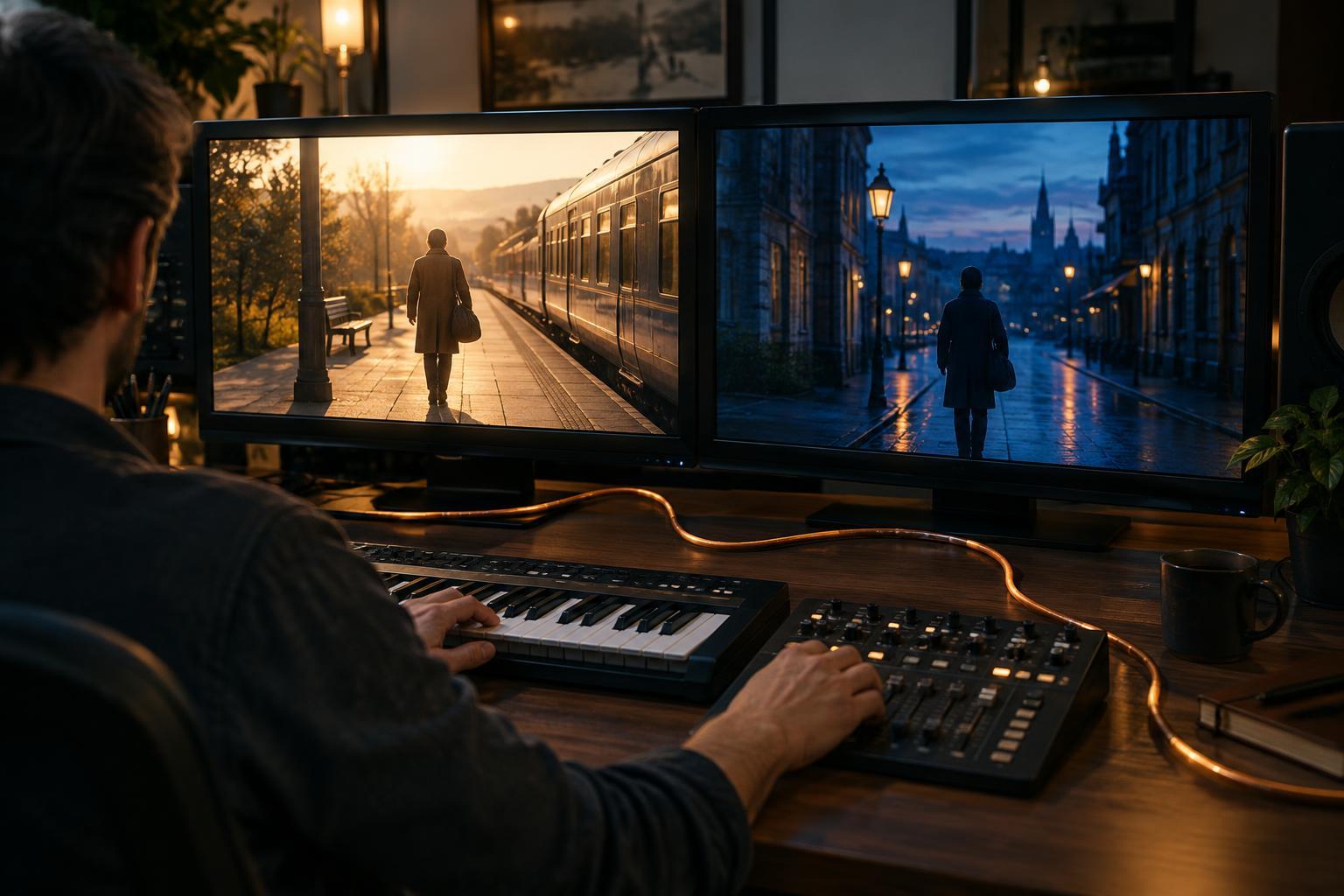
A cut can move a film from a crowded room to an empty street in an instant. The audience must take in a new place, perhaps a new time, while still making sense of what just happened. Music can help by continuing across the edit. Even when everything visible changes, an unbroken sound suggests that the two scenes belong to the same emotional or narrative thread.
Imagine a character leaving a difficult conversation. A quiet musical phrase begins as they reach for the door and continues over a cut to their walk home. The music does not need to tell us exactly what they feel. Its continuity gives the viewer room to carry the conversation into the next scene. If the phrase stopped at the cut instead, the walk might feel more separate: a fresh chapter rather than an immediate consequence.
A musical bridge can be simple
Connecting scenes does not always require a full melody. A held note, a low pulse or a repeating figure can span the transition. Because the ear follows sounds through time, even a modest musical element can soften a sharp visual change. This is especially useful when a film moves between locations or compresses a series of actions into a short sequence.
The bridge can also change as it crosses the cut. A piano note might continue into the next scene while strings enter beneath it, gradually shifting the mood. Or a steady rhythm might begin under a scene of preparation and carry into the action that follows. In each case, the music gives the transition a direction: the new image feels like a development of something already in motion.
Themes connect moments that are far apart
A recurring musical idea can link scenes even when no sound plays continuously between them. When a familiar melody, rhythm or instrumental color returns, it may remind the viewer of a person, place, relationship or earlier choice. The connection depends on how the idea has been used in the film; music gains meaning through repetition and context, not through a fixed emotional code.
A theme first heard during a warm family gathering might return, slower and more sparsely arranged, when a character visits the same house alone. The scenes are separated in time, but the music encourages a comparison. What has remained? What has changed? The altered version can suggest an answer without spelling one out in dialogue. A theme can connect scenes while also showing the distance between them.
Timing shapes what the audience anticipates
Where music begins and ends matters as much as what it sounds like. Starting a cue just before a cut can prepare the audience for a shift before the new image appears. Beginning it just after the cut can make the new scene feel like a response. A beat that lands with the edit may emphasize arrival; a beat that passes through it can make the transition feel fluid.
Music can also create a gentle mismatch. Suppose a lively cue continues briefly over an unexpectedly still image. For a moment, the audience hears the momentum of the previous scene while looking at its aftermath. That overlap may create humor, unease or reflection, depending on the surrounding story. Such effects are not automatic. Their force comes from the relationship among image, performance, other sounds and the audience’s expectations.
Sometimes the strongest bridge is a pause
Continuity is useful, but music need not cover every transition. Ending a cue before a cut can clear space for a new environment to announce itself through footsteps, traffic, room tone or silence. An abrupt musical stop may underline a rupture: the next scene is not simply an extension of the last one. Choosing not to connect moments can be just as expressive as linking them.
To hear these choices, watch a transition twice. First, notice what changes on screen and what stays with you emotionally. Then listen for when the music enters, whether it crosses the cut, and whether its rhythm or instrumentation changes afterward. The question is not simply whether the cue sounds beautiful. It is what relationship the sound asks you to perceive between two images—and whether the story becomes clearer, stranger or more open because of it.