Following the scene is not the same as copying it
Picture a character crossing a crowded room to deliver a message. They pause at the door, weave around a table, spot the person they need and discover that someone else is listening. A cue could mark each step, turn and glance. But if every movement produces a musical response, the score may begin to describe the choreography rather than the tension. The more useful question is what changes for the viewer as the scene unfolds.
Film music often follows action at the level of intention. A steady pulse might carry the character across the room, while a change in harmony marks the moment they recognize the unintended listener. The music has remained connected to the movement, yet it has saved its clearest gesture for the event that changes the scene’s meaning.
Choose a few moments worth meeting
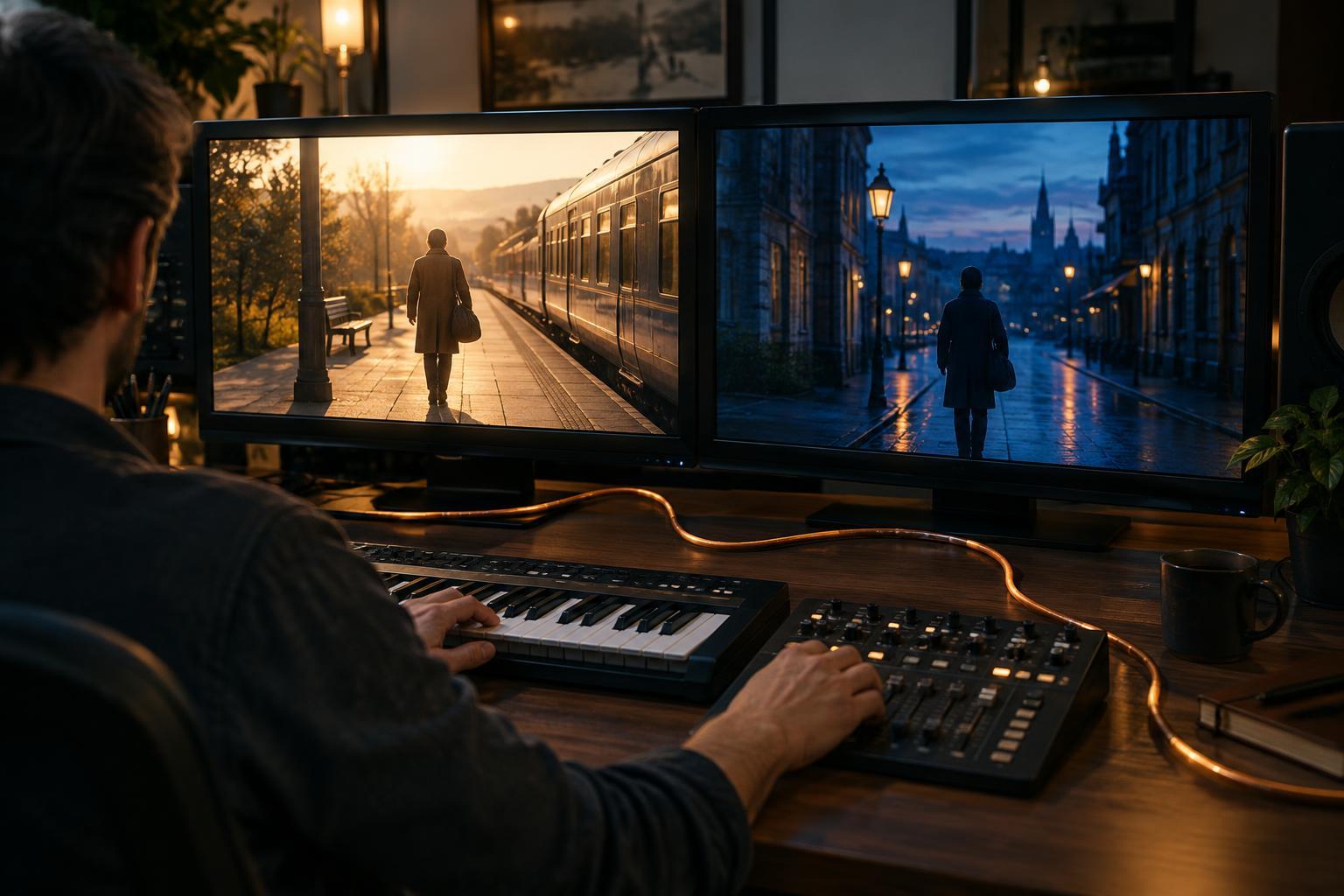
A useful first step is to watch the scene without writing notes for every visible action. Instead, identify its main turns: when a goal becomes clear, when an obstacle appears and when the outcome shifts. These can become possible points where the music changes direction. A cue does not need to land on all of them. Choosing one or two gives those moments more weight.
The composer can then decide how closely to meet each point. A sharp sound exactly as a door opens draws attention to the door. A gradual rise that peaks just after it opens may direct attention to what is revealed. Music that falls away before the door moves can make the audience notice the room’s own sound. Each choice follows the action, but each tells the viewer where to place their attention.
Let phrases bridge the smaller movements
A musical phrase gives a cue a sense of continuation. It might be a repeating rhythm, a melody moving toward a longer note or a texture that grows denser over several shots. Once established, that phrase can carry the viewer through gestures that do not need separate musical markers. The character can walk, reach for a handle and hesitate while the same idea keeps moving beneath them.
This continuity helps the cue feel like music rather than a sequence of reactions. If a scene changes pace, the phrase can adapt without starting over: a note can be held longer, a beat can be omitted or the instrumentation can thin out. These small adjustments acknowledge the screen while preserving the cue’s shape. Even a pattern that refuses to change can be expressive if the contrast between steady music and uncertain action suits the scene.
Make room for sound and silence
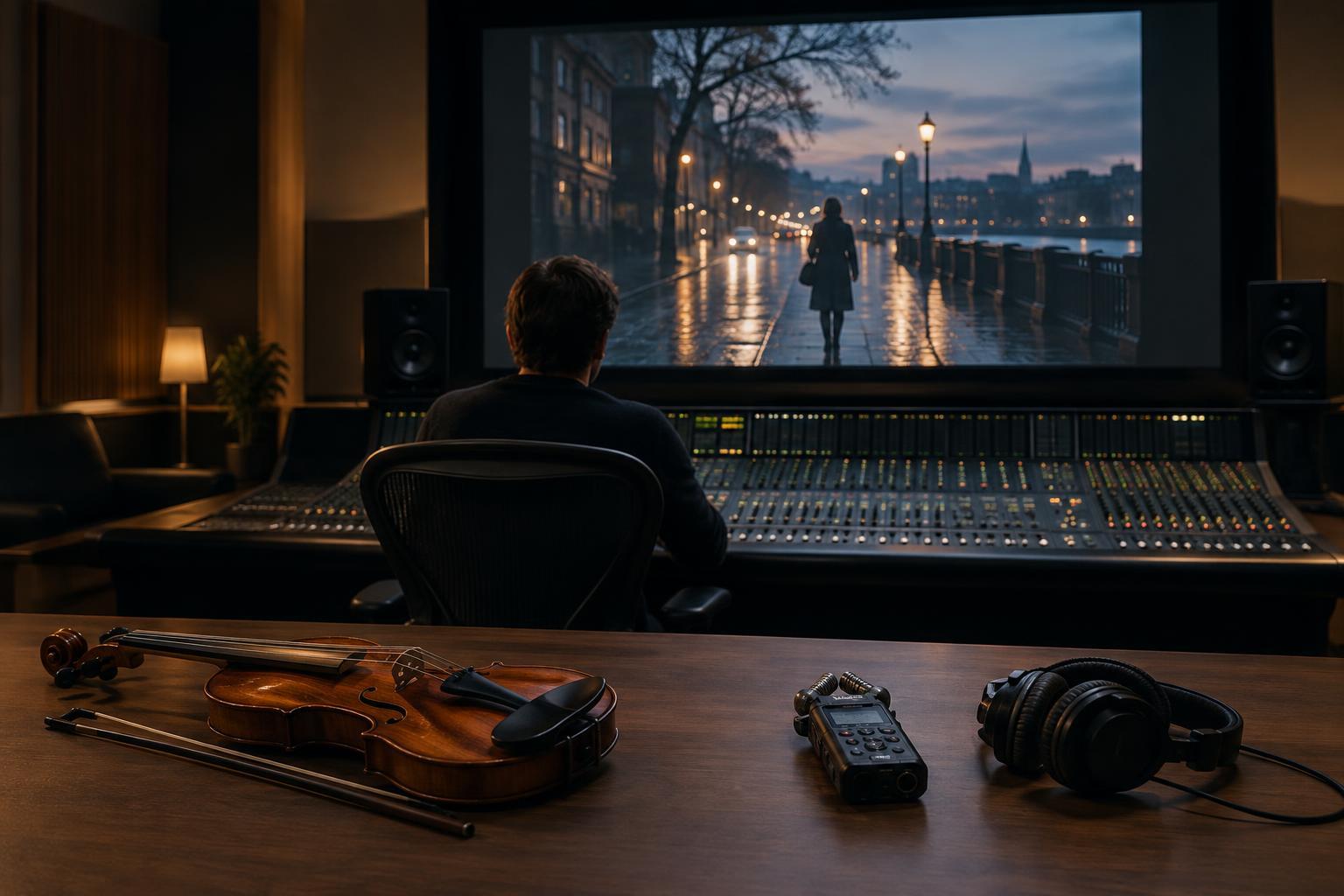
Film music shares the scene with dialogue and environmental sound. Footsteps, a rattling key or a chair scraping the floor may already give an action a precise rhythm. Doubling each sound with an instrument can make the moment feel crowded. If an object’s noise matters to the story, a composer might support the tension around it rather than cover the noise itself.
Silence is also a way to follow action. Stopping a cue as a character realizes they have been seen can make a quiet breath or distant conversation newly noticeable. Bringing music back after the character decides what to do can connect the next phrase to that decision. The absence of music is not a gap to fill automatically; it can be part of the cue’s timing.
Test the cue against the whole scene
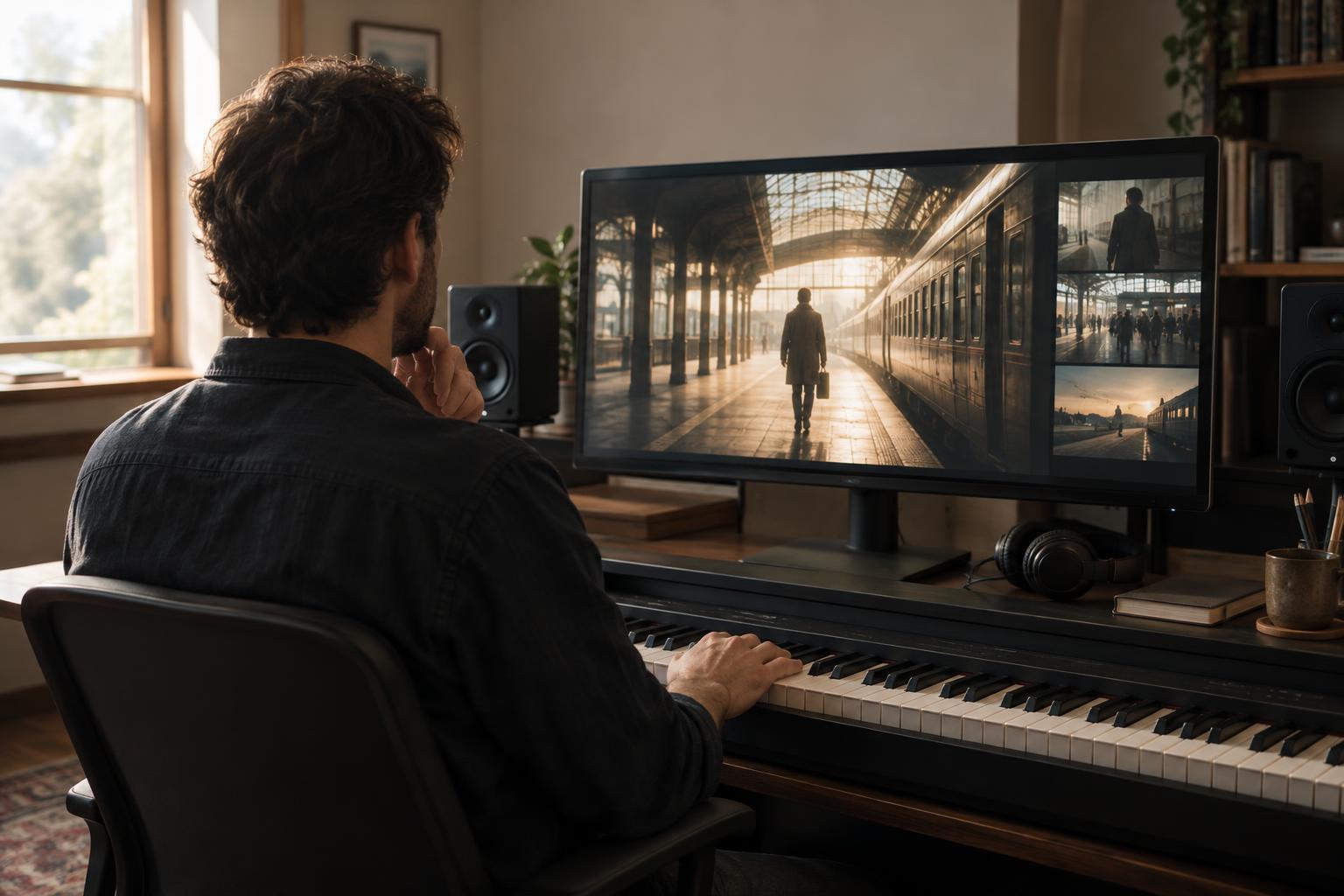
A practical way to judge a cue is to try more than one version. In one pass, place clear accents on the visible turns. In another, keep a phrase running across them and mark only the largest change. Then watch each version from the beginning of the scene through its aftermath. Does the music prepare an event too early? Does it keep insisting on motion after the characters have stopped? Does a well-placed pause allow a reaction to register?
The best fit depends on the scene’s tone. A playful sequence may welcome closely timed musical gestures, while a restrained conversation may need almost none. The aim is not to avoid synchronization as a rule. It is to use it selectively, so that when music finally meets a movement, the audience can feel why that movement matters.