Start with the idea you can hear
A song does not have to begin at the beginning. Its first piece might be a line you wrote while walking, a tune you keep humming, or a few chords that make you want to sing. Each is a useful starting point because each gives you something concrete to respond to. The best choice is usually the idea that makes you curious enough to keep going.
Before adding more, capture that idea in a form you can revisit: write the words down, record a rough voice memo, or note the chords and their rhythm. Then ask what it suggests. Does the line point toward a story? Does the melody feel like a chorus? Do the chords invite a quiet verse or a bold opening? You do not need firm answers yet. These questions help you choose a next step rather than wait for the whole song to arrive at once.
Begin with a lyric when you have something to say
A lyric-first approach works well when a phrase, scene, or point of view is the heart of the song. Pick one specific idea rather than trying to cover an entire experience. A small detail—a light left on, an unfinished message, a familiar street—can give a listener a way into a larger feeling. Write several lines freely, then underline the words that seem most worth repeating. One of them may become the chorus’s central line.
Next, read the lines aloud. Notice where you naturally pause and which syllables carry emphasis. Those spoken rhythms can suggest a melody. You can repeat a line over two or three notes, then let the pitch rise or fall where the thought changes. If a word feels awkward to sing, you are allowed to change it. A lyric is not finished simply because it looked good on the page; it also has to make room for breath, rhythm, and repetition.
Begin with a melody when a tune stays with you
Sometimes the most vivid part of a new song has no words at all. Record the melody before you forget it, even if you have to hum it over background noise. Listen for its shape: where does it climb, settle, repeat, or leave a question hanging? Try singing it again at a comfortable pitch. An idea that is easy to remember and return to can be a strong foundation, even if it is only a few seconds long.
To find words, sing temporary syllables and notice which sounds fit the notes. Then try short phrases with similar stress patterns. You might discover that a long note wants a simple, open word, while a quick run of notes leaves little room for a complicated sentence. If you play an instrument, test a few chords underneath the tune and keep the ones that support it. If not, you can work with the melody alone until its rhythm and emotional direction feel clear.
Begin with chords when you want a space to explore
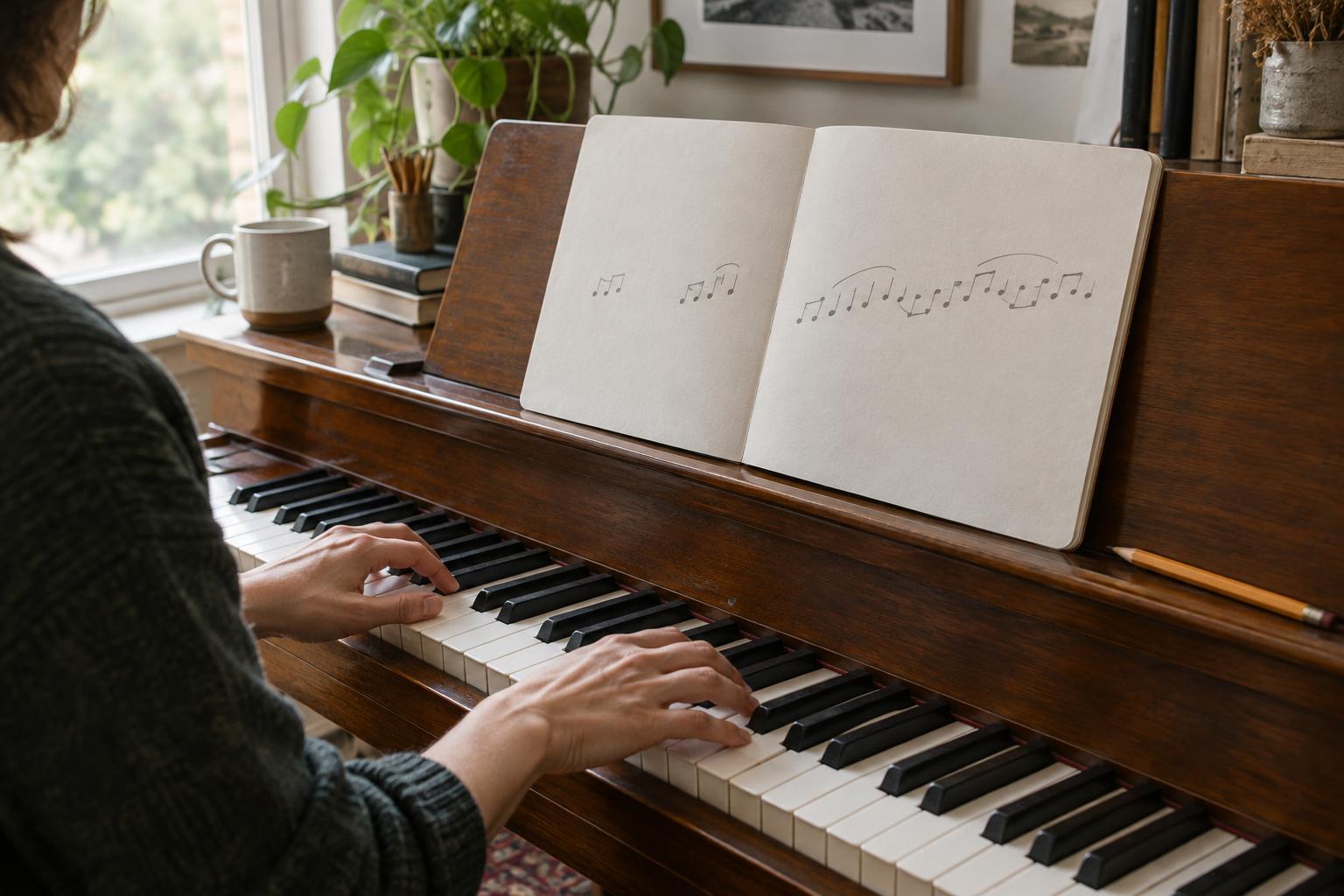
Chords can give you a steady frame for experimenting. Choose a short progression you can play comfortably and repeat it without worrying whether it is unusual. Change how you play it before searching for more chords: slower or faster, with space between changes, or with a different strumming or keyboard pattern. Those choices can alter the character of the song and make a vocal idea easier to find.
Sing or hum over the loop without judging the first few attempts. Listen for one phrase that feels natural, then repeat it and vary its ending. You can build a verse from a restrained version and save a wider or higher version for the chorus. If every section starts to sound alike, try changing the rhythm, length of the phrases, or point at which the chords turn around. More chords are an option, but they are not the only way to create contrast.
Turn the first piece into a draft
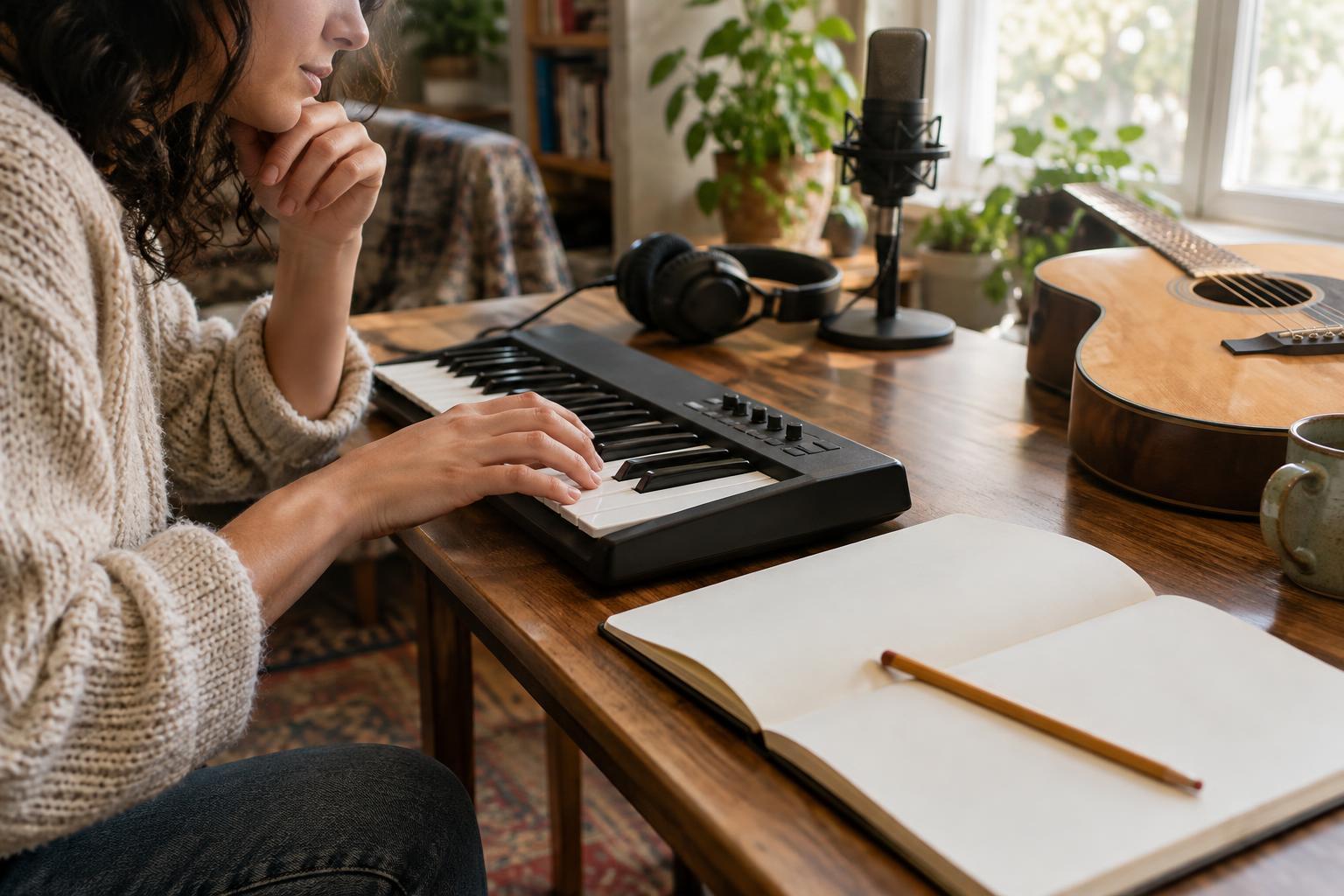
Whichever element comes first, the next task is to connect it to the others. Give yourself a small, finishable plan: a verse that sets a scene, a chorus that returns to the main thought, and another verse that adds something new. Record a rough pass from start to finish, including any unfinished words. A complete sketch makes it easier to hear what the song needs than a polished fragment does.
On the next listen, choose one problem to address. The chorus might need a clearer lyric, the verse might need more space, or a chord change might be pulling attention from the melody. Revise that part and record another pass. Your starting point is not a rule you must obey throughout the process; a lyric can lead to a new tune, and a melody can reveal better words. The aim is to keep the strongest idea in focus while giving the rest of the song room to grow.