Start with a small idea you can recognize
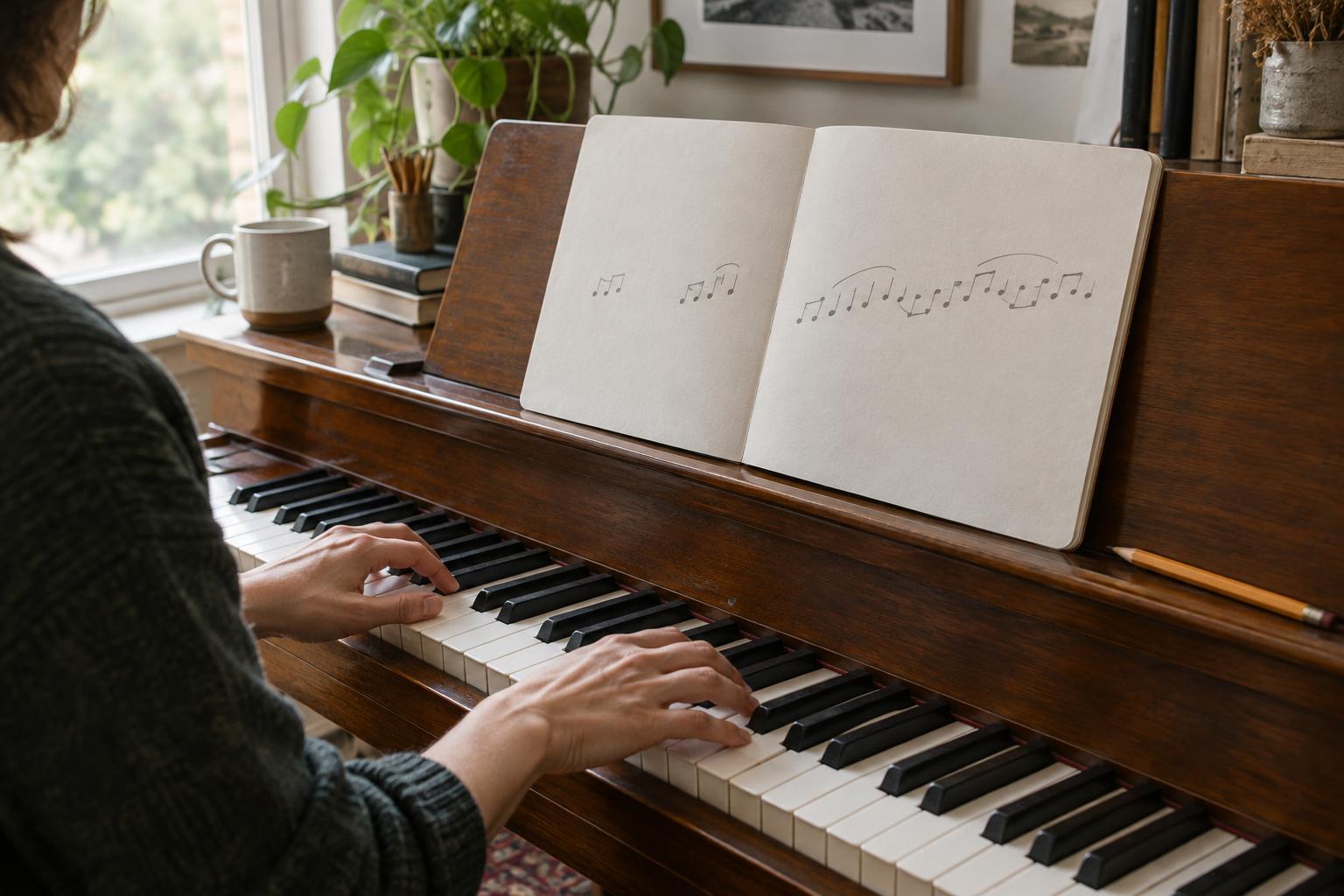
A motif is a short musical idea that gives a listener something to recognize. It might be a few pitches, a distinctive rhythm or a particular combination of both. To try one, sing four notes: step up, repeat the higher note, then step back down. Give the notes a rhythm, such as short, short, long, long. The shape is simple enough to remember, which makes it useful material for a longer melody.
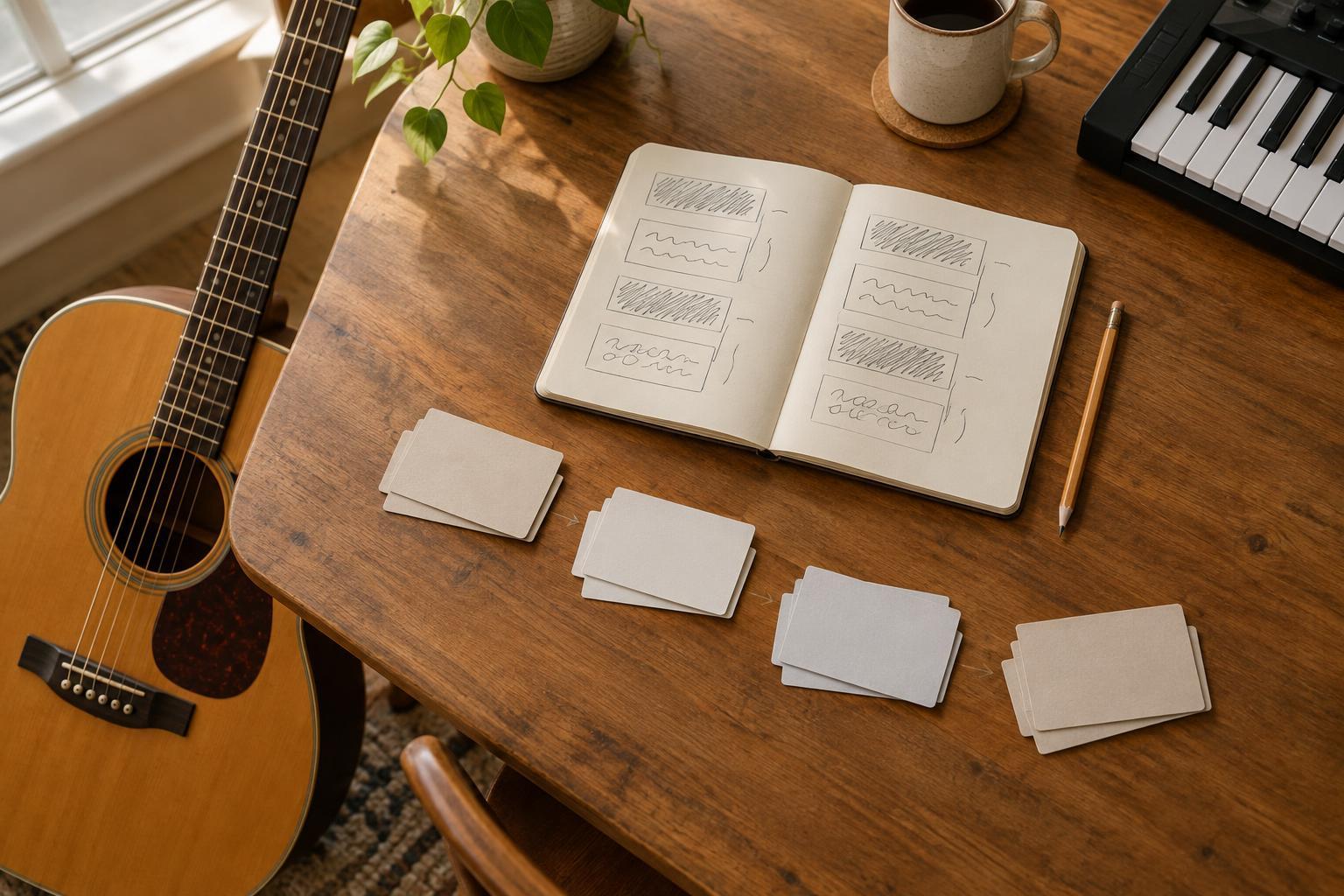
Record or notate the idea before you develop it. Then ask what makes it identifiable. Is it the repeated high note? The two quick notes at the start? The rise and return? You do not need to preserve every detail each time it appears. Knowing which feature catches your ear helps you change the motif without losing its identity.
Repeat it, then change one thing
Play the motif once and repeat it exactly. This gives the listener a chance to get acquainted with it. On the next pass, change just one element. You could start on a different pitch while keeping the same pattern of steps, hold the final note longer or replace the last note with one that leads onward. Listen after each change: does the new version still sound related to the first?
Working with one change at a time makes your choices easier to hear. Moving the whole motif higher may add a sense of lift. Shortening its last note may make the phrase feel unfinished. Adding a pause after it can make the next entrance more noticeable. None of these effects is guaranteed; the surrounding notes and rhythm matter. Treat each variation as a question you can answer by singing or playing it back.
Give the idea a question and an answer
A complete melody often feels more coherent when its phrases have different jobs. Make your first phrase an opening statement: play the motif, repeat or extend part of it, and stop on a note that makes you want to hear more. A rising final note or a shorter final duration might create that expectation. Leave a breath-sized gap before the next phrase so the opening has a clear boundary.
For the answering phrase, begin with a recognizable piece of the motif but choose a different destination. If the first phrase climbed, the second could descend. If the first stopped abruptly, the second could hold its last note. Try singing both phrases in one breath each. They need not be identical lengths, but their pacing should feel deliberate. You are shaping a conversation between familiar material and a new response.
Use contrast without abandoning the motif
If every phrase repeats the same contour and rhythm, the melody may run out of momentum. Give a later phrase a contrasting range or pace. For example, follow two phrases built from small steps with a wider leap, then return to the motif’s repeated-note rhythm. That familiar rhythm can connect the new passage to the opening, even when the pitches differ.
The accompaniment can help you hear possibilities, too. Try the same motif over a sustained note, then over a simple change of chords. A note that feels settled in one setting may feel as though it wants to move in another. You can use that difference to guide the melody, but you do not need chords to write it. Humming the line on its own is a useful check: can you follow where it is going without the accompaniment explaining it?
Find an ending, then edit for clarity
To finish, bring back an aspect of the original motif and give it a clearer resting point. You might keep its opening rhythm but let the final note last longer, or return to its starting pitch after a wider journey. Play the entire melody and notice whether the ending feels earned. If it arrives too suddenly, add a short lead-in; if it feels delayed, remove a repetition.
Finally, sing or play the melody without stopping to repair it. Mark the places where you lose your breath, forget what comes next or feel tempted to skip ahead. Those moments may point to a phrase that needs a simpler rhythm or a stronger connection to the motif. A complete melody does not require many new ideas. Often it is one small idea made clear through repetition, thoughtful change and a destination the listener can hear.