Sound starts with movement
Every musical instrument sets something in motion. A guitar string moves after it is plucked, a drumhead moves after it is struck, and the air inside a flute moves when a player blows across its opening. These vibrations disturb the surrounding air. As the disturbances travel outward, they eventually reach a listener’s ears as sound.
The motion is usually too quick to follow by eye, but its pattern matters. A vibration that repeats more rapidly generally produces a higher pitch; a slower repetition generally produces a lower one. Stronger vibrations often sound louder, though perceived loudness also depends on the instrument, the room and the listener’s distance. This basic relationship between movement and sound connects instruments that otherwise look and feel very different.
What vibrates in strings, winds and percussion
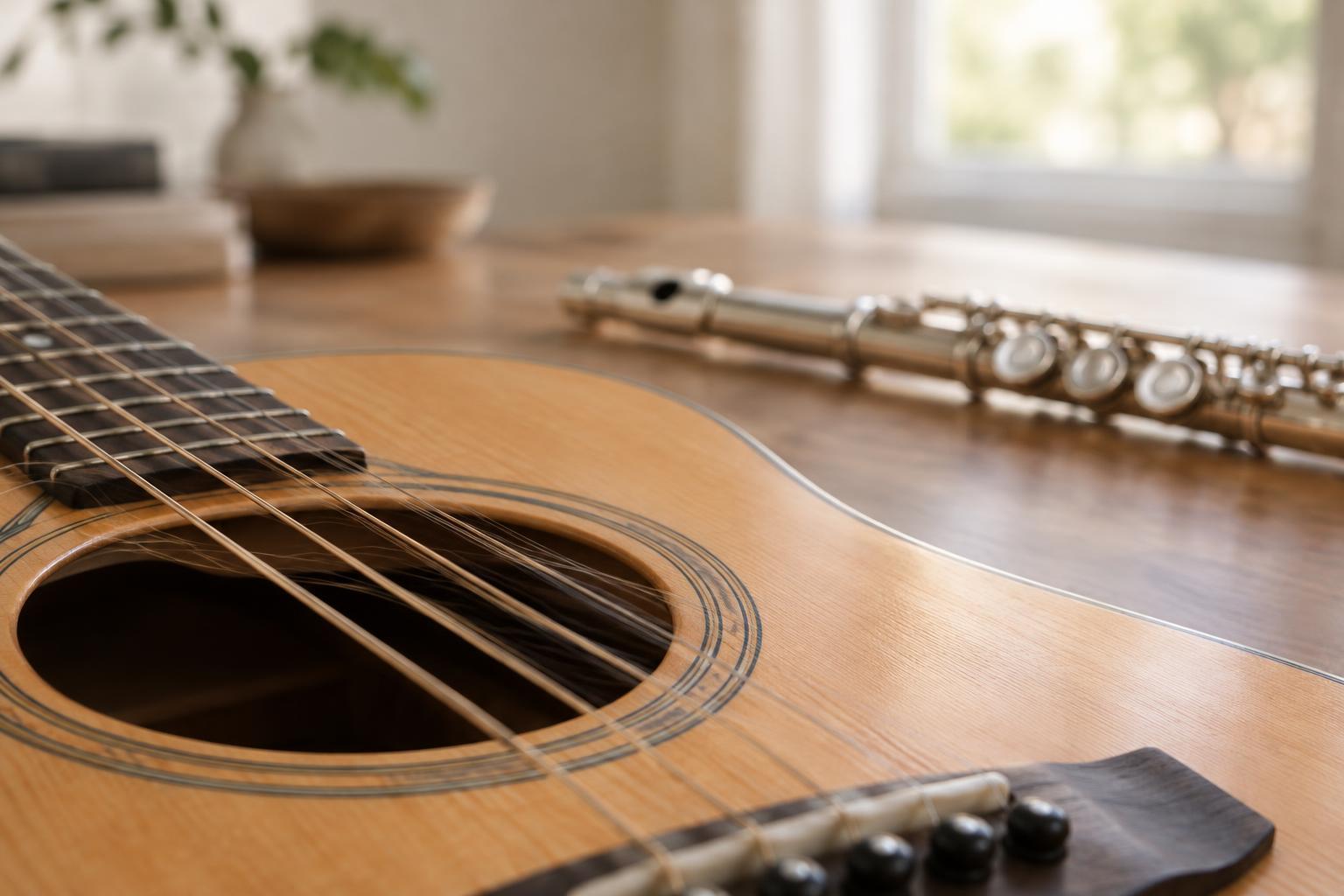
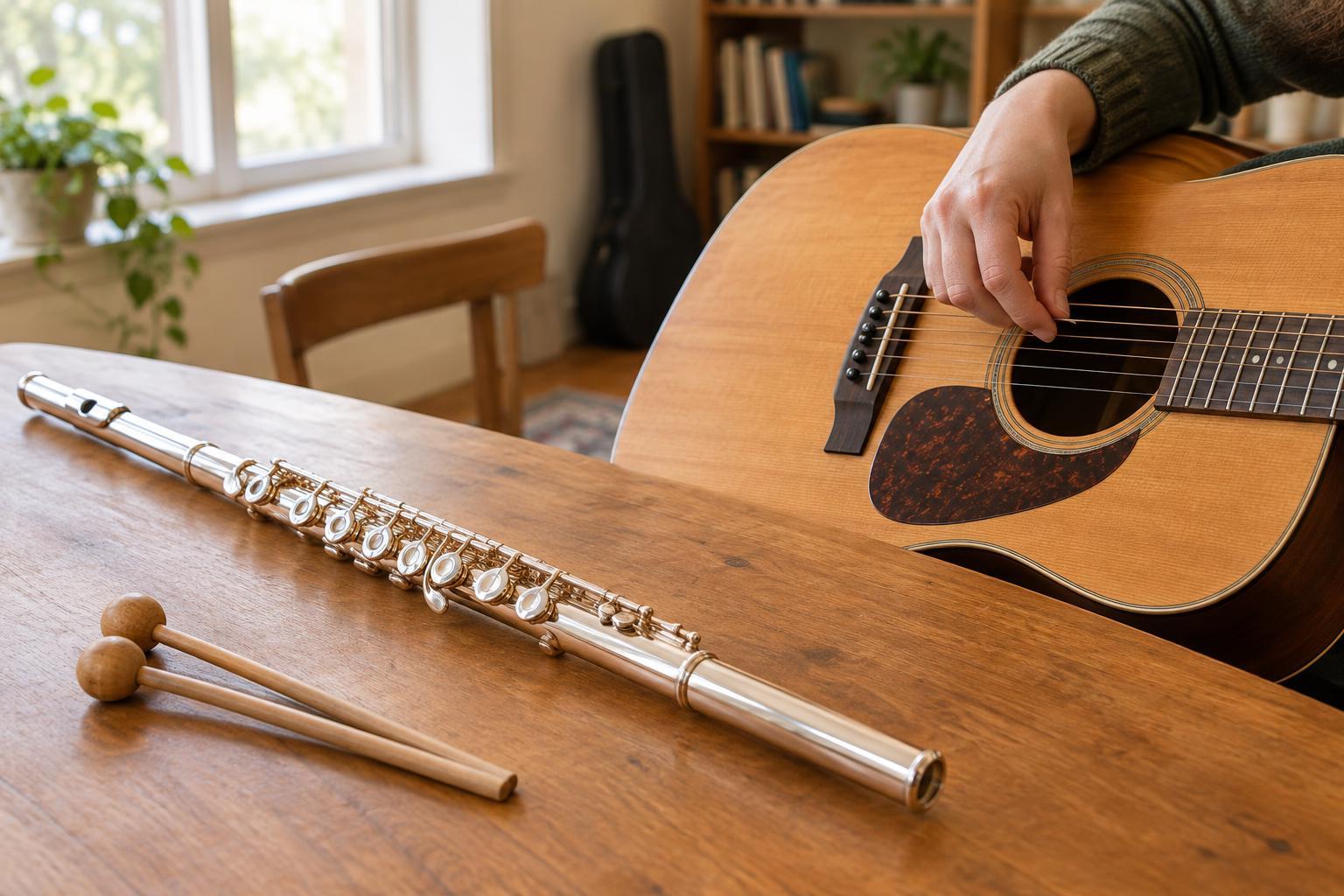
On a string instrument, the string is the first obvious vibrating part. Its length, tension and mass all affect the pitches it can produce. Pressing a guitar string against a fret shortens the portion free to vibrate, raising its pitch. Bowing a violin string, rather than plucking it, keeps supplying energy to the string and makes a sustained note possible. The string also passes some of its movement to the instrument’s body and the surrounding air.
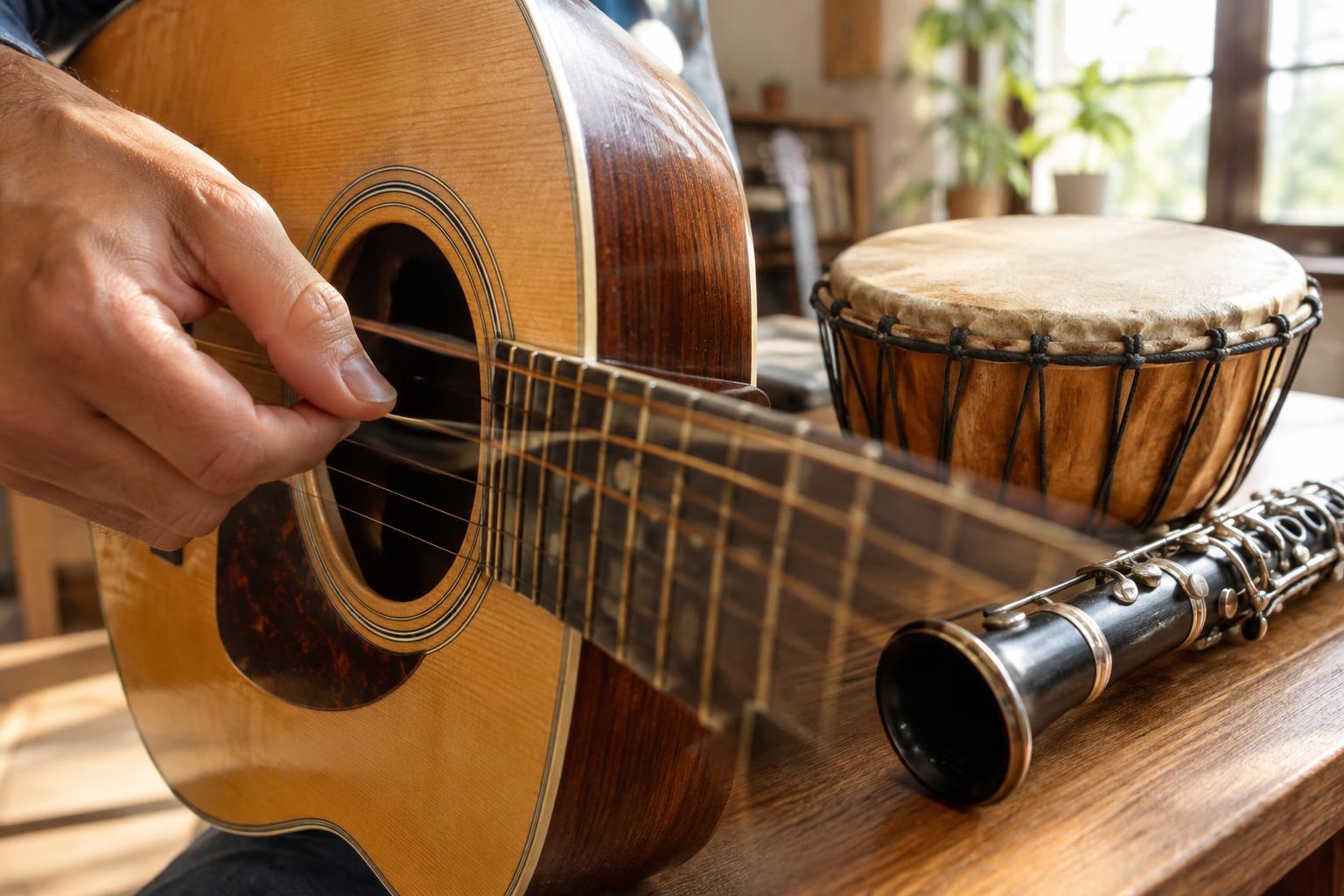
Wind instruments set air in motion, but they do not all start that motion in the same way. A flute player directs a stream of air across an edge. In a clarinet, a reed moves against the mouthpiece. A trumpet player’s lips vibrate at the mouthpiece. In each case, the moving air inside the instrument plays a central role in the note that develops. Opening a tone hole or changing the effective length of a tube changes which pitches are easier to produce.
Percussion offers still more possibilities. A drumhead stretches and flexes, while a xylophone bar vibrates after a mallet strikes it. Cymbals vibrate in complex patterns across their metal surfaces. Some percussion instruments offer a clear, steady pitch; others produce a wider spread of frequencies that listeners hear more as a shimmer, thud or rattle.
Resonance gives vibration room to speak
A vibrating part does not work alone. It can transfer energy to other parts of an instrument that respond especially readily to certain patterns of motion. This response is resonance. In an acoustic guitar, for example, the strings move the bridge and soundboard. The larger soundboard can move more air than the strings could on their own, helping make the sound audible across a room. The body’s construction also influences which parts of the sound seem prominent.
In wind instruments, the air inside the tube has resonant patterns of its own. A player’s breath, reed or lips interacts with those patterns rather than simply making an independent buzz. A drum’s shell and the air around and inside it can affect how its vibrating head is heard. Resonance does not create energy from nothing: the player supplies the energy, and the instrument shapes how that energy becomes sound.
Why the same note can sound different
A piano and a clarinet can play a note at the same pitch and still be easy to tell apart. One reason is that a musical note often contains several frequencies at once. Alongside the main pitch, other vibrations contribute brightness, warmth or a nasal quality. An instrument’s materials, shape and resonances influence the balance among them. So does the way the player starts the note.
The sound also changes over time. A piano note begins with a sharp strike and then fades. A bowed string can swell after it begins; a wind player can hold and shape a note with breath. This changing outline, sometimes called an envelope, is part of an instrument’s recognizable voice. Even small sounds at the beginning of a note, such as a pick touching a string or a mallet meeting a bar, add to its character.
Listen for the path from gesture to sound
To hear vibration and resonance at work, compare a few familiar sounds at a comfortable volume. Pluck an open guitar string, if one is available, and notice the quick start followed by a gradual fade. Then try a note on a keyboard or listen to a recording of a wind instrument. Ask what seems to begin the sound, whether it continues or decays, and which qualities remain after the first instant.
You can also listen for how surroundings change what you hear. A room may add echoes or emphasize certain frequencies, while a soft surface may absorb some reflections. Those effects are separate from the instrument itself, yet they become part of the listening experience. Following a sound from the player’s gesture through the vibrating instrument and into the room reveals how much of music’s character comes from the way it is made.