The difference between showing and suggesting
A door opens slowly. The camera reveals an empty hallway. If the music immediately announces danger, it may tell us something the image has not yet established. That can be useful when a film wants a clear jolt of suspense, but it is not the only choice. A quiet, unresolved sound might make us wonder whether the hallway matters at all. No music might let the small noises of the door and room carry the tension.
Film music works alongside images, dialogue and sound effects, not as a running description of them. When a character runs, a fast rhythm can underline the motion; when someone cries, a mournful melody can confirm the feeling. Such choices can be effective, especially when clarity is the goal. But a score often becomes more interesting when it contributes information that is harder to see: hesitation beneath a confident gesture, distance inside a reunion, or calm that feels too carefully maintained.
Choose whose experience the music follows
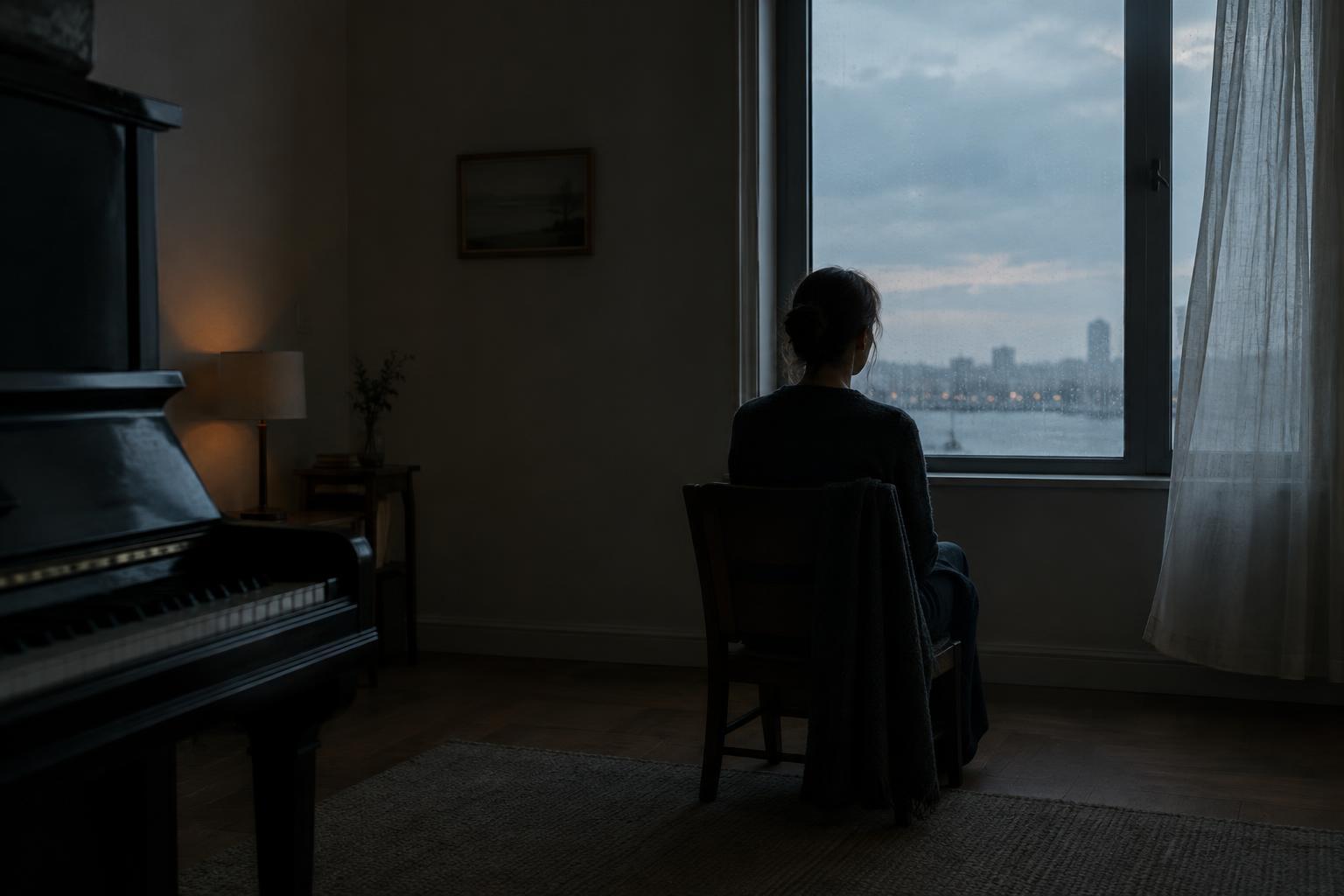
The camera shows what is happening, but the music can suggest how one person experiences it. Imagine a family meal filmed in warm light. The conversation is friendly, yet one guest knows they are about to leave. A sparse musical phrase could follow that guest’s private attention rather than the room’s cheerful appearance. The score does not need to insist that everyone is sad; it can give the audience access to a single, unspoken perspective.
That perspective can shift within a scene. Music might begin as the sound of an energetic gathering, then thin out when a character notices an empty chair. The change matters more than either texture on its own. A listener can follow the shift without being told exactly what to feel. When considering a cue, ask a simple question: does this music belong to the action, to a character’s thoughts, or to a wider view of the story? Each answer can lead to a different musical choice.
Use timing to make space for discovery
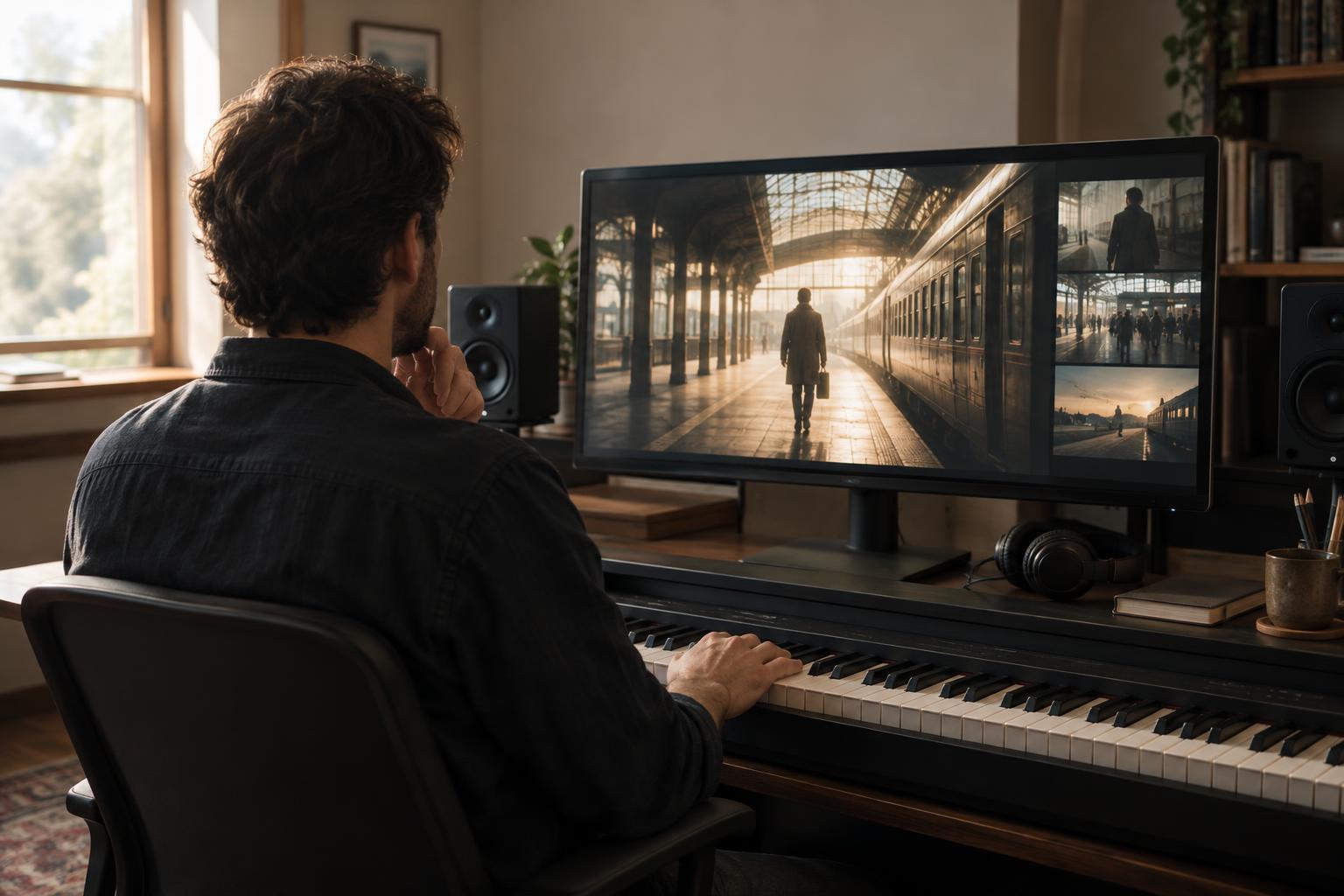
Music can affect a scene before its first note arrives. A score that enters at the instant of a revelation may mark it as important. A score that waits until the character has absorbed the news can draw attention to the pause instead. Likewise, ending a cue before a conversation is over can expose an awkward silence that a sustained note would have softened.
The practical decision is not merely what to play, but when to begin, change and stop. Try watching a short scene and noting the moment when your understanding changes. Would music help at that point, or would it reveal the scene’s direction too early? Leaving a stretch unscored can give dialogue, footsteps or room tone a chance to establish their own rhythm. Silence in a film is rarely an absence of sound; it is often a choice about which sounds deserve attention.
Let contrast open more than one interpretation
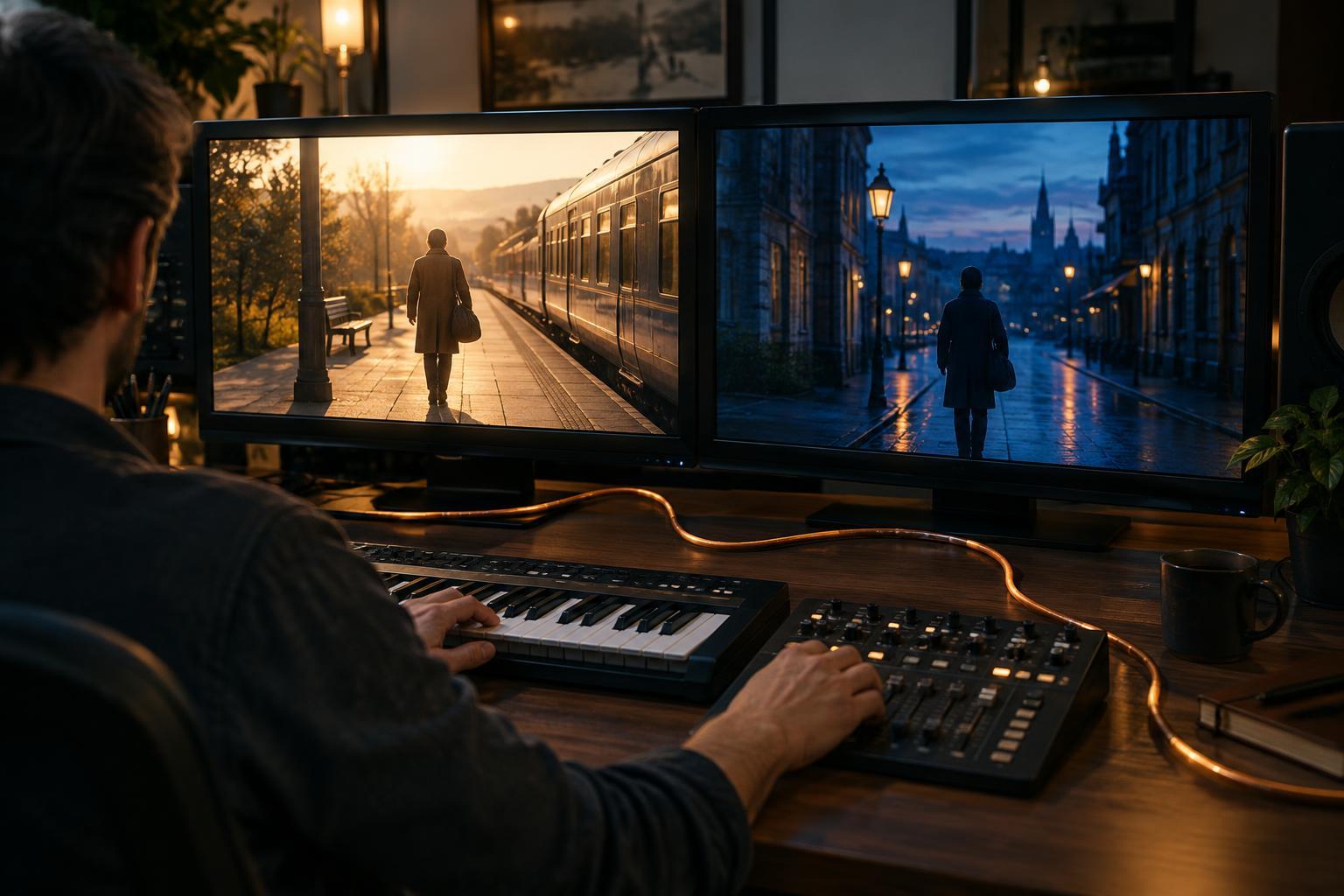
A mismatch between image and music can be expressive when it has a clear purpose. Gentle music over a hurried departure might suggest the character feels relief rather than panic. A steady pulse beneath an ordinary walk might make us notice determination that the character does not display outwardly. In both cases, the music offers another angle on the event instead of denying what we can see.
Contrast needs care. If every ordinary action receives an ominous cue, the audience may stop trusting the scene’s quieter details. If music is cheerful over distress, it may feel dismissive unless the story gives that choice a reason. The aim is not to surprise the viewer at every turn. It is to create a productive gap between what the image shows and what the sound suggests, allowing the two to meet in the viewer’s imagination.
Listen for what the music leaves unsaid
A cue can support a scene with very little material: a recurring interval, a held tone, a brief change in harmony, or a rhythm that appears only at certain moments. Repetition can connect scenes without making them identical. The same musical idea may feel reassuring in one setting and uncertain in another because the characters, images and surrounding sounds have changed.
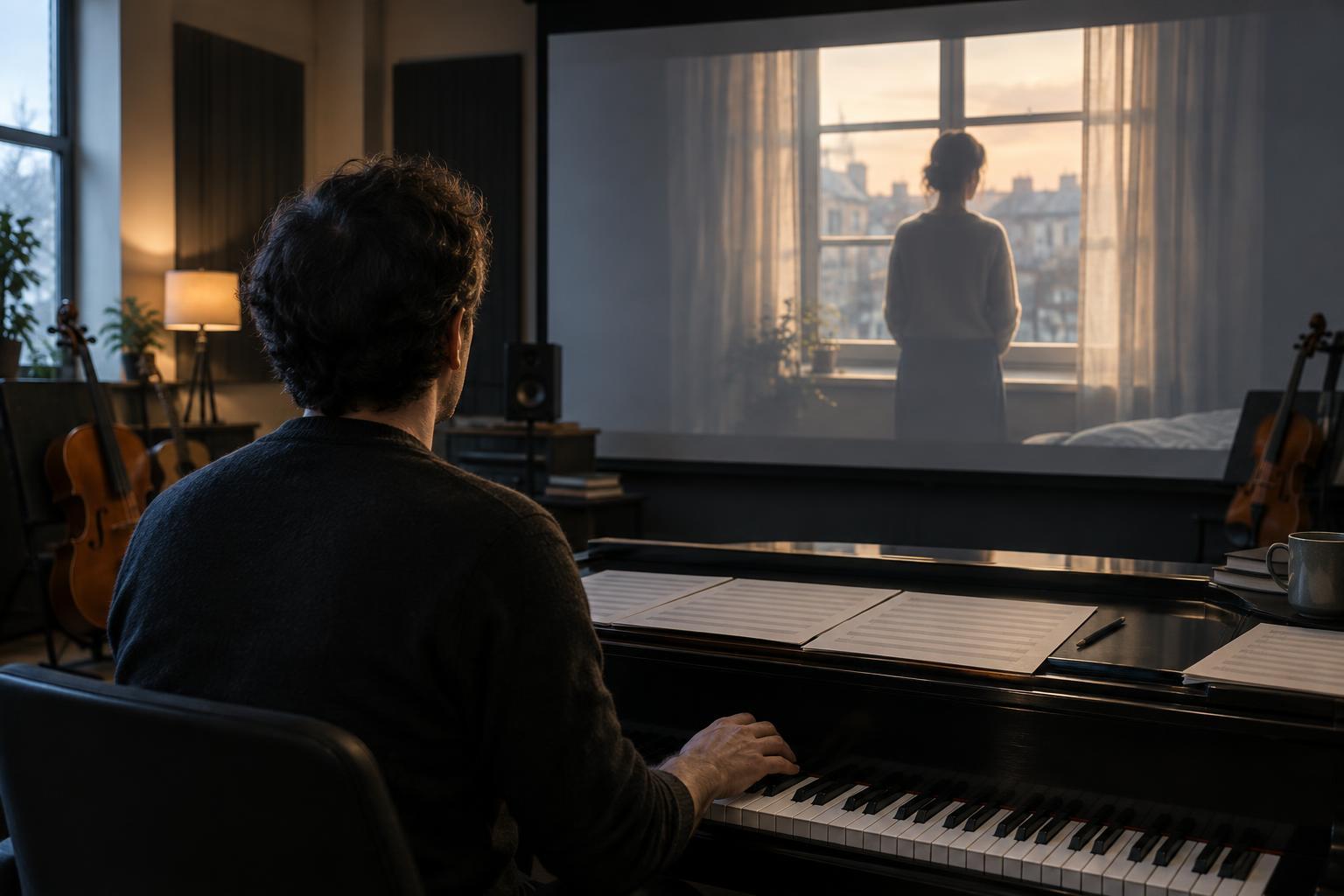
To hear this relationship more clearly, watch a scene twice. First, notice when the music enters and what seems to change. Then imagine removing it. Would you lose a sense of viewpoint, a link to an earlier moment, or the pace of an emotional transition? If the scene communicates exactly the same thing without it, the music may be doing little beyond restating the image. The most supportive score does not always call attention to itself. It gives the scene something it could not quite say alone.