The shape between the notes
A melody is more than a sequence of pitches and rhythms. The way each note begins, continues, and ends gives the phrase its shape. A player can leave a little air between notes, connect them smoothly, or make one arrival stand out. These choices are called articulation. They can make the same written tune sound buoyant, calm, hesitant, or determined without changing its basic notes.
Articulation is closely related to timing and volume, but it is not identical to either. A short note need not be loud, and an accented note need not be long. The most useful question is not simply “How long is this note?” but “How does it relate to the notes around it?” Listen for the space before the next sound, the strength of the attack, and whether the phrase seems to move in one breath or in distinct steps.
Staccato and legato: space or connection
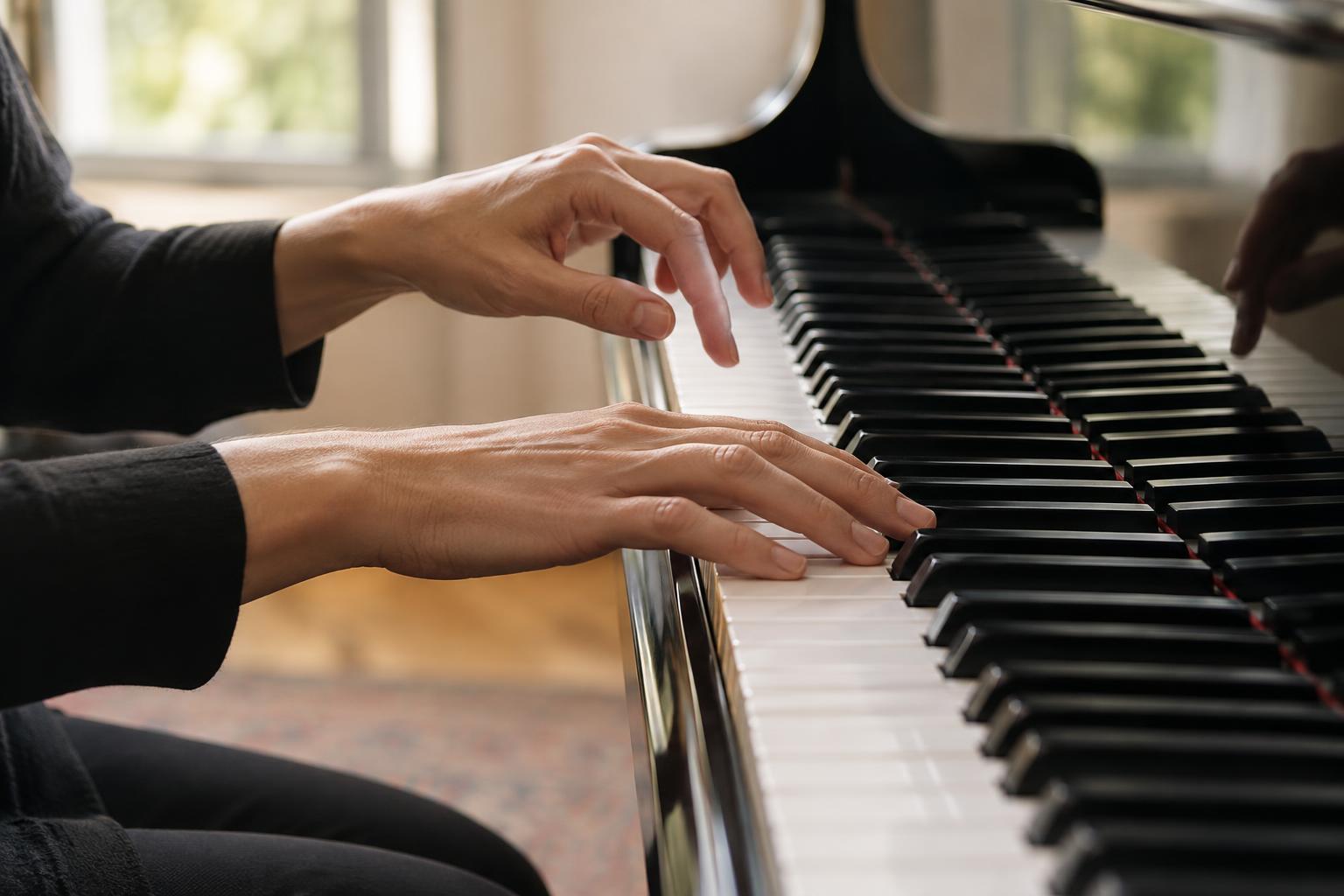
Staccato means playing notes in a detached way, typically shown by a dot near a note in written music. It does not mean rushing. At a steady tempo, a performer can shorten each note and leave silence before the next one. A string player might release the bow stroke promptly; a pianist might lift a finger earlier; a wind player might use the tongue to separate notes. The result can sound light and nimble, though firmer attacks can give staccato a sharper character.
Legato asks for a smooth connection. Notes flow into one another with little audible gap, often under a curved slur in notation. On a violin, a player may connect several notes within one bow stroke. A singer may carry a phrase on a continuous breath, while a pianist coordinates finger changes and releases to suggest an unbroken line. The instruments use different techniques, yet the listener hears a similar sense of continuity. Neither style is automatically more expressive: a detached phrase can be tender, and a connected one can be urgent.
Accents, tenuto, and other useful shades
An accent gives a note extra emphasis, often through a more pronounced beginning. It can draw attention to an unexpected beat or make a rhythmic pattern feel grounded. Marcato generally suggests an even more strongly marked note or passage, although the exact force depends on the musical setting. In both cases, emphasis works best as a relationship: if every note receives the same weight, the intended points of arrival may be harder to hear.
Tenuto, commonly shown by a short line over or under a note, invites a player to give that note its full value or a sense of gentle weight. Its meaning can shift with context: in one phrase it may encourage sustained sound, while in another it may distinguish a carefully placed note from its shorter neighbors. A slur also needs context. For a wind player it can indicate notes connected without a new tongue attack; for a string player it commonly groups notes within one bow stroke. Written marks guide a performance, but the instrument and surrounding phrase help determine the sound.
Why articulation changes the story
Imagine a simple four-note rising figure. Played legato, it may feel like one gesture reaching upward. Played staccato, it becomes four small steps. Accent only the final note, and the figure gains a destination; accent the first, and it can sound like a call followed by an answer. These impressions are possibilities, not fixed translations. Harmony, tempo, register, and the listener’s expectations also affect what the phrase suggests.
Articulation can help distinguish characters within a larger piece. A composer might give a melody a broad, connected line while an accompaniment moves in short pulses. In a film score, that contrast could keep a scene moving without making the main theme feel hurried. In a small ensemble, players can use matching releases to make a phrase sound unified, or deliberately contrast a clipped response with a sustained question. The expressive effect often comes from the relationship between parts rather than from one marking alone.
A simple way to hear and practice it
Choose a short phrase you can sing, play, or tap. Keep its pitches and overall tempo steady, then try it three ways: smoothly connected, clearly detached, and connected with an accent at the end. If you are playing an instrument, notice the physical change required to stop a sound cleanly or carry it forward. If you are only listening, try singing the phrase after each version. Which notes feel like beginnings, and which feel like arrivals?
Next, listen to a recording you know well and focus on one instrumental line. Ignore the pitches for a moment. Notice whether notes overlap, end cleanly, or fade before the next begins. Then listen again for changes: a repeated phrase may gain energy simply because its attacks become firmer or its gaps become shorter. Articulation is easy to overlook when it feels natural. Paying attention to it reveals how much storytelling can happen at the edges of a note.