One string, several kinds of sound
Stretch a string between two points and set it moving: it vibrates, pushing on nearby parts of the instrument and ultimately moving the surrounding air. Its length, tension, and mass help determine the pitches it can produce. But pitch is only part of what we hear. The way a player starts and continues the vibration gives a note its distinctive shape.
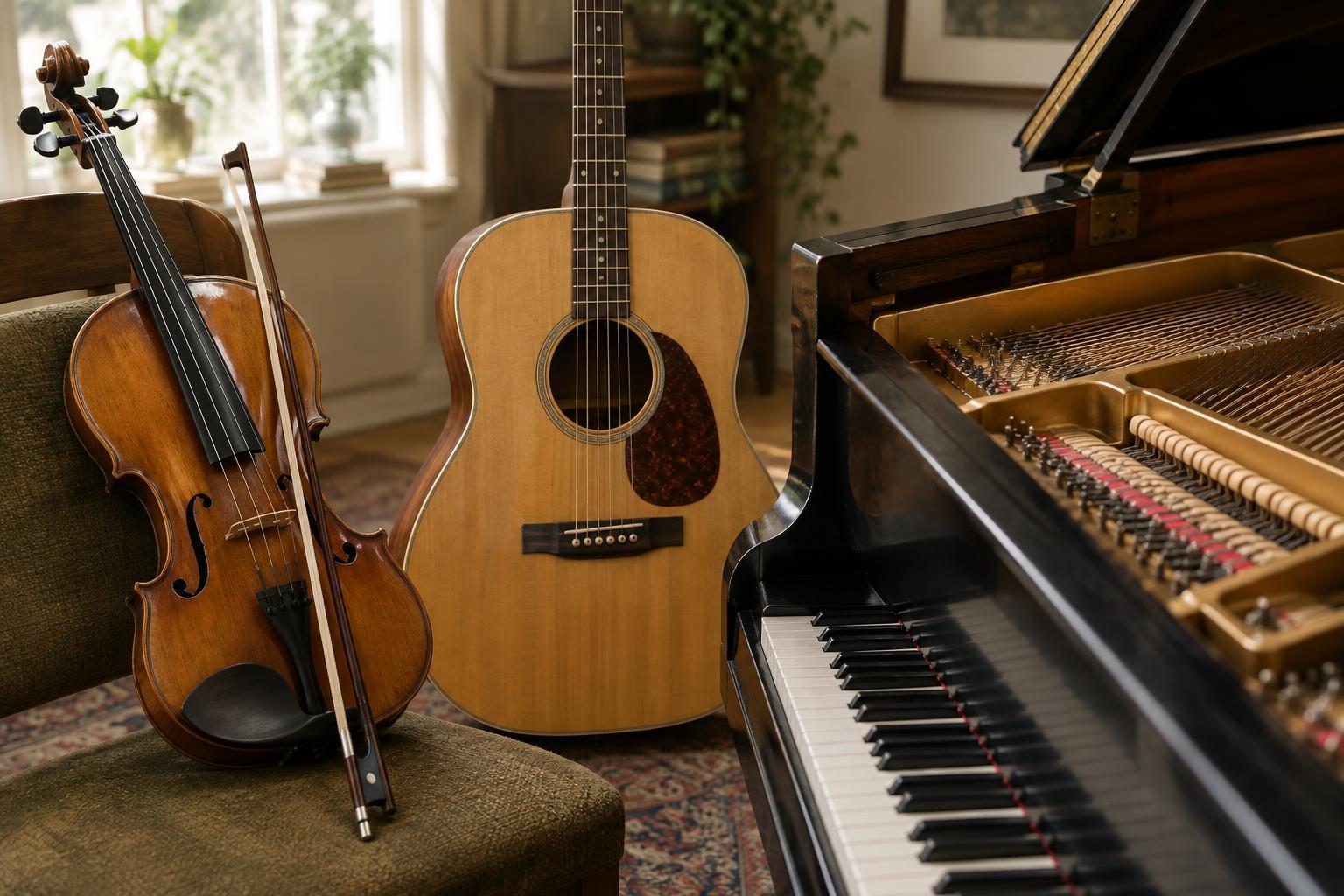
That shape is easy to notice when comparing a violin, a guitar, and a piano. A violinist can draw out a tone, a guitarist can release a crisp note that fades, and a pianist can make a firm entrance followed by a gradual decay. Their bodies, strings, and playing techniques differ, so no single detail explains everything. Still, bowing, plucking, and striking offer a useful way to listen for how an instrument speaks.
Bowing: keeping the vibration going
A bow does more than give a string one push. Its hair grips and releases the string repeatedly as it travels across it. Rosin helps create the friction that makes this possible. Because the player keeps supplying energy, a bowed note can continue for as long as the bow stroke allows. On a violin or cello, that sustained motion lets a melody swell, soften, or change color within a single pitch.
Bow speed, pressure, and contact point all affect the result. Playing nearer the bridge can bring out a more penetrating sound; playing farther from it often produces a gentler one. The player must balance these choices, since too much or too little grip can make a note sound rough or faint. Bowed strings are especially expressive when the listener can hear the tone evolve, rather than merely register when it begins.
Plucking: a clear beginning and a changing tail
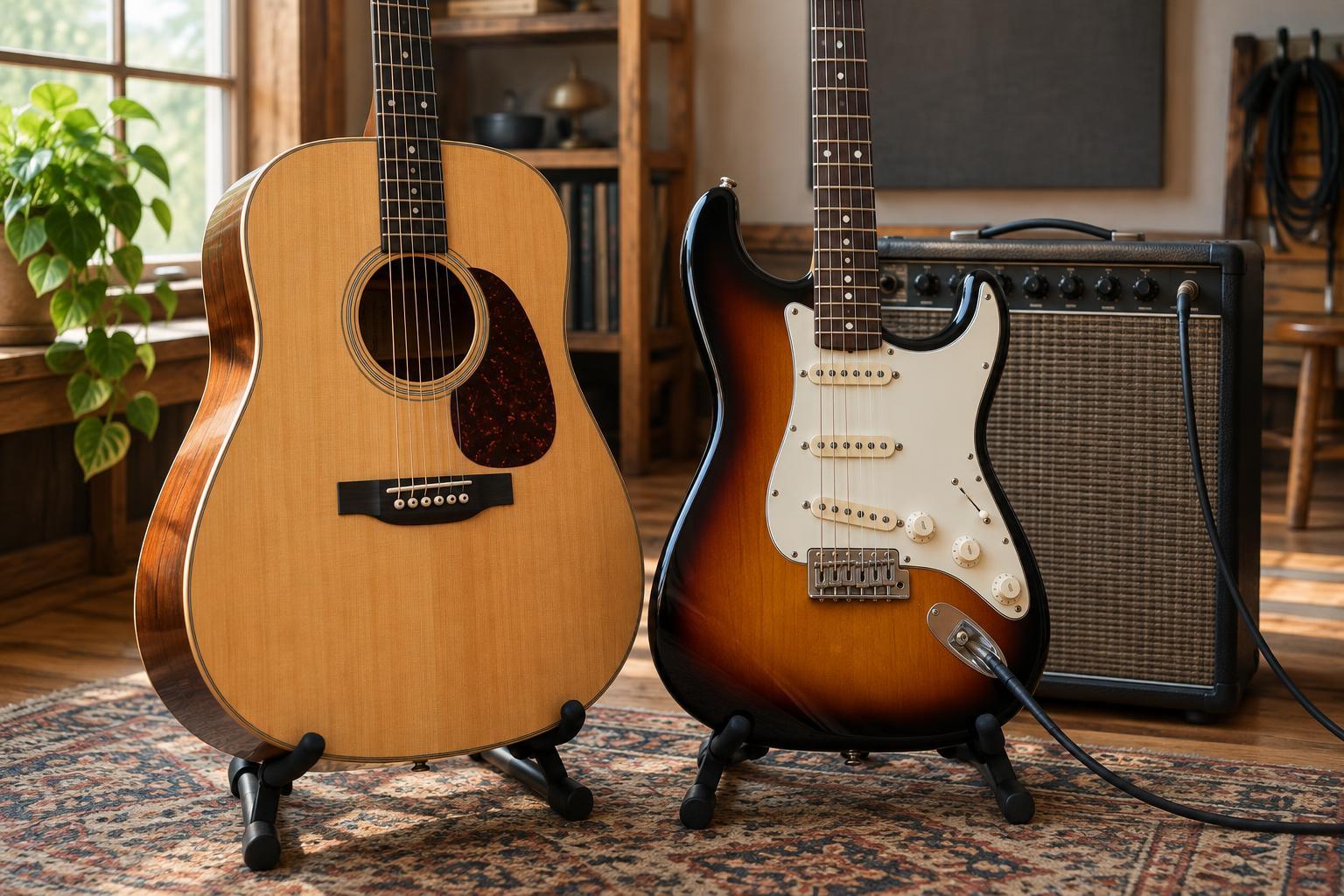
A pluck pulls a string away from its resting position and lets it go. That release gives the note a recognizable beginning, or attack. Afterward, the string generally loses energy and the sound fades unless it is plucked again. A guitar, harp, or pizzicato violin can therefore make individual notes stand out even in a quick sequence.
Where and how the string is plucked changes its color. A pluck near the middle tends to sound rounder than one close to the bridge, which can emphasize a brighter edge. Fingertip, nail, and pick may each produce a different attack. The instrument’s body matters too: a guitar’s top and a harp’s soundboard help carry the string’s vibration into the air. Listen past the initial snap and you may hear the tone grow softer and less bright as it decays.
Striking: a brief impact with lasting resonance
Struck-string instruments begin with an impact. In a piano, pressing a key sends a felt-covered hammer toward a string, or a group of strings tuned to the same note. The hammer rebounds rather than remaining in contact. The strings then continue vibrating, while the piano’s structure helps make their sound audible. On a hammered dulcimer, a player strikes exposed strings directly with handheld hammers.
A strike can give a note a distinct edge, but its character depends on the hammer, the point of contact, and the force of the blow. Piano pedals also shape what happens after the impact. With the sustain pedal down, raised dampers allow notes to keep sounding after the keys are released, and other strings may resonate sympathetically. The result can feel spacious, even though each note began with a brief action.
A simple way to hear the difference
When comparing string sounds, listen in three stages: the attack, the body of the note, and its ending. Does it arrive with a scrape, a snap, or a knock? Does its volume stay fairly steady, or does it begin fading at once? Does the sound stop abruptly, or linger in the instrument and room? These questions are often more revealing than trying to name an instrument immediately.
Playing methods are not strict emotional labels. A plucked note can sound tender or forceful; a bowed note can be smooth or abrasive; a struck note can be delicate or commanding. Composers and performers use those possibilities to shape a phrase. Even without knowing the instrument, following how each sound begins, lives, and disappears can make a piece’s texture—and its storytelling—easier to hear.