The recording is only part of what you hear
Play a song you know well in three places, and you may notice three versions of it. In a car, the bass might seem to fill the cabin. In a kitchen, a handclap or vocal consonant might jump forward. At a park, the song may feel less forceful even when you recognize every note. The recording itself is the same; the sound reaching your ears is not.
Every listening situation adds something to the music or takes something away. Walls reflect sound, soft materials absorb some of it, and other noises compete for your attention. The speaker or headphones matter too. So do your position and volume. These differences help explain why a track that sounds perfectly balanced at home can seem thin outside or muddy during a drive.
A car makes a small, close listening space
A car places you near several speakers inside a compact cabin. Windows and other hard surfaces reflect sound, while seats and upholstery absorb some of it. Low sounds can be especially noticeable in such an enclosed space, depending on the car and its audio setup. A kick drum that felt restrained elsewhere may suddenly seem central to the song.
A drive also comes with a steady layer of road, tire, and engine noise. That noise can cover quiet details, particularly when a passage is soft. Turning up the volume may make the main vocal or beat easier to follow, but it does not necessarily restore everything the noise masks. The result can be an impression of energy and momentum, with subtler textures pushed into the background.
Where you sit changes the balance as well. A driver is not equally distant from every speaker, and a passenger may hear the stereo picture differently. If a guitar seems unusually prominent on one side, the mix may not be the whole explanation.
A kitchen adds reflections and interruption
Kitchens often contain hard surfaces: counters, cabinets, tile, glass, and bare walls. Sound bouncing among them can make sharp attacks, such as claps or plucked strings, feel lively. In some kitchens, those reflections also blur fine detail, especially if the room is mostly empty. A rug, curtains, or people in the room can change the effect.
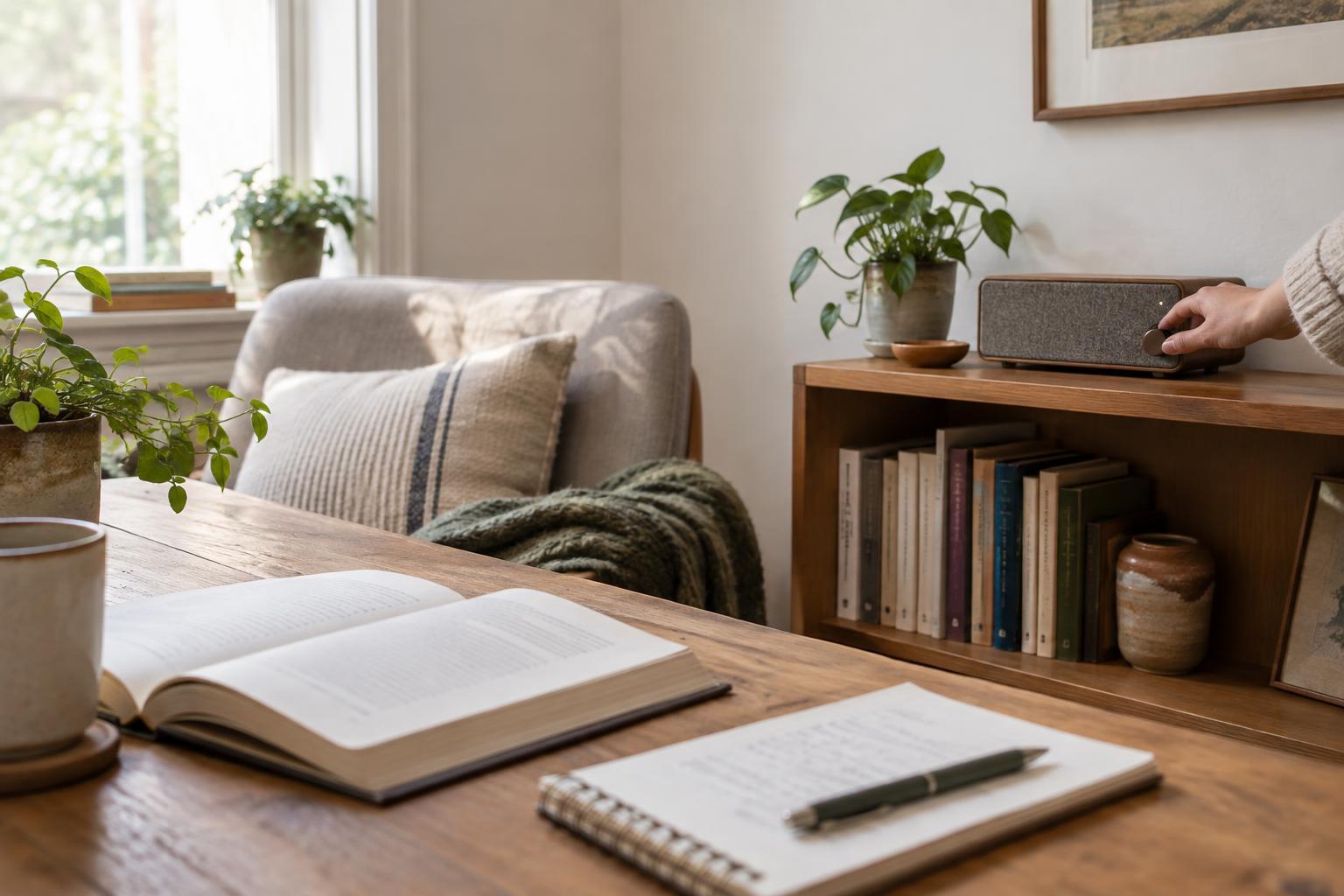
The playback device may be doing just as much work as the room. A small speaker on a counter is unlikely to present a song exactly like a car system or a pair of headphones. Its placement matters: near a wall or in a corner, it may sound fuller than it does in the middle of a table. Move it a short distance and the balance can shift.
Kitchen listening is rarely isolated. Running water, an extractor fan, dishes, and conversation can break up the song or hide particular sounds. You might catch the chorus while missing a quiet verse. That does not mean you are listening incorrectly; it means the music is sharing space with daily life.
A park gives the song room to escape
Outside, there may be few nearby walls to send sound back toward you. Music from a portable speaker can lose some of the enclosed, room-filling quality you hear indoors. Distance becomes important: a small move away from the speaker can change how clearly you hear a bass line or lyric. Wind, traffic, voices, and birds may also join the soundscape.
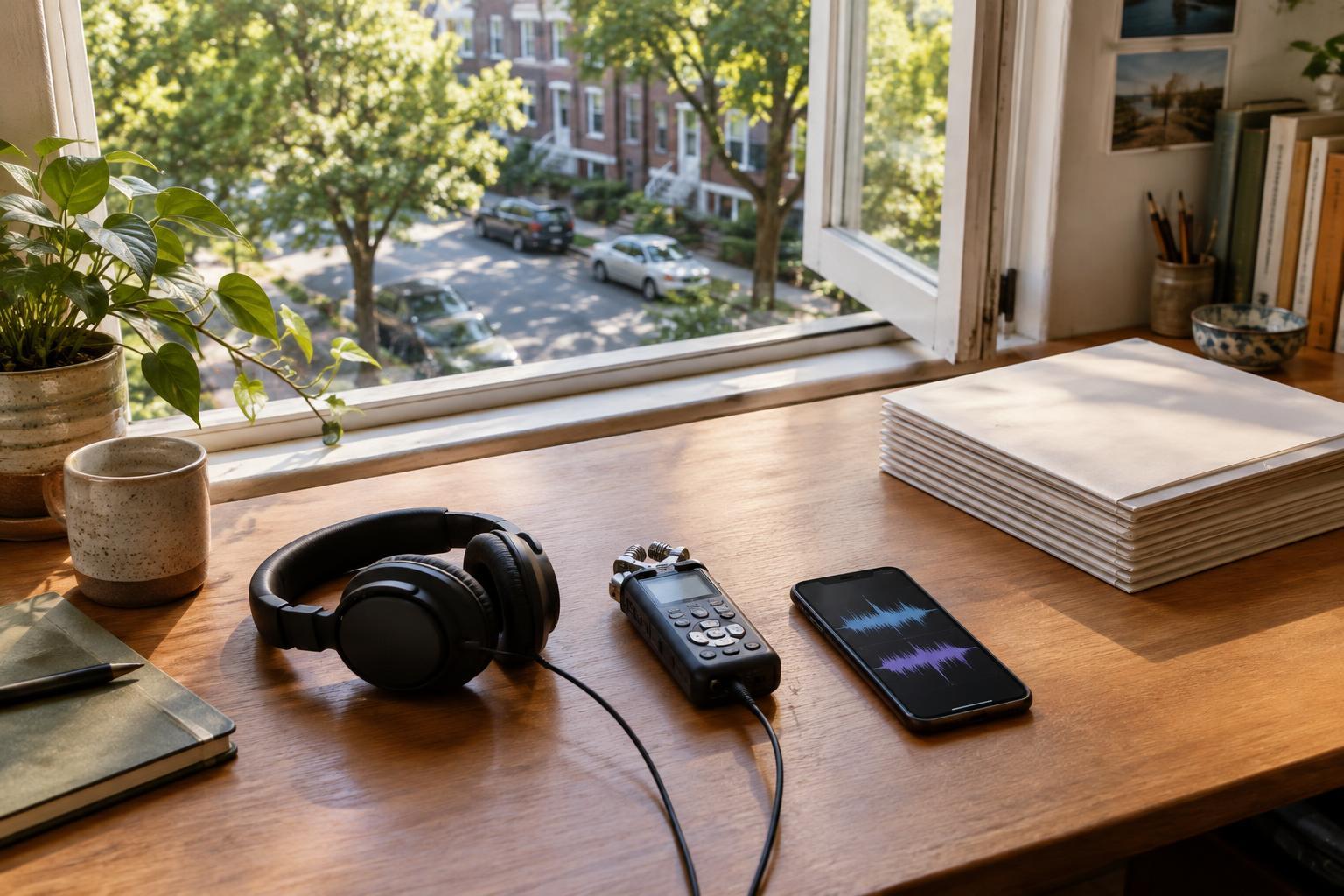
Headphones reduce some of these location-based differences, but they do not erase the setting. Ambient sound may still reach you, depending on the headphones, and your attention can move between the song and what is happening around you. Keep the volume at a level that lets you remain aware of your surroundings when you need to.
To hear the differences for yourself, choose one familiar song and listen at a comfortable volume in each place. Follow a single element—perhaps the bass, lead vocal, or cymbals—and notice when it becomes easier or harder to hear. Then notice where your attention goes. The exercise is not about finding the one correct setting. It is a way to hear how a recording, a space, and an ordinary moment combine to make each listen distinct.