Start with the whole sound of the room
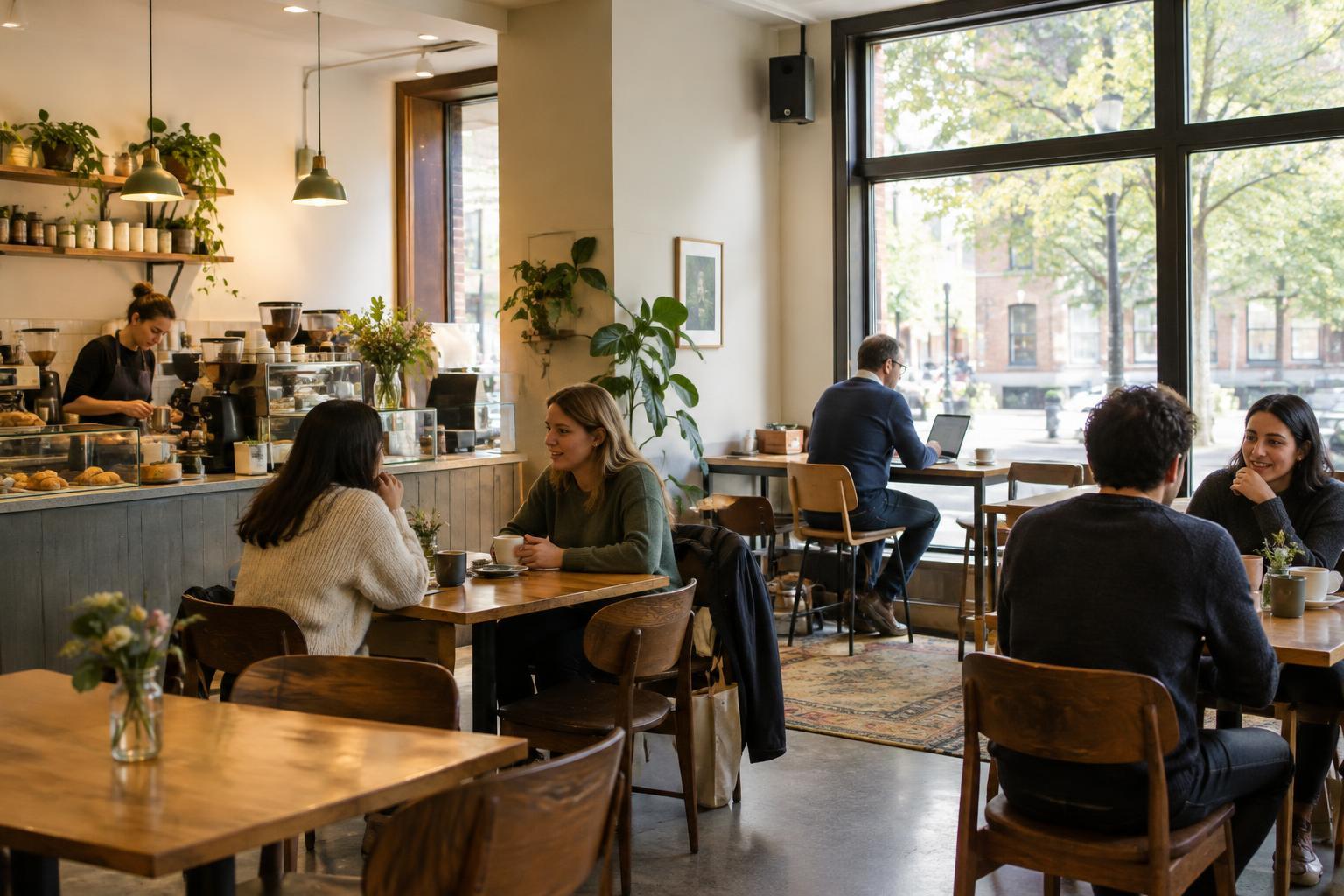
Walk into a café and you may notice the coffee grinder before you notice the music. In a shop, footsteps, hangers or a checkout may draw your attention first. Music does not arrive alone: it shares the space with people, objects and the building itself. To understand its role, begin by listening to everything you can hear rather than trying to identify a song.
Notice which sounds seem close and which form a backdrop. Can you hear the music clearly from the entrance, or does it become apparent only when you sit down or stop browsing? Listen for moments when another sound covers it, then fades. This simple shift in attention reveals whether the music is a prominent feature of the space or a quieter layer holding the other sounds together.
Listen to how music fits the activity
The same track can feel different depending on what people are doing around it. A steady beat beneath a busy counter might seem to accompany the movement of staff and customers. At a nearly empty table, that beat may become the most noticeable thing in the room. Rather than deciding that the music makes everyone behave a certain way, compare what you hear with the activity in front of you.
Pay attention to transitions. What happens when you move from a lively entrance to a quieter corner, or from a shop floor into a fitting area? Does the music remain equally audible? Do voices or mechanical sounds take its place? These changes can show how a space has several sound environments, even if one playlist runs throughout it.
Notice volume, texture and repetition
Volume is more than a question of loud or soft. Ask whether you can follow a conversation without effort and whether the music’s words are distinct enough to compete with speech. A track with a strong vocal may catch your attention differently from an instrumental piece at a similar level. Sharp percussion, a smooth sustained sound or a prominent bass line can also change what stands out against clattering cups or footsteps.
If you stay long enough, listen for patterns across several tracks. Do they share a pace, a kind of voice or a similar sound? A sequence can give a space a sense of continuity even when individual songs vary. You may also hear a track end, leaving a brief gap before the next one begins. That gap is useful: it lets you notice which sounds the music had been sitting behind.
Consider placement, not just the playlist
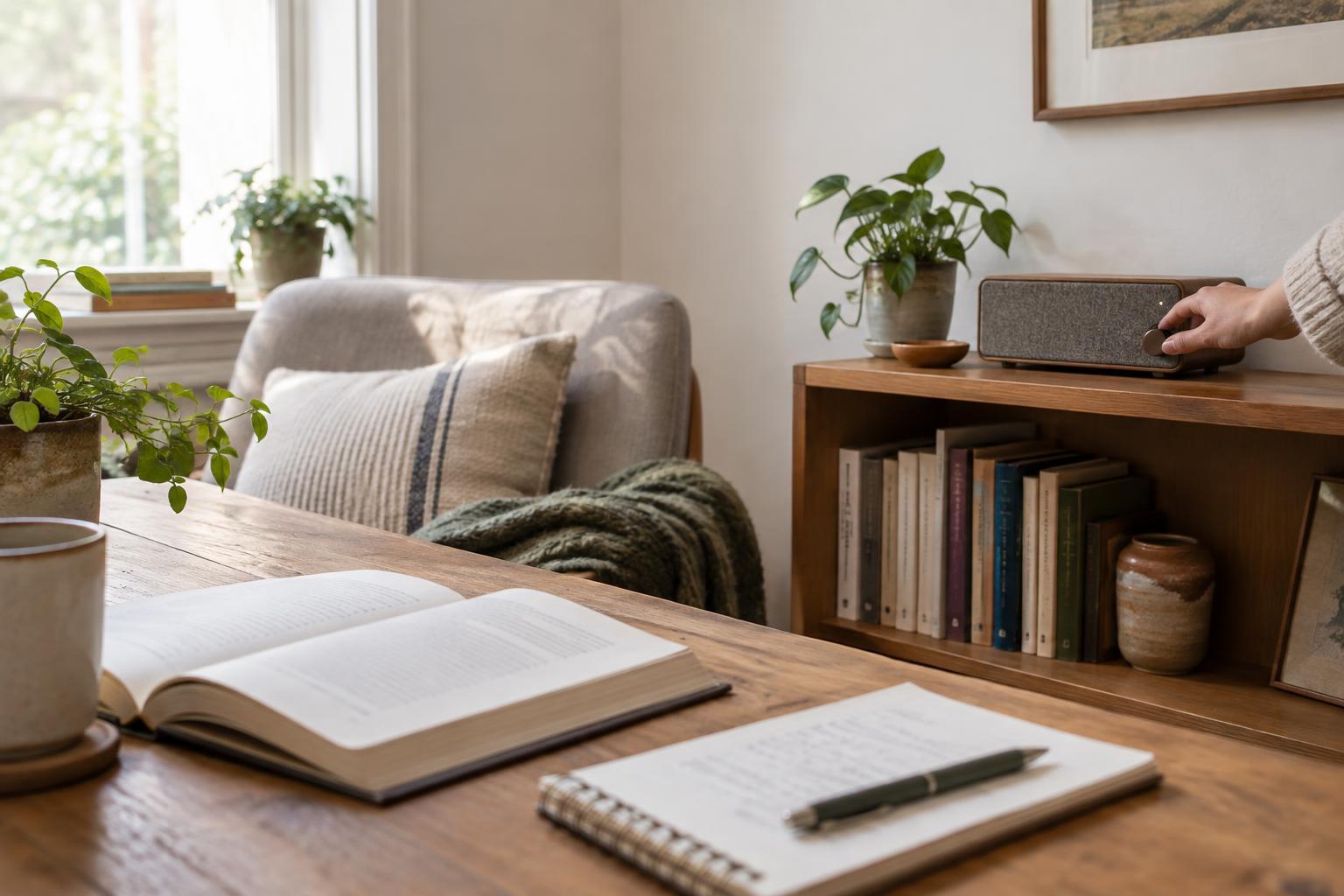
Where music comes from matters. A speaker near your table may make a quiet song feel foregrounded, while music from across a large room may blend with conversation. Hard surfaces can make some sounds seem more present; soft furnishings and crowded areas may change what reaches your ears. You do not need to measure the room to notice the effect. Try listening from two ordinary positions, such as the doorway and a seat.
Then ask what the music appears to be doing in each spot. Is it easy to ignore while you order but more engaging while you wait? Does it help mark the space as casual, lively or calm to you? These are impressions, not fixed properties of a genre. Another listener might respond differently, and your own impression may change with your purpose for being there.
Make a small listening record
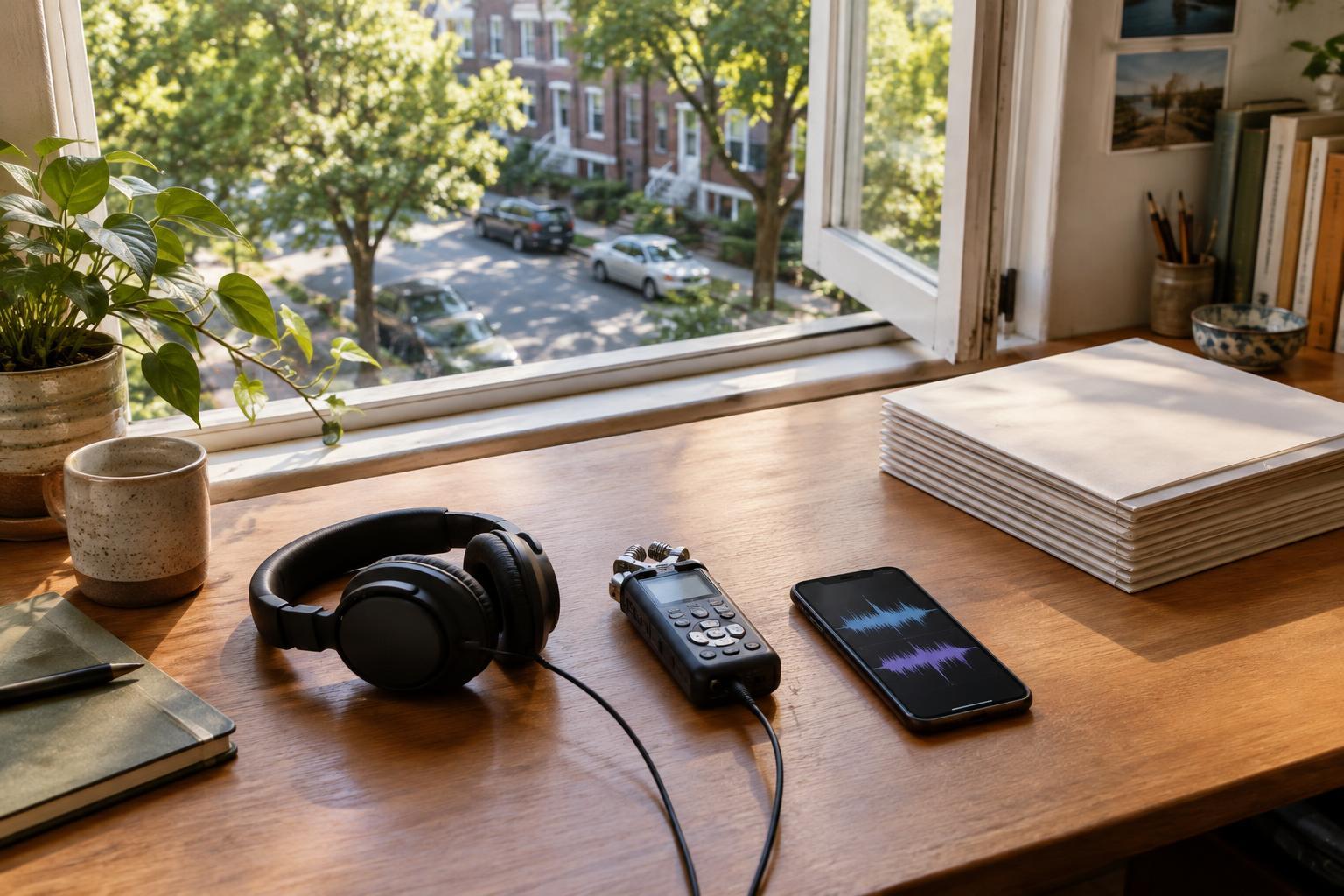
For a closer look, jot down a few observations after you leave. Note where you were, what activity was underway, which sounds you noticed first and when the music came into focus. You can describe a track without naming it: “soft voice over a regular beat” may be more useful for this exercise than a title. Include one moment when the room changed, such as a rush of customers or a pause between songs.
The aim is not to grade the venue’s taste. It is to hear how an ordinary place is assembled through sound. On a later visit to a different shop or café, use the same questions and compare your notes. You may find that music is sometimes the center of your attention and sometimes a subtle part of the setting—one that becomes easier to appreciate once you listen for its place among everything else.