Mistaking tempo for emotion
A quick beat can sound joyful, but speed alone does not make a song happy. A brisk pulse might also suggest urgency, nervous energy, determination, or an attempt to outrun a difficult thought. Likewise, slow music can feel restful, heavy, tender, or suspenseful. Tempo describes how quickly the music moves; mood depends partly on what seems to be happening within that movement.
Listen to what the rhythm is doing before assigning it an emotion. Are the accents light and buoyant, or sharp and insistent? Does the singer glide over the beat or struggle against it? A fast song with tense harmonies and a strained vocal may feel very different from a fast song with playful phrasing. The useful question is not simply “How fast is it?” but “What kind of motion does this speed create?”
Treating major and minor as fixed labels
Major chords are often described as bright and minor chords as sad. Those associations can be helpful starting points, but they become misleading when treated as rules. A song centered on minor harmony might feel warm or resolute because of its melody, groove, and performance. Major harmony can accompany wistful lyrics or a melody that never seems to settle.
Harmony also changes over time. A single chord cannot explain the effect of a phrase that moves through several chords, pauses unexpectedly, or returns to a familiar sound in a new way. Instead of identifying one chord and naming the mood, notice where the music seems stable, where it creates tension, and whether a change feels like relief. Those relationships often say more than the label attached to any one chord.
Assuming an instrument has one emotional meaning
It is easy to hear strings as romantic, a distorted guitar as angry, or a piano as reflective. Yet an instrument’s effect depends on how it is played and placed in the arrangement. A piano struck in short, uneven bursts can feel restless; sustained guitar notes can feel spacious and gentle. Even a familiar sound may take on a different character when it is close and exposed rather than distant and surrounded by other parts.
Consider the whole texture. Is the instrument alone, answering a voice, or buried beneath a dense rhythm? Does it repeat a reassuring figure or introduce a sound that disrupts the pattern? Production choices such as volume, space, and clarity can change your sense of intimacy or distance, too. Naming the instrument is a first observation, not the end of the interpretation.
Letting one clue override words and performance
Lyrics may appear to settle a song’s meaning, but words and music do not always point in the same direction. An upbeat arrangement can carry a regretful line; a restrained arrangement can make an ordinary phrase sound momentous. There is no need to decide that one layer is the “real” mood. The contrast may be the most expressive part of the song.
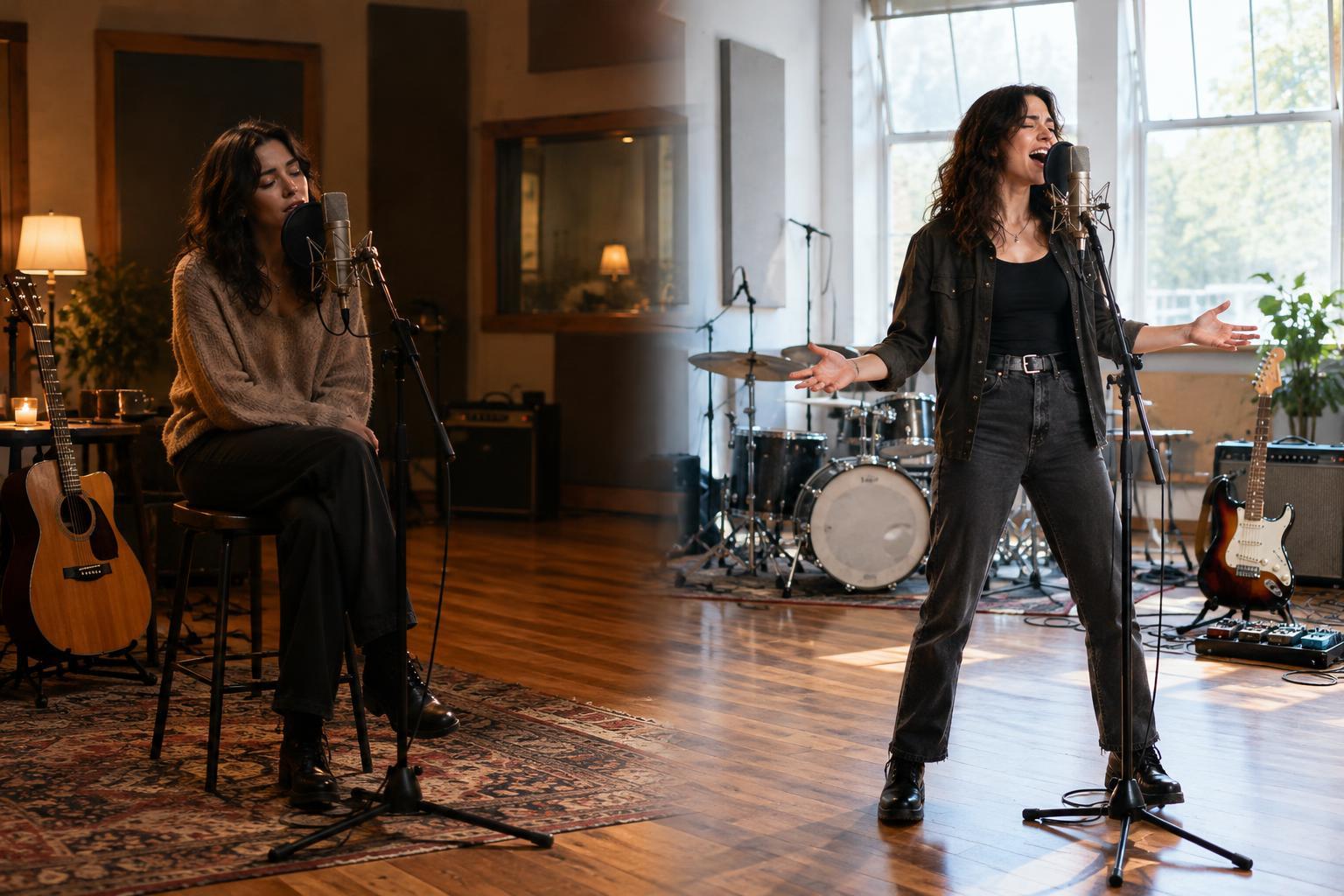
The voice deserves attention beyond the words it delivers. A line sung with a smile in the tone can differ from the same line sung quietly or with hesitation. Listen for breath, emphasis, pauses, and changes between verses and chorus. If there are no lyrics, a melody or instrumental part can still seem to lean forward, hold back, or answer another sound. Describe those audible gestures before translating them into an emotional label.
Building a more flexible listening habit
Try listening through once without naming the mood. On a second pass, note three specific details, perhaps a steady beat, a harmony that shifts under a held note, and a vocal that grows firmer near the end. Then ask how those details work together. Do they reinforce one another, or create a productive contradiction? This approach gives you reasons for your impression without pretending that the song has only one possible reading.
Your own associations matter as well. A familiar sound might call up a personal memory that another listener does not share. You can acknowledge that response while distinguishing it from what you hear in the recording: “The slow pulse feels comforting to me, while the clipped phrasing adds unease.” That kind of description leaves room for complexity. Rather than hunting for a single feature that proves a song is happy, sad, or tense, listen for how its parts shape an experience over time.