Listening beyond the song
Music gives us an obvious reason to listen closely. We follow a melody, notice a rhythm, or wait for a favorite instrument to enter. Everyday listening applies some of that same curiosity to sounds that were not arranged as a piece of music: a door closing, dishes being put away, wind at a window, or footsteps moving down a hallway.
The goal is not to decide whether every sound is beautiful. It is to notice what is present and how it changes your impression of a place. The hum of a refrigerator may be easy to overlook until it stops. A familiar stair may have a particular creak that tells you someone is coming. These details can help a room or a routine feel recognizable, even when you have never thought of them as part of its sound.
Start with a short, ordinary moment
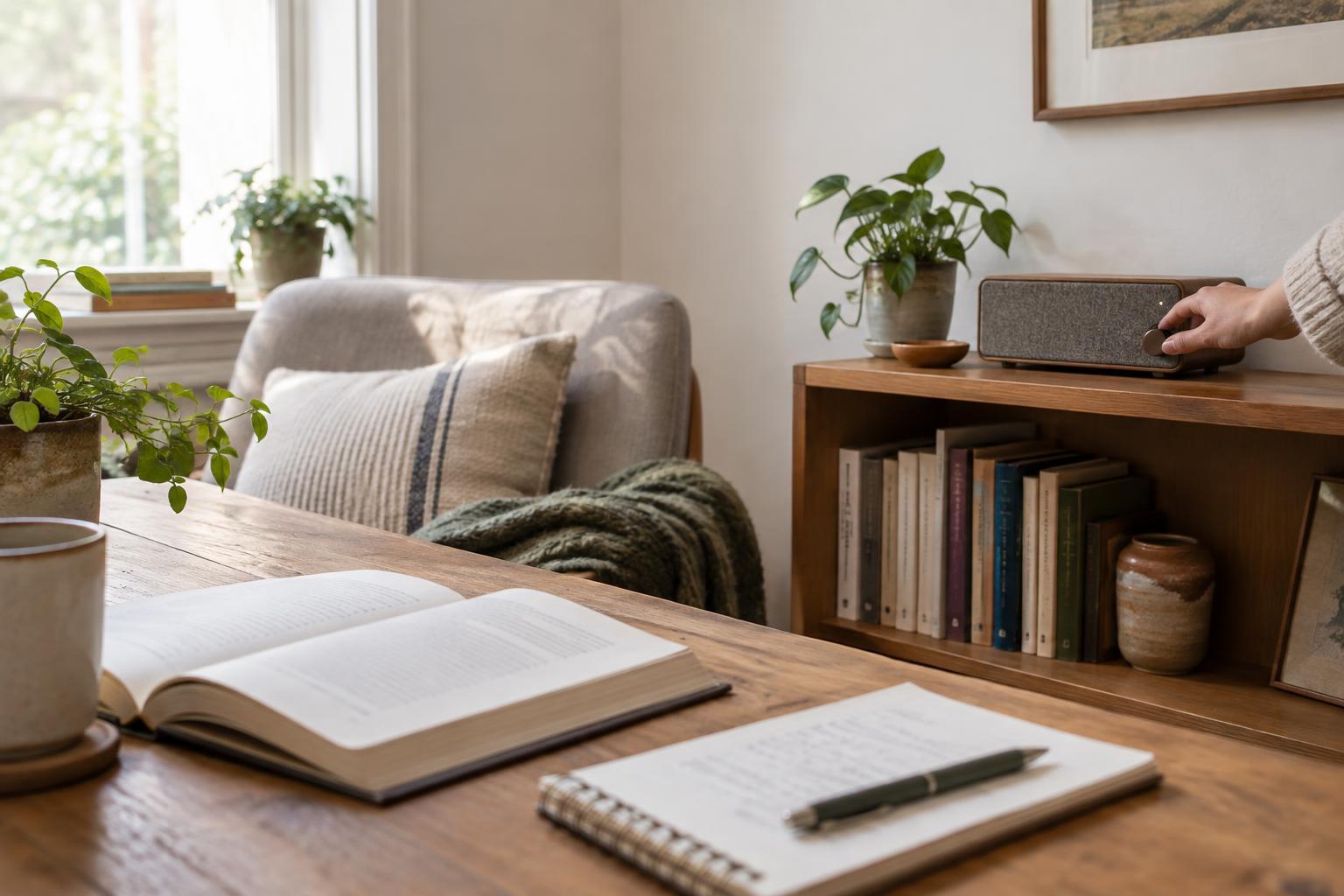
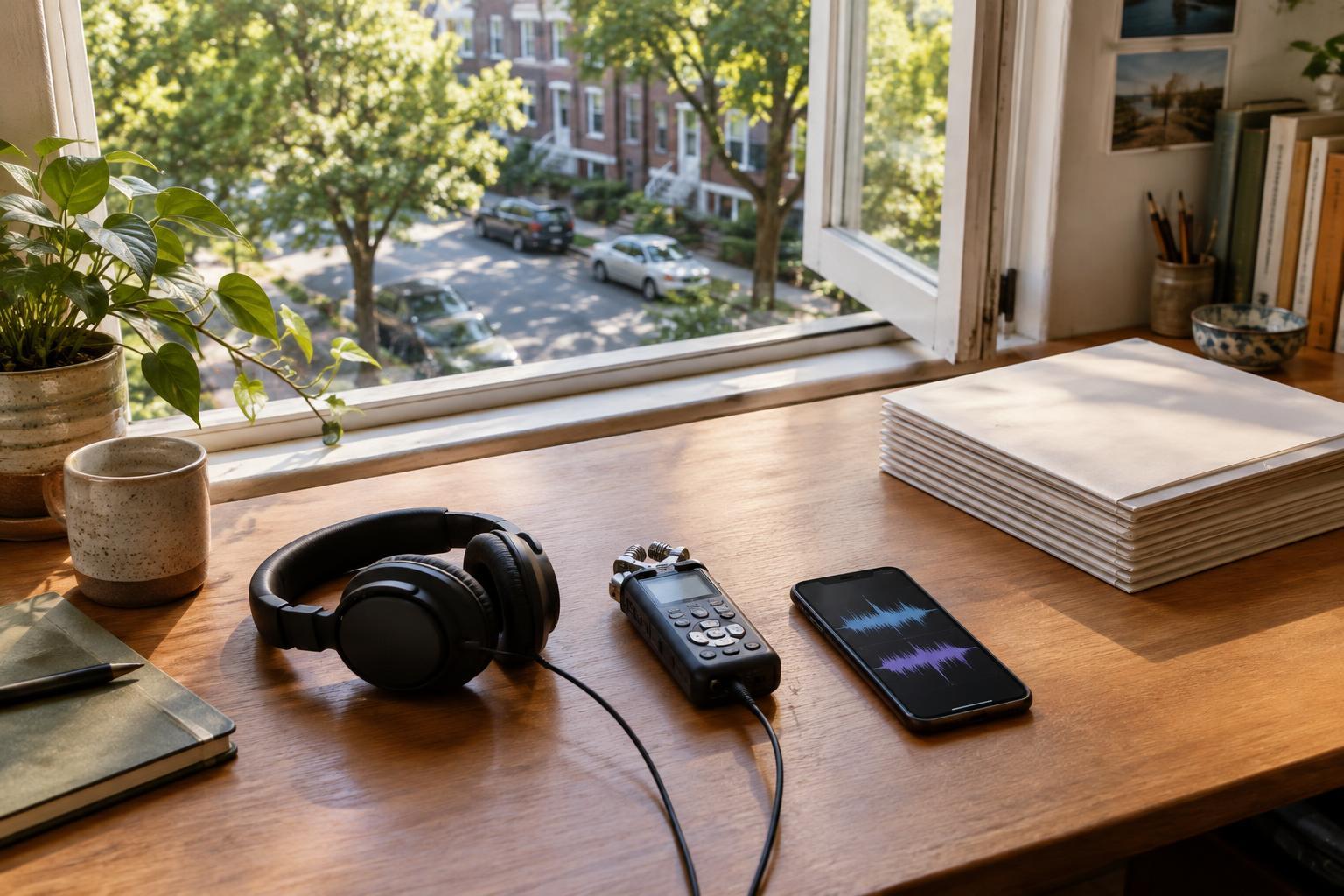
You do not need a recorder, headphones, or a trip somewhere new. Choose a comfortable place and spend a minute noticing what you can hear. If it helps, begin with the sound nearest to you, then consider sounds farther away. You might hear your clothing move, water running in another room, or activity outside. There is no required number of sounds to find.
Try asking simple questions rather than naming everything immediately. Is a sound steady or intermittent? Does it seem close or distant? Is it sharp, soft, low, or high? Does it repeat at a regular pace? A sound that first registers as a general hum might turn out to have several parts, such as a fan’s whir and a faint vibration from its casing.
You can also listen while doing something familiar, such as preparing a meal or walking a usual route. Keep your attention on your surroundings and your safety; listening closely should not distract you from traffic, other people, or a task that needs care. Brief moments of attention are enough to begin.
Notice how sound gives a place its shape
Sounds offer clues about spaces. A handclap may feel brief and dry in a room with soft furnishings, while the same clap may linger in a large, hard-surfaced space. You do not need technical vocabulary to hear the difference. Words such as muffled, echoing, crowded, and open can help you describe what a place seems to do to sound.
Listen, too, for layers. In a café, nearby conversation may sit over the clink of cups and a quieter wash of activity. At home, a clock or appliance may form a nearly constant background while shorter sounds come and go. What you notice will depend on where you are and what is audible to you. Different listeners may pick out different details from the same setting.
Changes can be especially revealing. A pause in conversation may make a distant sound suddenly noticeable. Closing a window can alter the balance between indoor and outdoor noise. Comparing one moment with the next is often more useful than trying to capture every sound at once.
Describe sounds without judging them
When you are new to everyday listening, it can be tempting to sort sounds into pleasant and unpleasant. Those reactions matter, but description gives you more to work with. Instead of writing “the street was noisy,” you might note a low engine sound, occasional footsteps, and a crossing signal that cuts through both. The description makes the scene easier to imagine.
An ordinary sound can suggest a story without proving one. Footsteps approaching a door might create a sense of anticipation; rain against a roof might make a room feel enclosed. The sound itself does not carry one fixed emotion. Context, memory, and what happens next all affect how a listener interprets it. That flexibility is part of why everyday sound can be useful to writers, filmmakers, and anyone curious about storytelling.
Make listening a small creative habit
One way to keep exploring is to jot down a three-sound snapshot of a place: one close sound, one distant sound, and one that changes. Use your own words. You might write “keys brushing against a pocket” rather than searching for a formal term. Later, compare snapshots from the same place at different times and see what stays familiar.
You can also imagine how a short scene would change if one sound disappeared. Would a kitchen feel different without the tap running? Would a quiet hallway seem less empty if voices were audible behind a door? These questions connect everyday listening with composition and film sound, where choosing what an audience hears can help direct attention.
Everyday listening does not require constant alertness or an ideal soundscape. Some sounds are tiring, and sometimes you may simply want less noise. The practice is an invitation to pay attention when you choose to: to hear a familiar environment with a little more detail and to discover which sounds help make it feel like itself.