Tempo sets a pace, not a feeling
Tempo describes the underlying pace of music: how quickly its beats pass. It gives listeners a sense of motion, but it does not assign an emotion to that motion. A quick pulse might support excitement, impatience, nervousness or humor. A slow pulse might leave room for tenderness, suspense, confidence or calm. The same speed can serve very different stories, depending on what happens around the beat.
It also helps to distinguish tempo from perceived energy. A piece can keep a steady, moderate beat while packing many notes between beats, making the surface feel busy. Another can have a brisk beat but long, spacious notes that make it feel unhurried. What we hear as “fast” is often a combination of the pulse and the activity layered over it.
Rhythm changes the way speed feels
Imagine two songs played at the same tempo. One places a firm drum hit on every beat, with short, even notes that push steadily forward. The other lets its melody enter late, holds notes across beats and leaves gaps between phrases. The first may feel insistent; the second may seem to float. Neither needs to change speed for the listener to experience a different kind of movement.
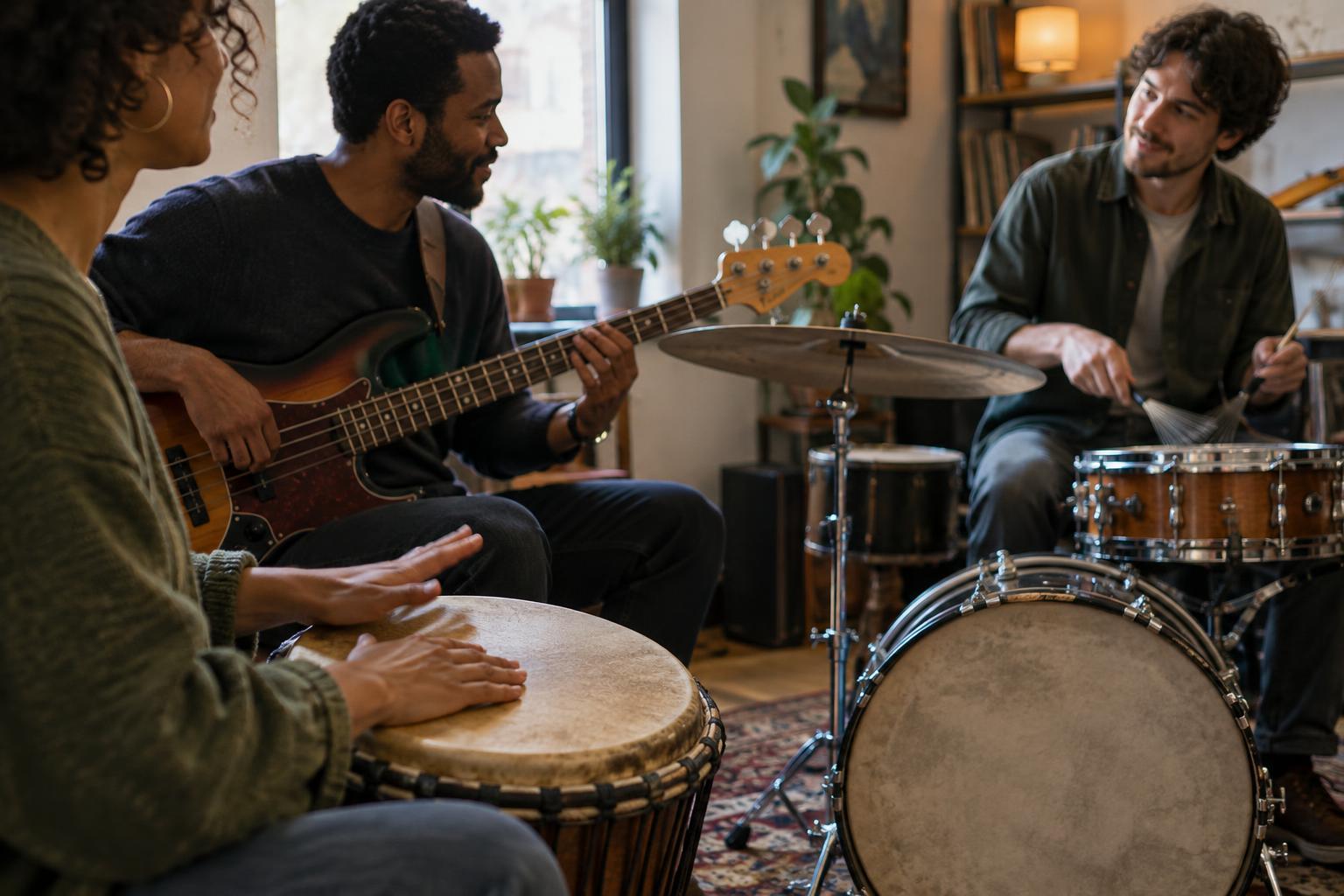
Accents matter, too. When a rhythm emphasizes expected beats, it can feel grounded and easy to follow. Accents in less expected places can add lift, playfulness or tension. A drummer might make a passage feel relaxed by placing sounds with a loose touch, even while everyone follows the same pulse. Tempo tells us how often the beats arrive; rhythm tells us how the music uses that space.
Harmony, melody and sound color the pulse
The notes surrounding a beat help shape its emotional impression. A quick melody that climbs in short phrases can sound eager, especially over a bright, open-sounding accompaniment. At a similar speed, a narrow melody repeating over unsettled chords might feel anxious or trapped. A slow melody may sound mournful when it falls and lingers, yet reassuring when its phrases resolve gently. These are possibilities, not rules: listeners bring their own associations to musical patterns.
Timbre—the character of a sound—also changes the experience. A soft voice, rounded bass and lightly played percussion can make a fast song feel intimate. Sharp attacks, distorted tones or a dense arrangement may give even a slower piece an edge. Dynamics add another layer: music played quietly can invite close attention, while a sudden increase in volume can make a familiar tempo feel urgent. Speed stays the same, but the scene it seems to create changes.
Performance and context complete the picture
Musicians can shape mood through small decisions within a fixed tempo. A singer may stretch a word over the beat, clip the ends of phrases or leave a breath before the next line. An instrumentalist may play with a light touch or a heavy one. These choices affect whether the music seems to lean forward, hold back or settle into place. They are part of why two performances of the same song can feel different without a major change in speed.
The setting matters as well. A lively tune heard under a tense film scene may take on an eerie quality because the sound and image pull in different directions. A song linked to a personal memory may carry an emotion that its tempo cannot explain. Lyrics, surrounding sounds and what a listener expects to happen next can all influence the mood they hear. Tempo is one cue among many, not a mood label attached to the recording.
Try listening beyond the beat
Choose a familiar song and listen once while tapping its main beat. On a second listen, keep tapping but pay attention to something else: where the melody enters, which words or notes are held, and when the arrangement becomes fuller or thinner. Notice whether your sense of the song’s energy changes even though your tapping remains steady. You can try the same exercise with two contrasting songs that seem to share a similar pace.
If you make music, try changing one element at a time. Keep the tempo fixed and leave more space between notes, soften the attack or move accents to different parts of the beat. Listen for how each choice changes the impression. This approach treats tempo as a useful frame rather than an emotional shortcut. A song’s mood emerges from the relationships among its parts—and from the listener who hears them.