Energy is more than speed
A song can move quickly without feeling urgent. Another can unfold at a slow pace yet seem to lean forward with every note. Tempo—the speed of the underlying beat—is one part of that difference, but it does not explain the whole listening experience. The placement of sounds, the strength of accents and the amount of space between events all affect how a rhythm feels.
Rhythm is the pattern of sounds and silences over time. A beat is a regular pulse you might tap along with; groove is the felt relationship among the musical parts that play around that pulse. A bass line, drum pattern, guitar strum and vocal phrase can each follow a different path while still suggesting one shared movement. When those paths fit together in a compelling way, listeners may hear a groove even in music with very few notes.
Find the pulse, then notice what plays against it
To hear how a groove works, start by tapping a steady beat through a short passage. Listen for sounds that land with your taps and sounds that arrive between them. A firm kick drum or low bass note can make the pulse feel grounded. Handclaps, snare hits or sharp chords may draw attention to particular beats, giving the pattern a recognizable shape.
Then keep tapping while you follow a single part, such as the voice. Does it begin a phrase before the beat, settle directly onto it or enter just after it? An accent in an unexpected place can create a small sense of surprise. This is often called syncopation: emphasis that shifts attention away from where you might expect the strongest beat. It need not make music sound chaotic. Repeated consistently, an offbeat accent can become the feature that makes a groove feel familiar.
The pulse also offers a reference point when the music changes. A drummer might maintain the same beat while a singer stretches a word across it, or a bass player might switch to shorter notes. The tempo has stayed put, but the energy can seem to change because your attention is pulled toward a new pattern.
Space and texture change the weight of a pattern
A rest is not simply an absence of music. It gives surrounding sounds room to register and can make the next entrance feel more important. Imagine a drum pattern that leaves a brief gap before each snare hit. That gap may create anticipation. Fill it with extra notes, and the same basic beat might feel busier or more insistent.
The character of each sound matters, too. A soft, rounded bass note can give a rhythm a different weight from a bright, clipped note played at the same moment. Sustained chords can smooth over the spaces between beats, while short, dry sounds make each attack easier to hear. Several quiet parts playing continuously may create a denser impression than one loud part surrounded by silence.
This is why volume alone is a poor measure of rhythmic energy. A restrained passage can feel lively when its parts answer one another in quick succession. A loud passage can feel spacious when sounds are held for a long time. Listen not only for how many notes are played, but also for what each note leaves behind.
Groove comes from relationships between players
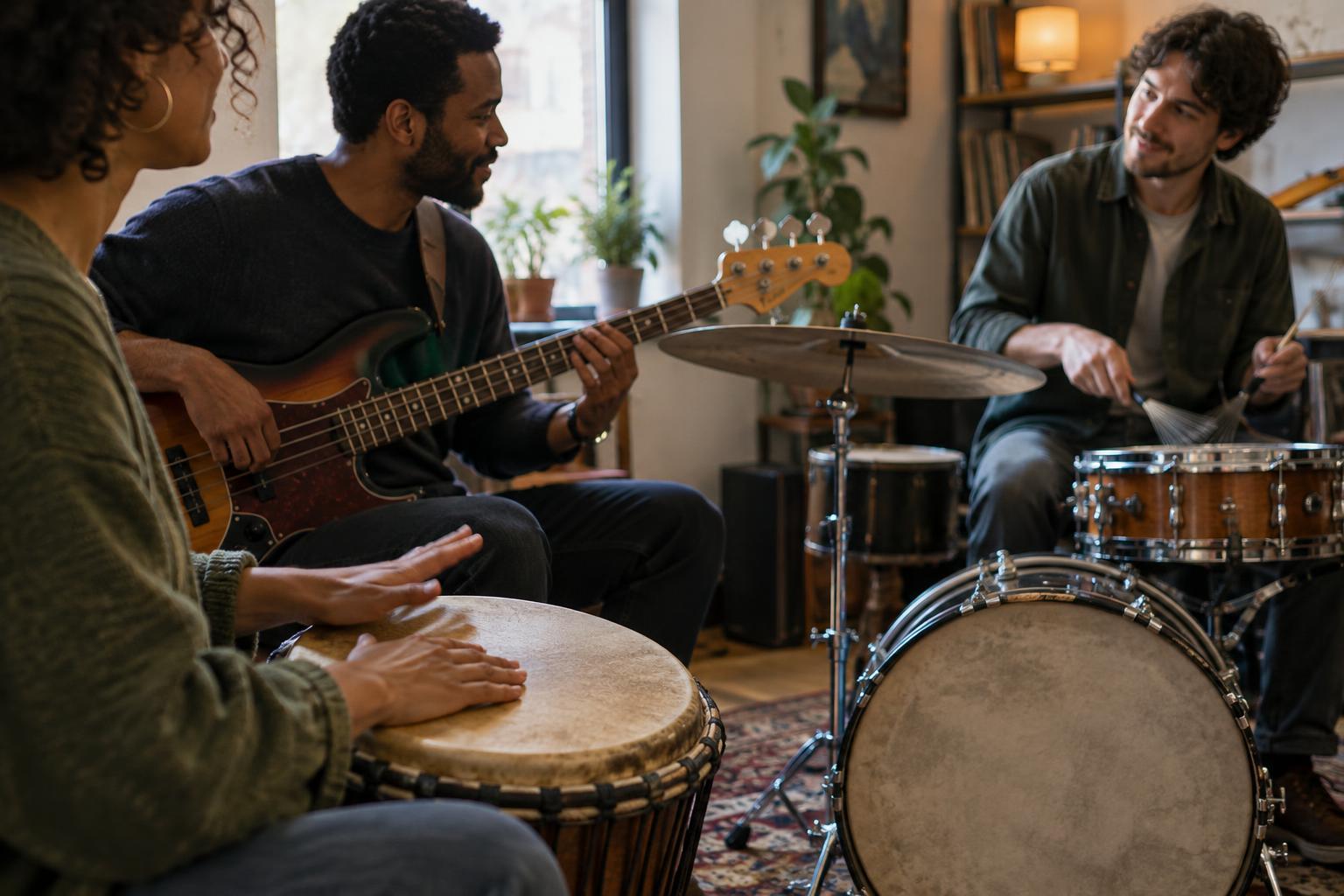
In an ensemble, no part creates the full groove by itself. A drummer may establish a repeating pattern while the bass reinforces some hits and passes over others. Chords can mark the spaces between drum accents; a melody can float in longer phrases above them. The interest often lies in this combination of agreement and contrast.
Not every performance places notes with machine-like uniformity. Some styles make expressive use of slightly uneven subdivisions or small differences in how attacks line up. These details can contribute to a groove, though their effect depends on the surrounding music and on the listener. A useful question is not whether a passage is perfectly aligned, but whether its parts create a movement you can recognize from one phrase to the next.
Arrangement can reshape that movement without introducing a new tune. If the bass drops out for a few bars, the remaining beat may feel lighter. When it returns, the groove may seem fuller. That shift can support a song’s storytelling: a sparse verse leaves room for a voice, while a more layered refrain changes how strongly the same pulse is felt.
Try listening in layers
Choose a familiar track and play a short section three times. On the first pass, tap the beat without trying to identify every instrument. On the second, follow the low sounds and notice which beats they emphasize. On the third, listen for shorter or higher sounds, including vocal syllables, and notice where they meet or avoid your taps.
Finally, stop tapping and listen to the passage as a whole. Does its energy come from a steady foundation, an offbeat pattern, a crowded texture or a well-placed gap? There is no need to assign one fixed emotion to a groove. The same rhythm may strike different listeners differently, and its effect can shift with the melody, lyrics and setting. Paying attention to its moving parts simply gives you a richer way to describe what you hear.