Start with the kind of attention your idea invites
Some song ideas arrive as events: a missed train, a difficult conversation, a return to a familiar street. Others arrive as a feeling attached to a sound, color or object. The first kind may invite narrative lyrics, which give listeners a sense of what happened and what changed. The second may invite impressionistic lyrics, which build meaning through images, associations and atmosphere.
Neither approach is more complete or more emotional by default. A story can leave room for mystery, while a collection of images can suggest a clear emotional journey. Before writing a verse, describe your idea in one sentence. If the sentence centers on an action, try following the action. If it centers on a sensation, try gathering details that make the sensation tangible. Treat this as a starting point, not a rule: drafting may reveal that the song wants to move in another direction.
Build a narrative around change
Narrative lyrics give a listener enough landmarks to follow an experience. A character wants something, encounters a complication and ends in a different place, even if the change is small. For a song about returning to a childhood home, the first verse might establish the arrival, the next might focus on what has changed, and the final section might show a choice to stay, leave or simply see the place differently.
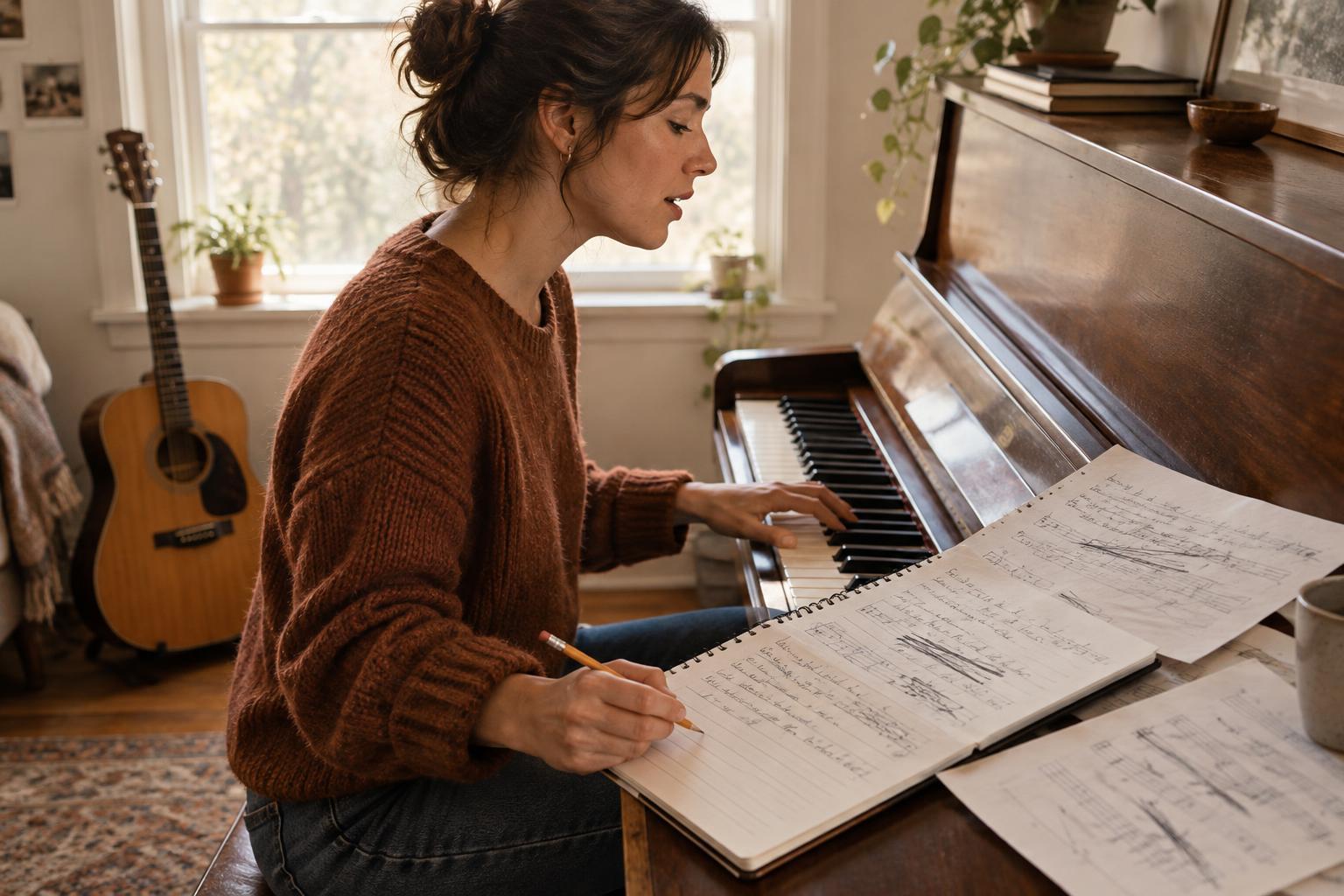
To draft a narrative, write the events in plain prose first. Identify the moment that matters most, then cut any background the listener does not need. You may find that one concrete action, such as leaving a key on a table, carries more weight than an explanation of the whole relationship. A repeated chorus can hold the central question or feeling while the verses reveal new information.
Clarity does not require spelling out every motive. Choose details that help listeners locate themselves in the scene, but leave space for them to interpret it. Check each verse for movement: does it change what the listener knows, or deepen the meaning of something already introduced? If two verses do the same job, consider combining them.
Build an impression through connected details
Impressionistic lyrics do not need a sequence of events to develop. They can return to a set of images from different angles: light through a kitchen window, a coat by the door, traffic heard from another room. The images need not explain one another, but some connection should help them feel like parts of the same song. That connection might be a place, a recurring object, a contrast between warmth and distance, or the speaker’s changing response.
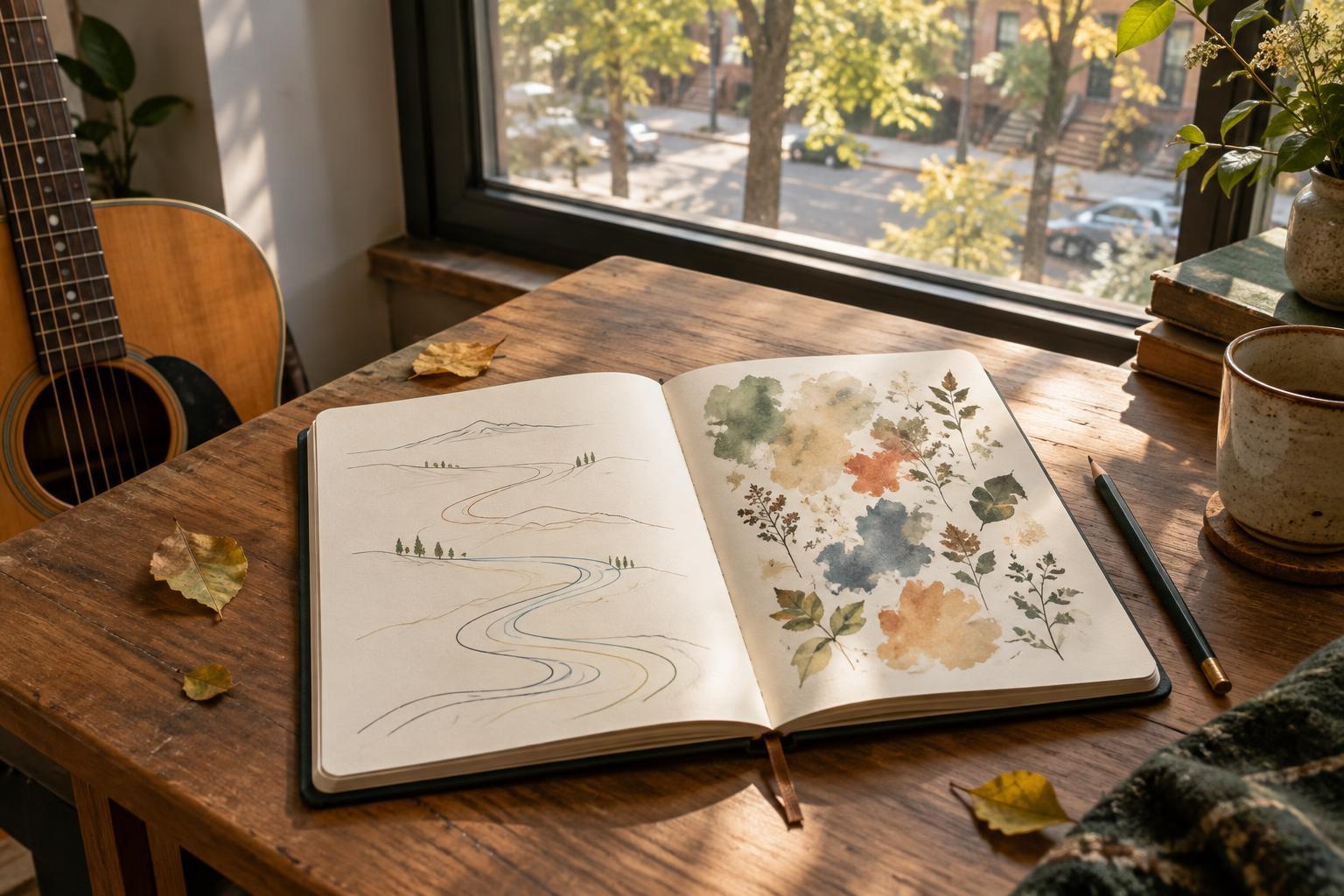
Begin by making a list of sensory details associated with your idea. Include what might be heard, seen or touched, and avoid judging the phrases too soon. Then choose a few that create a useful tension. An image of an open window beside one of a locked drawer, for example, may suggest conflicting impulses without naming them. Arrange your choices so the atmosphere develops rather than repeating at the same intensity.
If a draft feels vague, adding more abstract words may not help. Try replacing one general feeling with a specific detail, or let the chorus state a simple desire that gives the images a center. Impressionistic writing can remain open-ended while still giving the listener something to hold onto.
Let the music help choose the approach
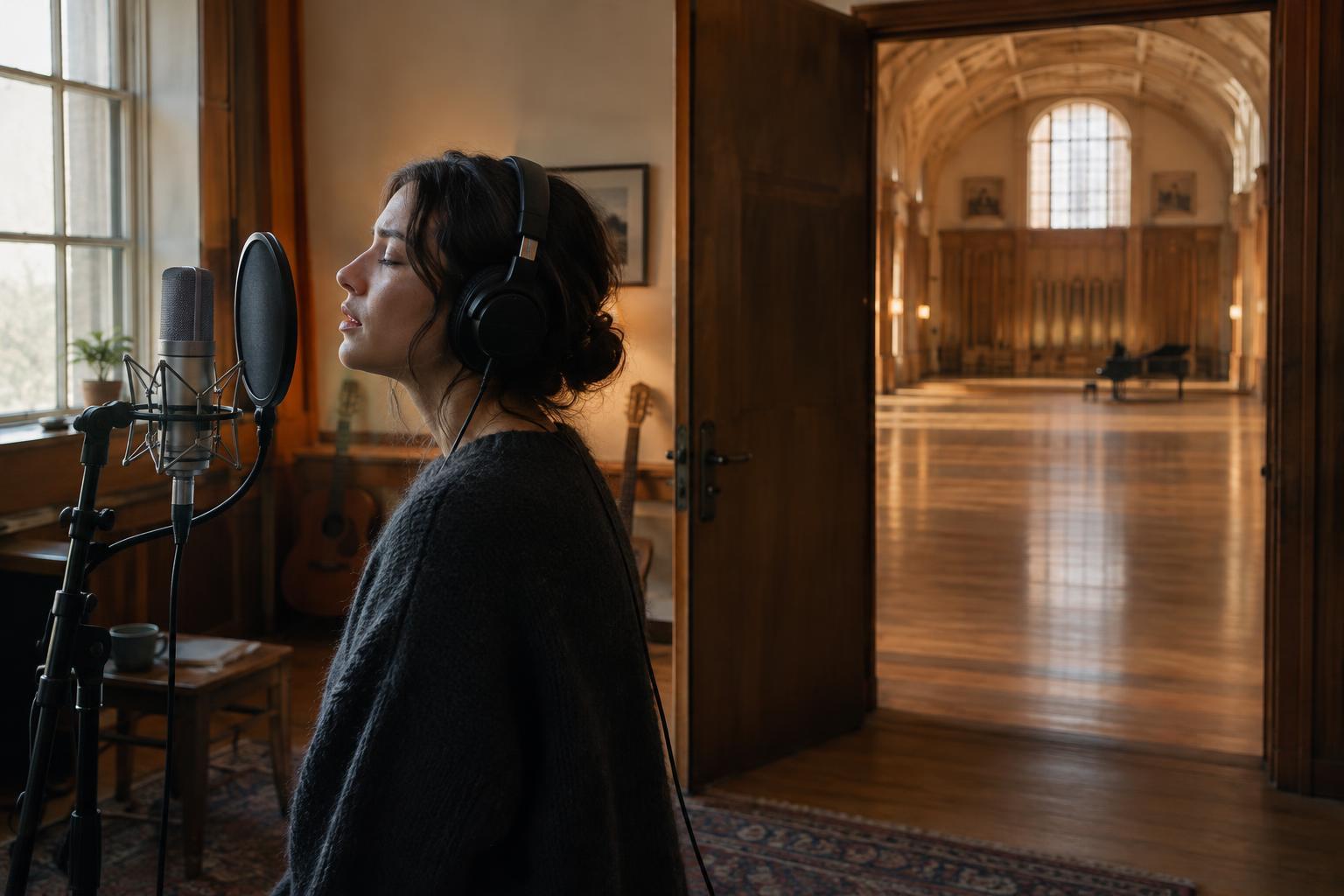
Sing both versions of an idea before deciding between them. A melody with room for conversational phrasing may welcome the turns of a story. A sustained melody or repeated rhythmic figure may make a recurring image especially effective. These are possibilities, not fixed pairings: a sparse arrangement can sharpen a narrative detail, and an energetic groove can carry elusive lyrics.
Notice where the listener’s attention falls. If the arrangement changes dramatically between verses, the lyrics may need only a small shift to make that change meaningful. If the music repeats with little variation, a new event or image in each verse can provide momentum. Read a draft aloud, then sing it. A line that looks precise on the page may feel crowded when set to music; a simpler phrase may leave space for its meaning to land.
Combine the methods, then revise for purpose
Many songs benefit from both approaches. You might use narrative verses to show two people preparing to part, then let the chorus return to an image that expresses what neither says aloud. Or you might begin with a sequence of images and introduce one decisive action near the end. The question is not whether every line belongs to one category, but whether each line serves the song’s central experience.
For a useful revision test, write a short summary of what each section contributes. Mark the lines that offer an event, an image, a feeling or a turn in perspective. Look for places where explanation weakens a vivid moment, and places where ambiguity leaves the listener without a foothold. Keep the details that gain meaning when heard again. A developed song idea does not have to resolve every question; it needs to give its listeners a compelling path through them.