Start with a shared picture of the song
Before anyone reaches for an instrument, spend a few minutes describing the song you hope to make. You might agree on a central image, a point of view or the feeling you want a listener to carry away. The description need not be precise. “A quiet verse that opens into a restless chorus” gives you a direction while leaving room for surprises.
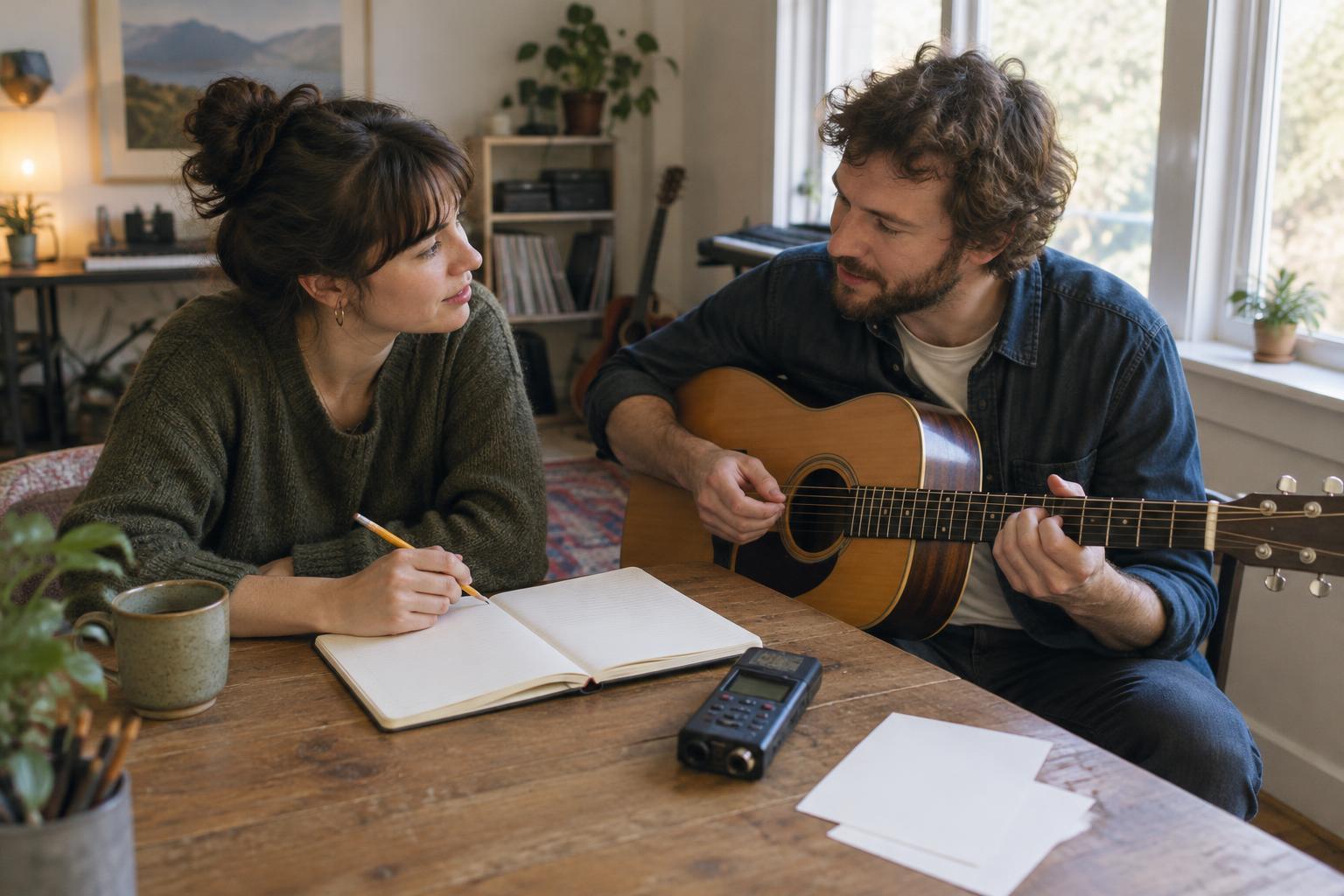
Ask what each person is bringing to the session. One collaborator may have a melody, another a lyric fragment, and a third a chord sequence. Listen to each starting point before deciding which one leads. If an idea existed before the session, note that too; it helps everyone remember what changed as the song developed. You can also agree on a modest goal, such as drafting a chorus or finding the song’s central phrase, rather than expecting a finished recording in one sitting.
Agree on roles without making them rigid
Roles can make a session easier to navigate, especially when several people are contributing at once. Someone might lead the lyric discussion, someone might test melodic shapes, and someone might keep the rough recording or notes. These are working roles, not limits on who is allowed to contribute. A lyricist may hear the perfect bass movement; an instrumentalist may find the line that makes the chorus click.
It helps to name how you will make decisions. Will you try several options before choosing, or let the person leading a section make the first call? If one collaborator tends to think aloud while another needs time to consider an idea, make space for both. A short pause to play back what you have can be more useful than voting immediately. Also distinguish session roles from questions of songwriting credit: keeping the notes or recording a demo does not, by itself, explain who contributed to the song. If credit or future use matters to the group, discuss expectations plainly rather than relying on assumptions.
Capture ideas before they disappear
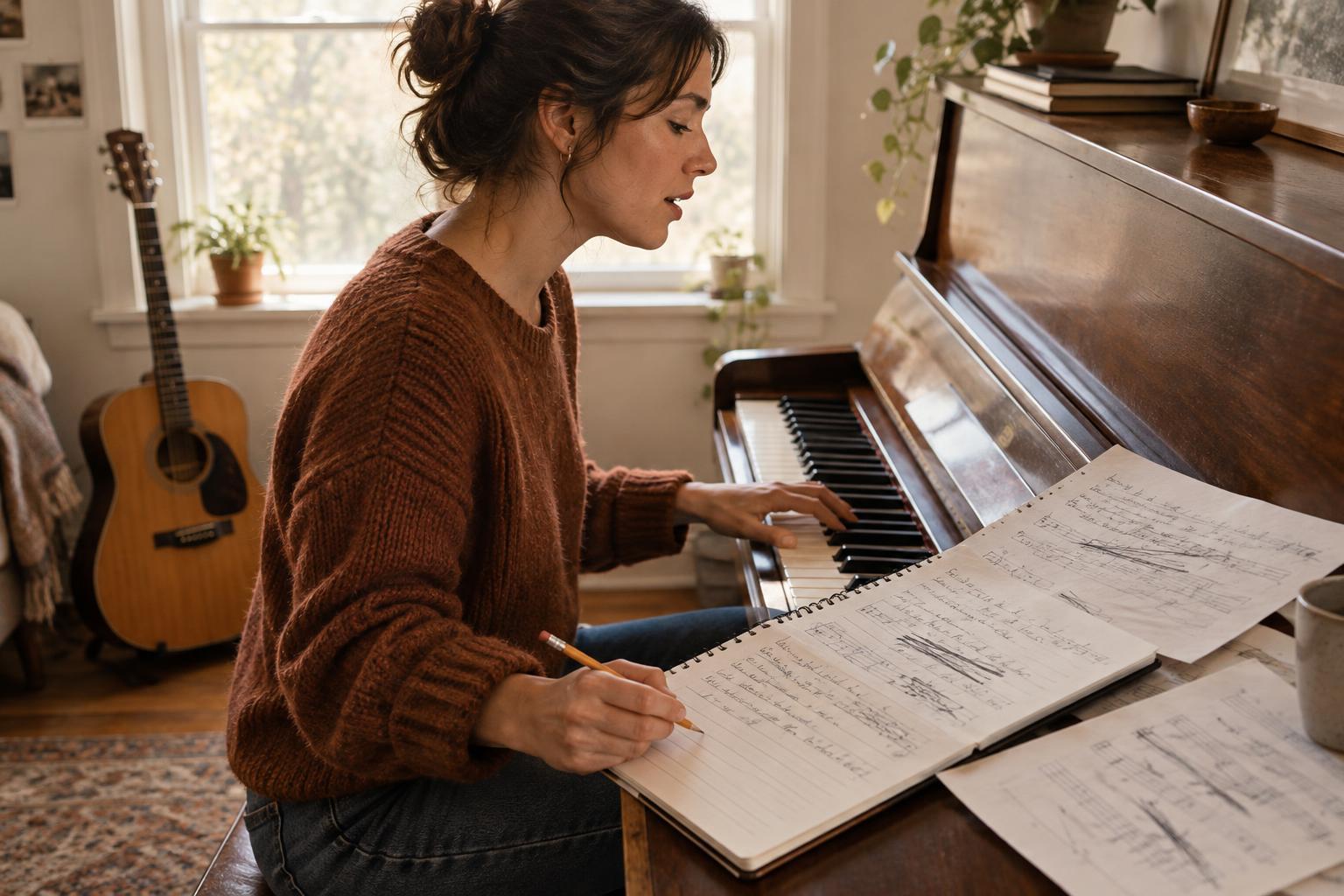
Co-writing often produces more possibilities than one song can hold. Keep one shared place for lyric drafts, rough audio and decisions. It could be a notebook, a document or a folder, as long as everyone knows where to find it. Give files descriptive names such as “verse melody option B” instead of accumulating recordings called “new idea.” Save the words beside an audio sketch when possible, since a phrase can be hard to decipher later.
Record promising alternatives even after choosing a direction. A different chorus line may not fit this version, but saving it lets you move on without treating it as lost. Mark which ideas are currently in the song and which are on hold. Before recording someone’s performance or sharing a session file outside the group, check that everyone is comfortable with it. The point of documentation is to support the collaboration, not to turn every spontaneous moment into a formal process.
Work through differences by testing the song
Disagreement is normal when collaborators hear different possibilities in the same draft. Try describing what an option does rather than declaring it good or bad: “This shorter line leaves more space for the melody” is easier to explore than “That line doesn’t work.” If two choices seem promising, sing or play each one in context. A verse lyric that looks strong on the page may feel crowded at the intended tempo; a simple melody may gain character when paired with the right words.
When the discussion stalls, return to the shared picture you set at the start. Which choice better serves the song’s point of view or movement? You can also make a temporary choice and revisit it after a break. Keep the rejected version in your notes so nobody has to defend an idea simply to prevent it from vanishing. If the song has moved away from the original plan, say so openly; the new direction may be worth following together.
End with a version everyone can recognize
Leave time at the end to play the song from beginning to end, even if parts are unfinished. Make a quick recording, save the current lyric and label any gaps: “second verse needs a new image” is more actionable than “fix verse.” Confirm which version is the working draft so collaborators do not spend the next week editing different choruses.
Finally, decide what happens next. Who will try an alternate melody? Who will gather the latest files? When will the group listen again? If the song may be shared, recorded or developed with others, talk about that before anyone acts. A co-writing session does not have to resolve every question, but it should leave people able to pick up the same song at the next meeting. Clear roles and a reliable trail of ideas give the creative work room to keep growing.