Let the journey shape your listening
Public transport gives listening a changing backdrop. A quiet bus at the start of a route may invite a full album, while a crowded train with frequent stops asks for more attention. The useful question is not whether to listen, but how much of your attention the audio should take at each point in the journey.
Before you press play, consider what you need to notice: your stop, a platform change, a driver’s announcement or people moving through the aisle. On a familiar route, it can be easy to assume you will catch every cue. Looking up periodically and checking signs gives you another way to keep your bearings when the sound around you changes.
Choose a level that leaves room for the world
The rumble of a vehicle can make audio seem too quiet, tempting you to turn it up. Instead, try content that remains enjoyable at a moderate level. A spoken-word episode with clear voices or a song with an uncluttered arrangement may be easier to follow than something with very soft passages. If you keep raising the volume to compete with the journey, it may be a good moment to pause.
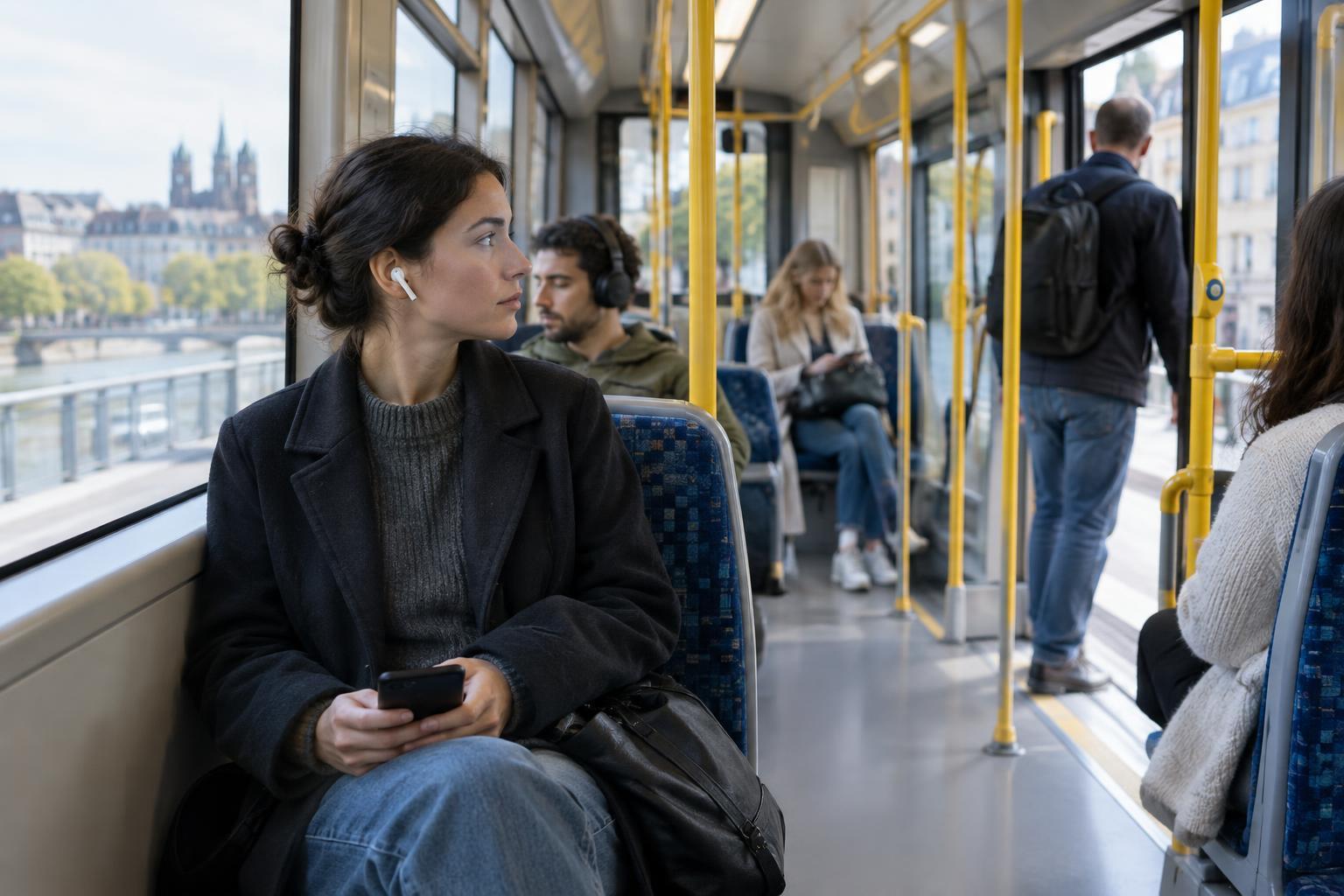
Headphones and earbuds change the balance in different ways. Noise reduction can make steady engine noise less distracting, but it can also make an announcement or someone addressing you less noticeable. A transparency setting, if your device has one, may help you hear more of the environment, though it is worth checking how well it works where you are. No setting replaces looking around.
Build natural pause points
You do not have to maintain one listening mode from door to door. Boarding, changing lines and approaching your stop are useful times to pause or lower the audio. Once you are seated and know the next part of the route, you can settle back into it. This rhythm makes the journey part of the listening experience rather than an interruption to it.
If you often miss your stop while absorbed in a long episode or playlist, choose shorter pieces for the final stretch. Ending a song before a transfer can feel more satisfying than cutting it off mid-phrase while searching for a platform. Downloading what you want to hear before leaving can also reduce the need to handle your phone when you would rather watch where you are going.
Make space for other passengers
Personal audio is not always private in a shared carriage. Sound leaking from headphones can be noticeable to the person beside you, especially in a quiet compartment. A quick check at a comfortable volume, or simply turning it down when the carriage grows quieter, helps keep your choice of soundtrack from becoming someone else’s.
The same courtesy applies when you are not wearing headphones. Playing a track through a phone speaker can make it difficult for others to read, rest or hear travel information. Calls and voice messages have their own sound footprint too. If you need to speak, keeping it brief and lowering your voice can make the ride more comfortable for those nearby.
Try listening to the journey itself
Some trips are more interesting without a soundtrack. Doors opening, footsteps on a platform and the shift in sound as a bus leaves a busy road can give a place its character. Paying attention to these details need not be a formal exercise; it can simply be a way to notice where you are before choosing what to play next.
You might alternate one song with a few minutes of unfiltered travel sound, or save a favorite piece for the calmest part of the route. There is no single ideal balance. The aim is to enjoy what you hear while leaving enough attention for the people, signals and small changes that help you move through a shared space.