A place has more than one soundtrack
Picture a street you know well: a crossing signal, footsteps near a shop, traffic beyond the corner. You might think of those sounds as part of the place itself. Yet visit during a downpour and the traffic may seem distant behind the hiss of rain. Return on a windy day and you may notice leaves, loose signs or air moving around buildings. The street has not become a different place, but the balance of sounds has changed.
Weather affects a soundscape in two ways. It makes sounds of its own, and it changes how other sounds are produced or heard. Wet ground responds differently to footsteps than dry pavement. Wind may carry a sound toward you or make it harder to pick out. Paying attention to these shifts can make an ordinary route feel newly detailed.
Rain adds layers and changes surfaces
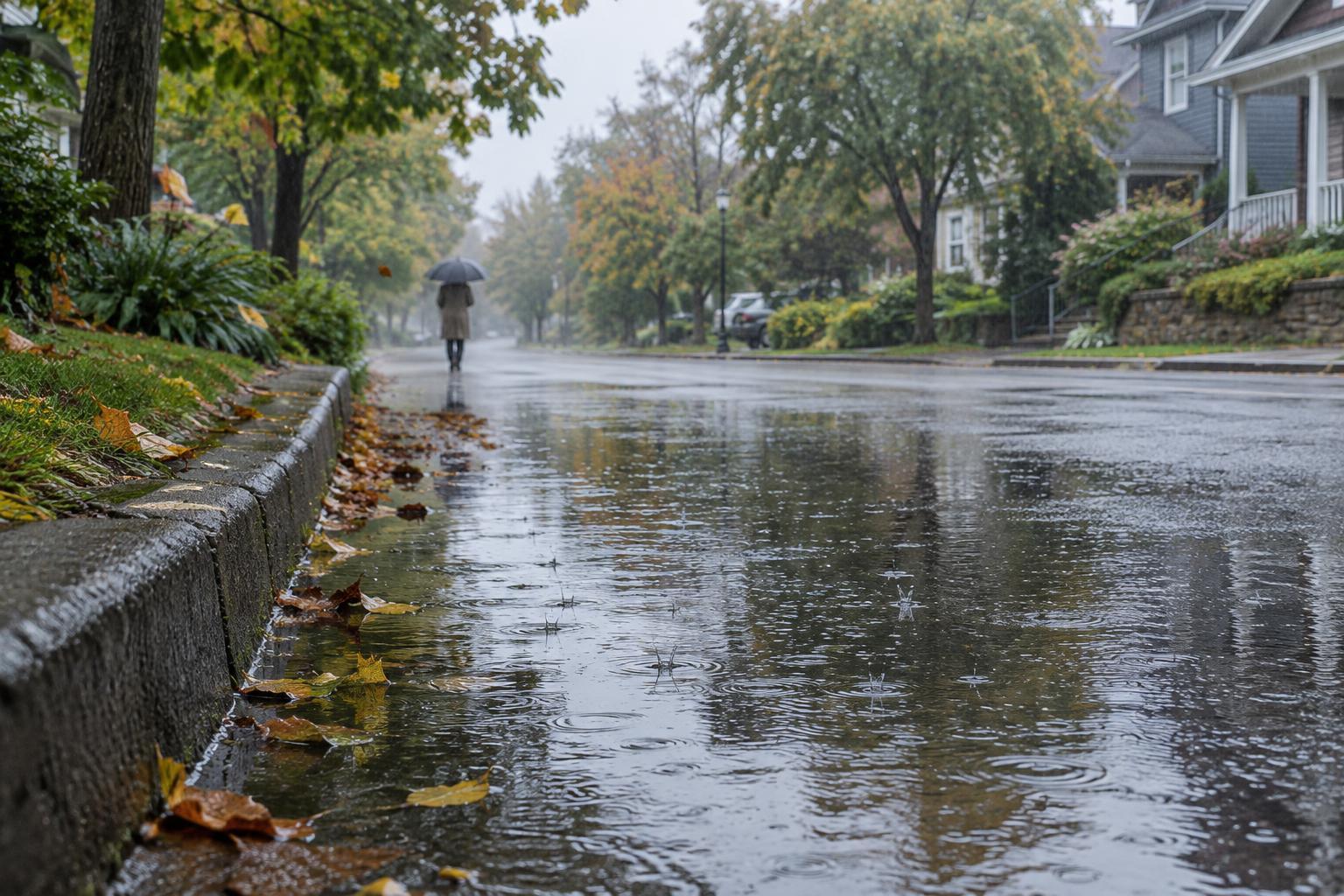
Rain is not a single sound. Light drops tapping a windowsill have a different rhythm from water streaming through a gutter. Drops striking leaves, parked cars, roofs and puddles create overlapping textures. During steady rain, these small impacts can merge into a broad background wash. A passing car or a nearby voice may still be audible, but it has to compete with that wash.
The surfaces underfoot change too. Tires make a noticeable spray on wet roads, while shoes may slap against pavement or splash through shallow water. Under a shelter, you can sometimes hear several versions of the same shower at once: a sharp rattle overhead, softer patter on plants and a low rush from a drain. Listening for each layer separately is a simple way to hear the shape and materials of a place.
Wind makes the surroundings perform
Wind can turn objects that are usually silent into instruments. Branches scrape and leaves rustle; a gate clicks against its latch; an opening beneath a door may whistle. The sound depends on what the air encounters, so a tree-lined path and an exposed row of buildings can have very different windy-day signatures.
It can also alter what reaches your ears. A gust across your face or a microphone can create a rushing sound that covers quieter details. When you turn a corner or step behind a wall, that rush may fade and a distant sound may become clearer. This does not mean the distant source suddenly grew louder. Your position and the competing noise changed. Noticing such moments reveals how shelter, direction and movement shape a listening experience.
Snow can bring a different kind of quiet
After fresh snow, a familiar outdoor space may seem hushed. A soft snow-covered surface can absorb some sound that a hard surface would reflect, and fewer splashing tires or rustling dry leaves may mean fewer competing noises. The effect varies with the snow and the setting: an icy crust, busy road or strong wind can make a snowy day sound anything but quiet.
What breaks that quiet can feel unusually distinct. Footsteps compressing snow have a close, textured crunch; a shovel scraping a path cuts through the softer background. Rather than assuming snow simply turns down the volume, listen for the contrast it creates between broad stillness and nearby, brief sounds.
Try listening to the same place twice
Choose a spot you pass regularly, such as a porch, a bus stop or a view from an open window. Spend a minute listening on a dry day, then revisit it in different weather. Start with three questions: What is making sound now? Which familiar sound is harder to hear? Does anything seem closer, farther away or more sharply defined? You do not need to record the scene to compare it; a few written notes can preserve what caught your attention.
If you do make a recording, listen back for sounds you overlooked at the time. A steady background can draw your attention away from a brief drip, creak or change in traffic noise. The point is not to find the best-sounding weather. It is to hear how a place changes with its conditions. That habit can offer useful ideas for writing, composing or simply noticing more of an everyday walk.