Start with the chord roots
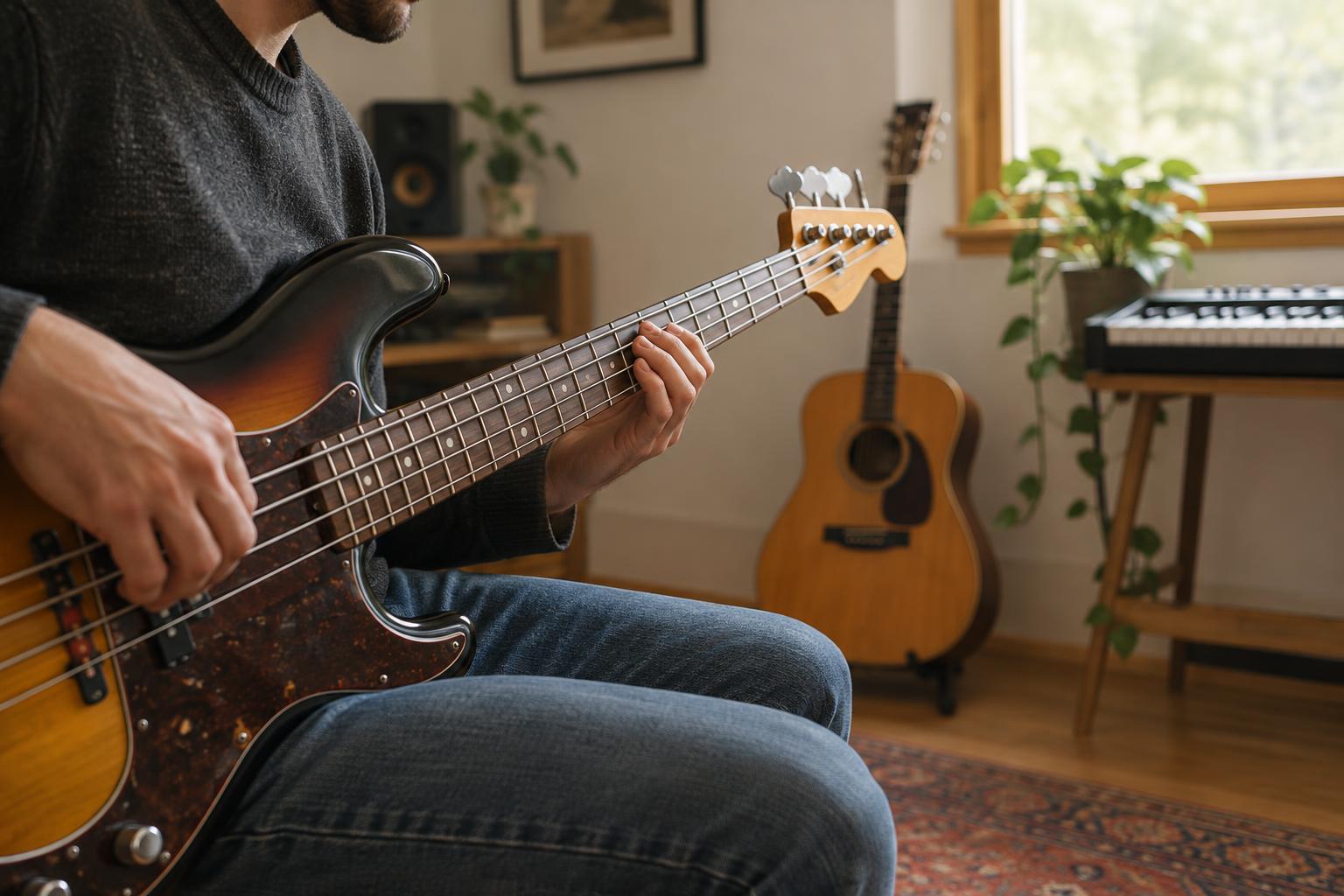
When a bass line feels uncertain, begin with one note per chord: its root. For a progression of C, F and G major chords, play C, F and G in the bass as the chords change. This simple version lets you hear the shape of the progression before you add movement. It also gives you a reference point: every later note should have a reason to be there, even if that reason is simply to create a moment of tension.
Pay attention to when each chord arrives. Playing its root on the chord change usually makes the harmony easy to follow. If a chord lasts for two bars, you need not fill both bars with new notes. Letting a low note ring can give a vocal phrase, melody or keyboard part more room. Record this basic pass, then listen without playing along. Is the progression clear? If so, you have a foundation worth developing.
Choose chord tones before extra notes
Roots are dependable, but they are not your only options. A major chord contains a root, third and fifth; C major, for example, contains C, E and G. Moving from C to G while a C chord plays adds motion without leaving the chord behind. The third can bring out the chord’s major or minor quality, while the fifth often provides a stable change of position. Try each note against the full arrangement rather than judging it in isolation.
You can also place a chord tone on a strong beat and return to the root before the next change. That gives the line a small contour while keeping the harmony recognizable. If the chords are played in a busy pattern, a restrained bass part may work best. If they are held for a long time, a few well-spaced chord tones can help sustain interest. The goal is not to use every available note; it is to choose notes that make the chords feel connected.
Let the song’s rhythm guide you
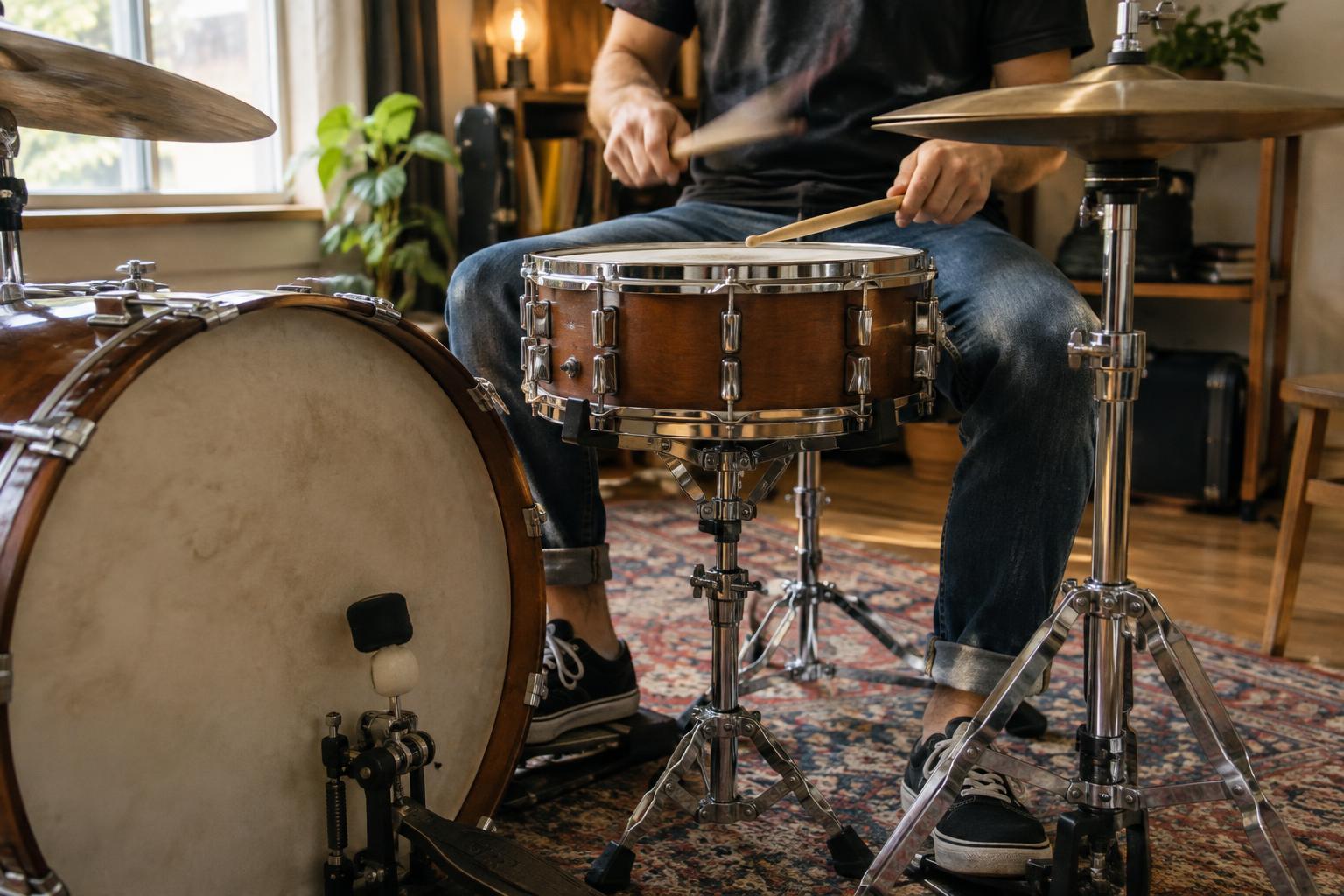
A supportive bass line has a rhythmic job as well as a harmonic one. Listen to the pulse and notice where other parts place their accents. You might play with a kick drum on the first beat, then leave a gap before the next bass note. In a song without drums, the bass can help establish that pulse itself. Either way, the spaces between notes shape the groove as much as the notes do.
Try three versions of the same progression: one sustained root per chord, roots played in a steady repeating rhythm, and a version with a few notes placed just before chord changes. Keep the pitches mostly the same so you can hear what the rhythm changes. A note leading into a new chord can create anticipation, but doing it every time may make the effect predictable. Choose a pattern that serves the phrasing of the song, especially where the melody needs space.
Connect chords with passing notes
Once the main notes feel secure, use a brief passing note to travel between them. Moving from a C bass note toward F, for instance, you could play E shortly before landing on F. The E is part of the C chord, and its step up to F gives the change a sense of direction. You could instead hold C until F arrives if the song calls for a stronger contrast. Both choices can support the same chords.
Passing notes tend to work best when their destination is clear. If a note outside the current chord sounds awkward on a strong beat, try placing it briefly between beats or removing it. Listen especially to the melody: a bass note that sounds good alone may compete with a prominent sung note. You do not have to connect every chord with a run. One small movement at the end of a phrase can be more memorable than continuous motion.
Check the line in the full arrangement
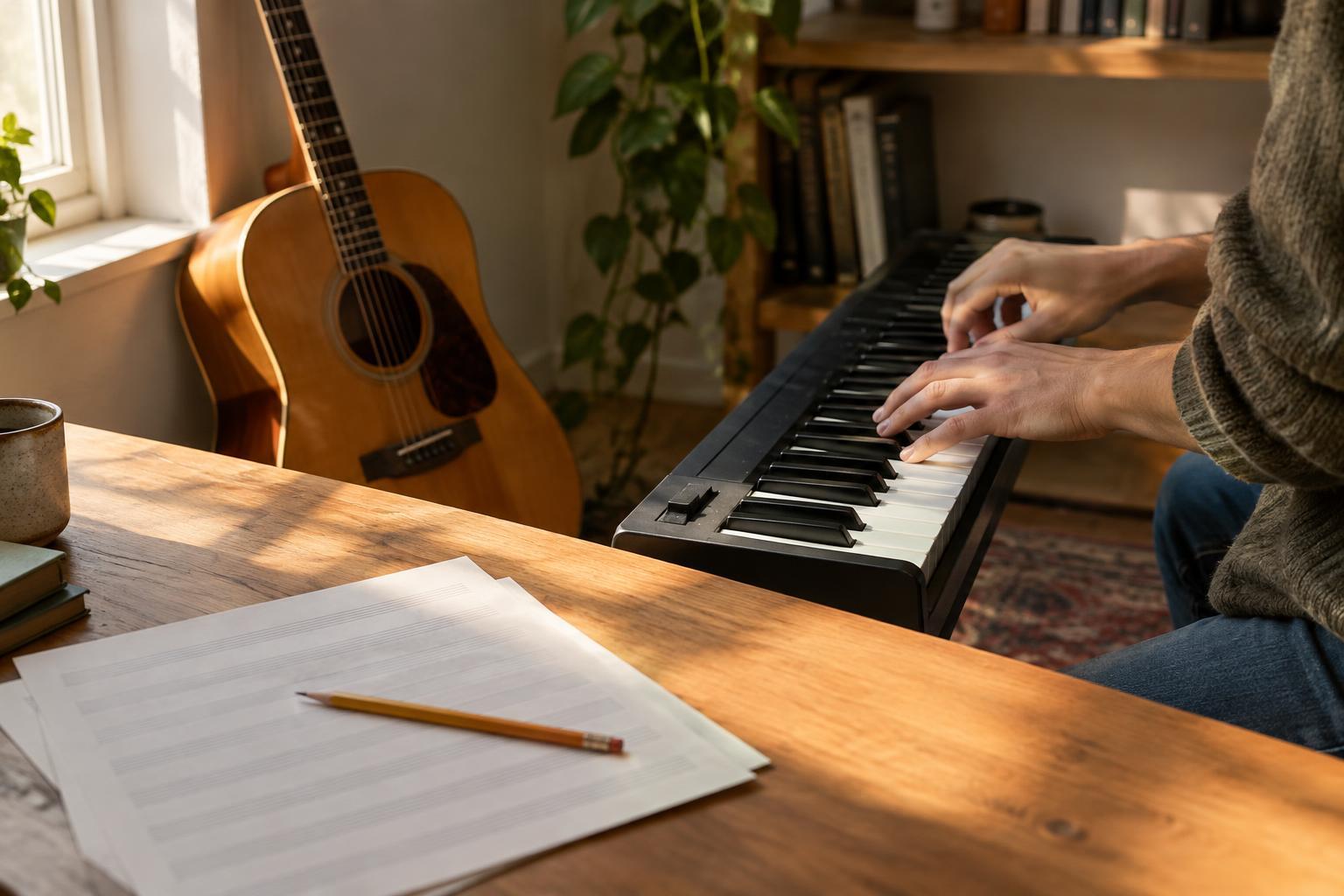
The final test is how the bass works alongside everything else. Play or record the chords, melody and bass together, then listen at a comfortable volume. Can you follow the chord changes? Does the bass add momentum without pulling attention away from the main idea? If a passage feels crowded, simplify the rhythm first. If it feels flat, try changing the length of a note or approaching one chord from a nearby pitch.
Also consider register. Very low notes can sound less distinct on some speakers, while a higher bass line may begin to overlap with guitars, piano or vocals. Try the same phrase in another octave and listen for clarity rather than assuming lower is always stronger. Keep the version that gives the song a firm foundation. A useful bass line does not need many notes: it needs the right notes, placed where they help the chords tell their story.