Start with one ordinary morning
A sound map is a record of what you hear in a place or during a stretch of time. It does not need to be a precise diagram or a complete inventory. For a morning routine, a short timeline is often more useful than a floor plan: it can follow you from waking up to leaving home, or from your first cup of tea to the start of work.
Choose one morning to observe without trying to make it special. Keep a notebook or phone note nearby, and write down sounds as they occur: an alarm, water running, a cupboard closing, footsteps on stairs. If your morning moves quickly, jot down a few words and fill in the details later. The aim is to capture what you actually noticed, not every sound that might have been there.
Give the sounds a place on the map
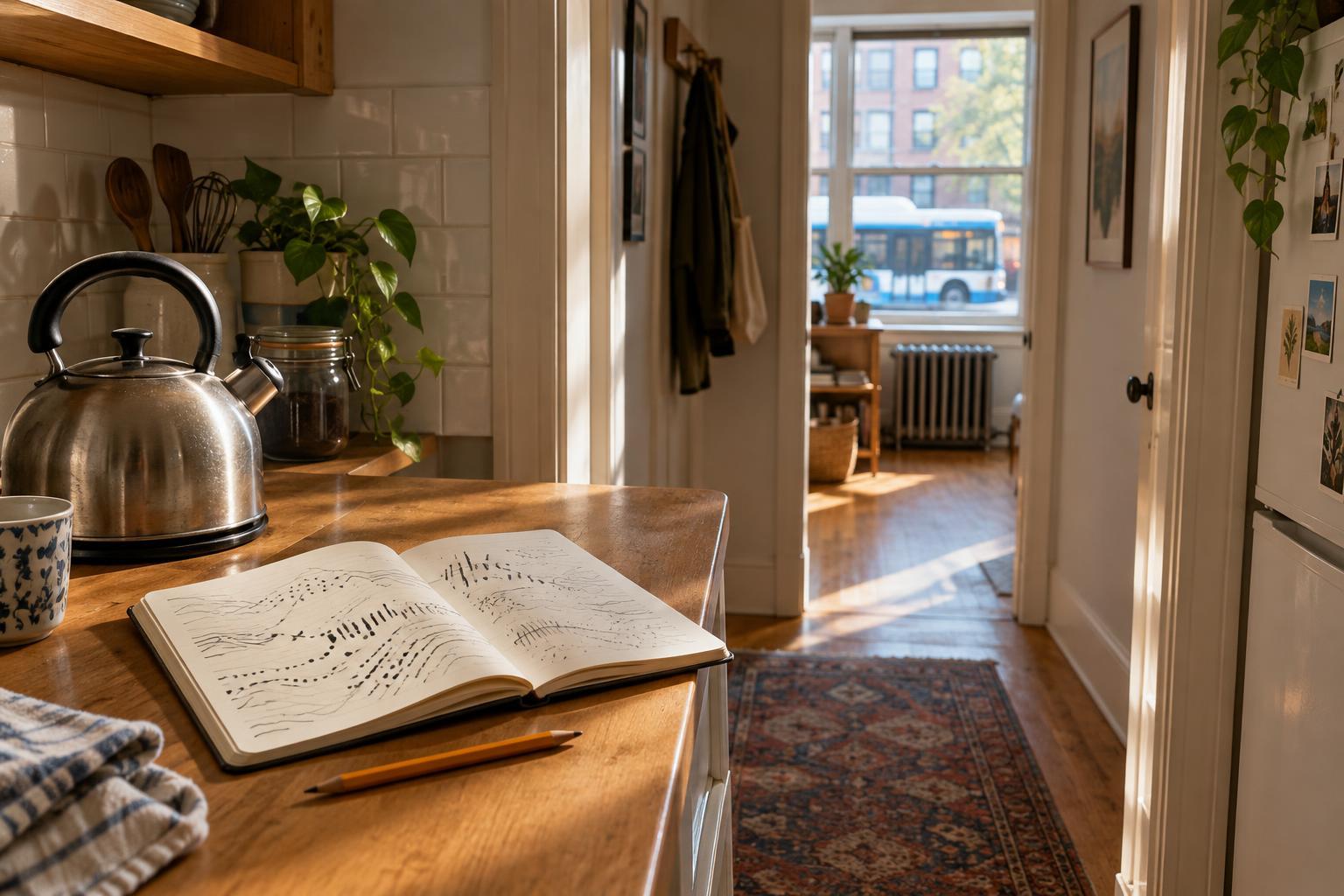
Draw a line across a page and divide it into a few stages, such as waking, getting ready, breakfast and the journey out. Add each sound near the stage where you heard it. You can mark repeated sounds with several small entries or one note that says “returns.” If you stay in one space, try sketching the room instead and placing sounds roughly where they seem to come from.
Add simple details that will help you remember the experience. Was the sound close or distant, steady or brief, sharp or soft? Did it stand out against a quiet background, or blend with several other sounds? There is no need for technical vocabulary. “Keys clink by the door” may tell you more about your morning than a complicated description.
Leave room for uncertainty. A low rumble beyond the window might be traffic, a delivery vehicle or something you cannot identify. Write “distant rumble” rather than guessing. Sound maps are records of listening, and not knowing a source can be part of that record.
Listen for patterns and transitions
Once the timeline has a few entries, look at how one stage gives way to another. Perhaps the bedroom begins with a fan and a quiet street, then the kitchen brings cupboard doors, water and dishes. At the front door, indoor sounds may fade as voices and traffic become clearer. These changes can make a routine feel like a sequence of scenes, each with its own sound.
Notice sounds that act as cues. The click of a light switch may mark the start of getting ready; the kettle switching off may signal a pause; a gate closing may mark the end of time at home. Also look for sounds you usually overlook, such as fabric moving as you put on a coat. You do not have to assign an emotion to each one. It is enough to ask which sounds feel familiar, which draw your attention and which help you recognize a particular moment.
Decide whether recording would help
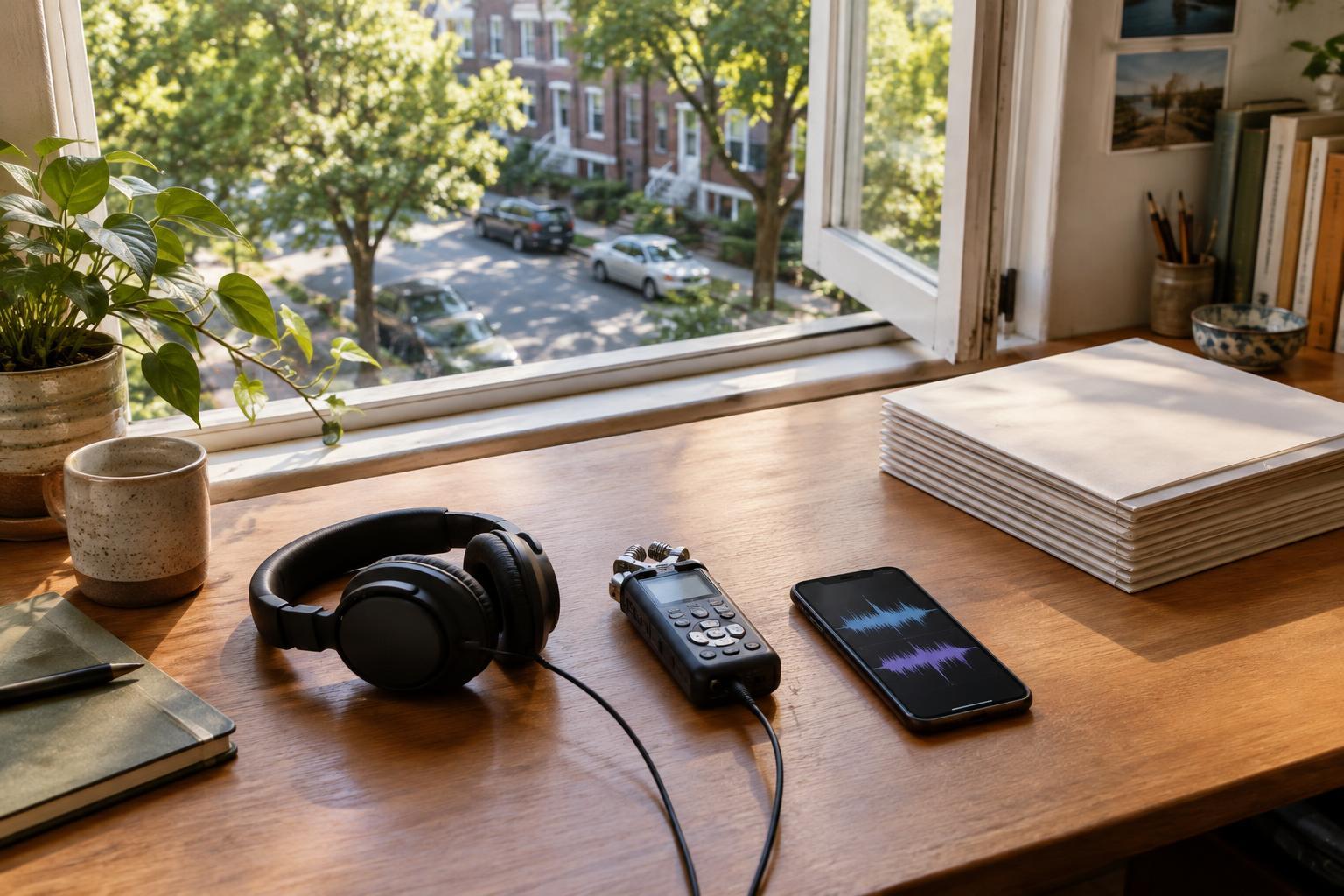
Written notes are enough to make a sound map, but a short recording can help you revisit details you missed. If you record, choose a moment when the device will not interrupt what you are doing. Label the file with the stage of your routine, then listen back once and add any details that seem useful. A recording can capture overlapping sounds particularly well, though it may not match how you heard them at the time.
Be considerate of other people’s privacy. Avoid recording private conversations, and ask permission before intentionally capturing someone else’s voice. You can always describe a sound in words instead. If you listen while walking or travelling, keep enough attention on your surroundings to move safely.
Make the map your own
There is no single finished form. You might turn your notes into a clean timeline, draw symbols for recurring sounds, or use different words to show foreground and background. For a creative exercise, arrange the entries as a short sequence: a quiet opening, a busy middle and the change in atmosphere as you step outside. That structure can suggest a scene without requiring a melody or a recording.
Try mapping another morning only if you are curious about what changes. A rain shower, an open window or a different route may alter the soundscape, while some small cues remain the same. Comparing the maps can show which sounds belong to the setting and which belong to your habits. Even a single map, though, offers a fresh way to hear a familiar part of the day.