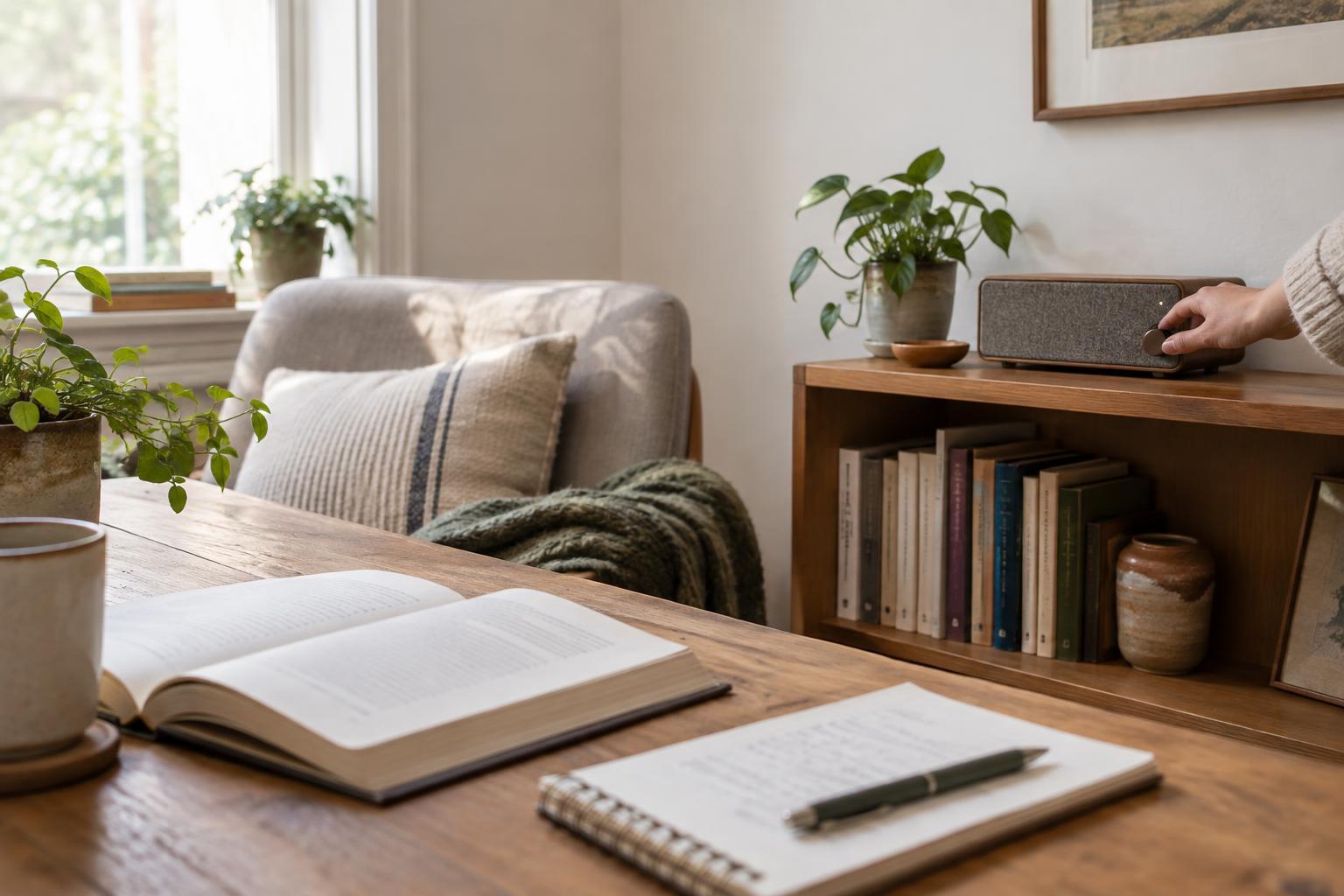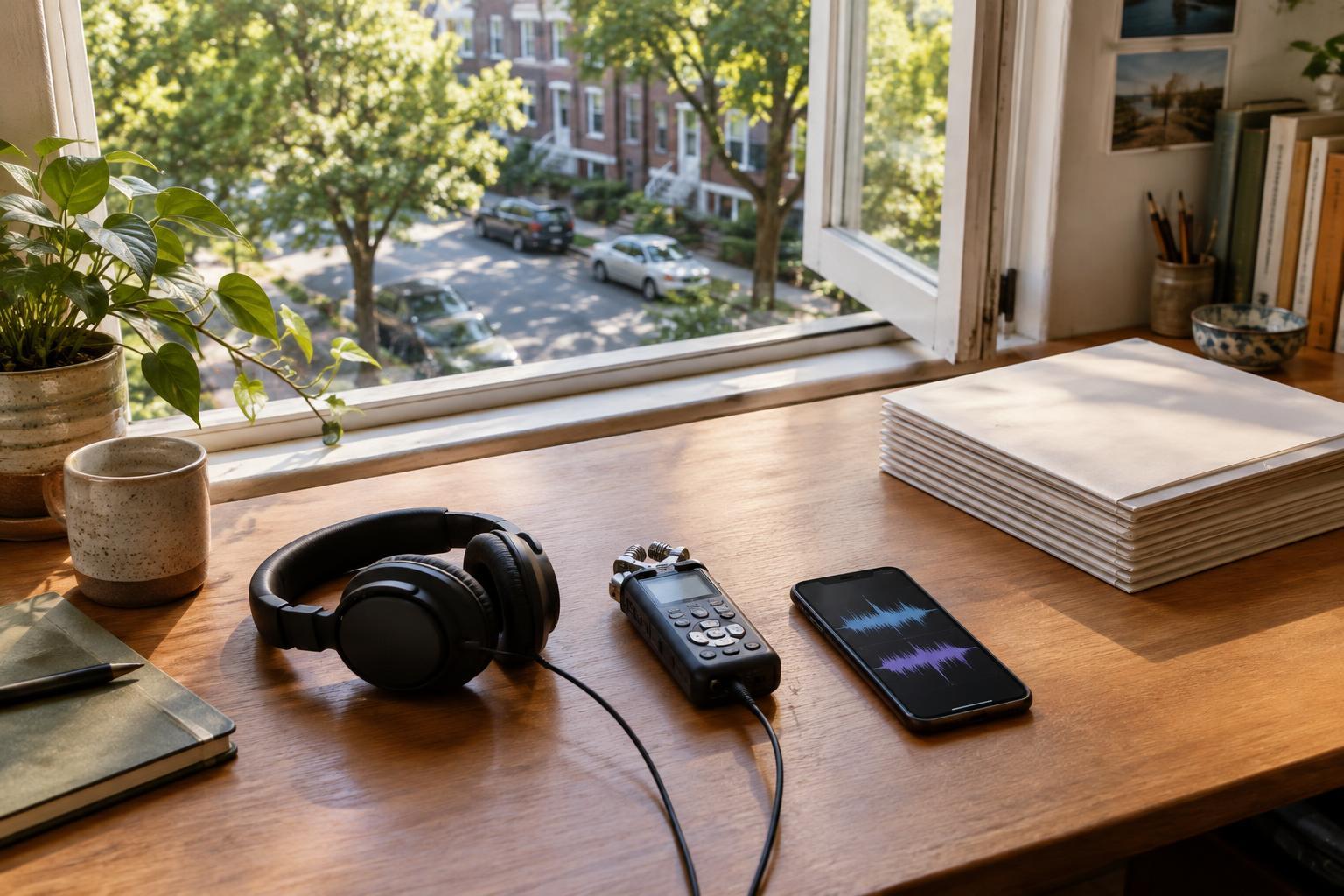
Start low, then let the music settle
A comfortable volume gives you enough sound to follow what matters in the music without making you feel that you need to pull away from it. There is no single setting that works for every recording, device or room. A quiet acoustic track, a densely layered film score and a spoken-word recording may each invite a different adjustment.
Begin lower than you think you need, especially when you put on headphones or start a new playlist. Bring the volume up gradually until you can hear the melody, words or textures you came to enjoy. Then leave it there for a moment. Your first impulse may be to turn it up further, but a short pause gives you time to notice whether the level already works.
Listen for comfort as well as detail
A good level makes it easy to stay with a piece of music. If sharp sounds feel startling, vocals seem to press forward too forcefully or you find yourself tensing during loud passages, try turning it down. You can still appreciate the shape of a drum hit or the swell of an orchestra at a gentler level. Impact comes from contrast and timing, not just loudness.
Check in after a few tracks rather than judging by the opening seconds alone. Does the sound still feel pleasant? Are you turning up each new song to chase the excitement of the last one? Recordings can vary in loudness, and a setting that suited one track may not suit the next. Reaching for the volume control is fine; the useful habit is to make each adjustment deliberately.
Let your surroundings guide the setting
The same volume can feel different in a quiet bedroom, a busy kitchen or on a train. Background noise may tempt you to raise music until it covers everything else. Before doing that, consider whether you can move somewhere quieter, pause until the noisy moment passes or use headphones that reduce outside noise through their fit. You may be able to hear more clearly without making the playback louder.
Your surroundings also determine how much you need to hear beyond the music. While walking near traffic, cooking with other people or waiting for an announcement, keep the level low enough to stay aware of relevant sounds. In a shared space, speaker volume is a matter of comfort for others too. A level that fills your side of the room may carry farther than you expect.
Make small device choices work for you
Headphones and speakers present sound differently. With headphones, music is close to your ears and can make a modest setting feel immersive. With speakers, placement can affect what you hear: if one instrument seems buried, moving closer to a balanced listening position may help more than increasing the volume. Neither device type has one universally comfortable setting.
Notice features that change playback automatically. A playlist may include tracks mastered at different levels, while volume-normalization settings can reduce some jumps between them. Equalizer settings can also change which sounds stand out. If bass is overwhelming or voices are hard to follow, a small adjustment to the sound balance may be more satisfying than turning everything up.
Build a listening habit you can return to
Choosing a volume is not a test you pass once. Before a long listening session, start at a moderate-feeling level and revisit it when the music, device or environment changes. Take a pause now and then to hear the room again. If the music feels uncomfortably intense, or your ears seem to need a break, turn it down or stop for a while.
Comfortable listening leaves room for curiosity. At a level you enjoy, you can follow a bass line, catch a quiet lyric or notice how a composer leaves space before a dramatic entrance. The goal is not to make every sound as big as possible. It is to find a setting that helps you keep listening with attention and pleasure.