Two ways to make a listening space
The same song can feel different through headphones and speakers. Headphones place sound close to your ears and largely separate it from the room. Speakers send sound into the space around you, where walls, furniture and your position all help shape what you hear. Neither approach is automatically more faithful or more enjoyable. The better choice depends on what you want from a particular listening session.
For focused listening, headphones can bring small details forward: a quiet backing vocal, a breath before a phrase or a percussion part tucked behind the beat. Speakers offer another kind of perspective. Music can occupy a room while you move through it, and the distance between you and the sound may make an arrangement feel more like a performance taking place in your home. Try thinking of these as two viewpoints on the same recording rather than rivals.
What your room adds to the music
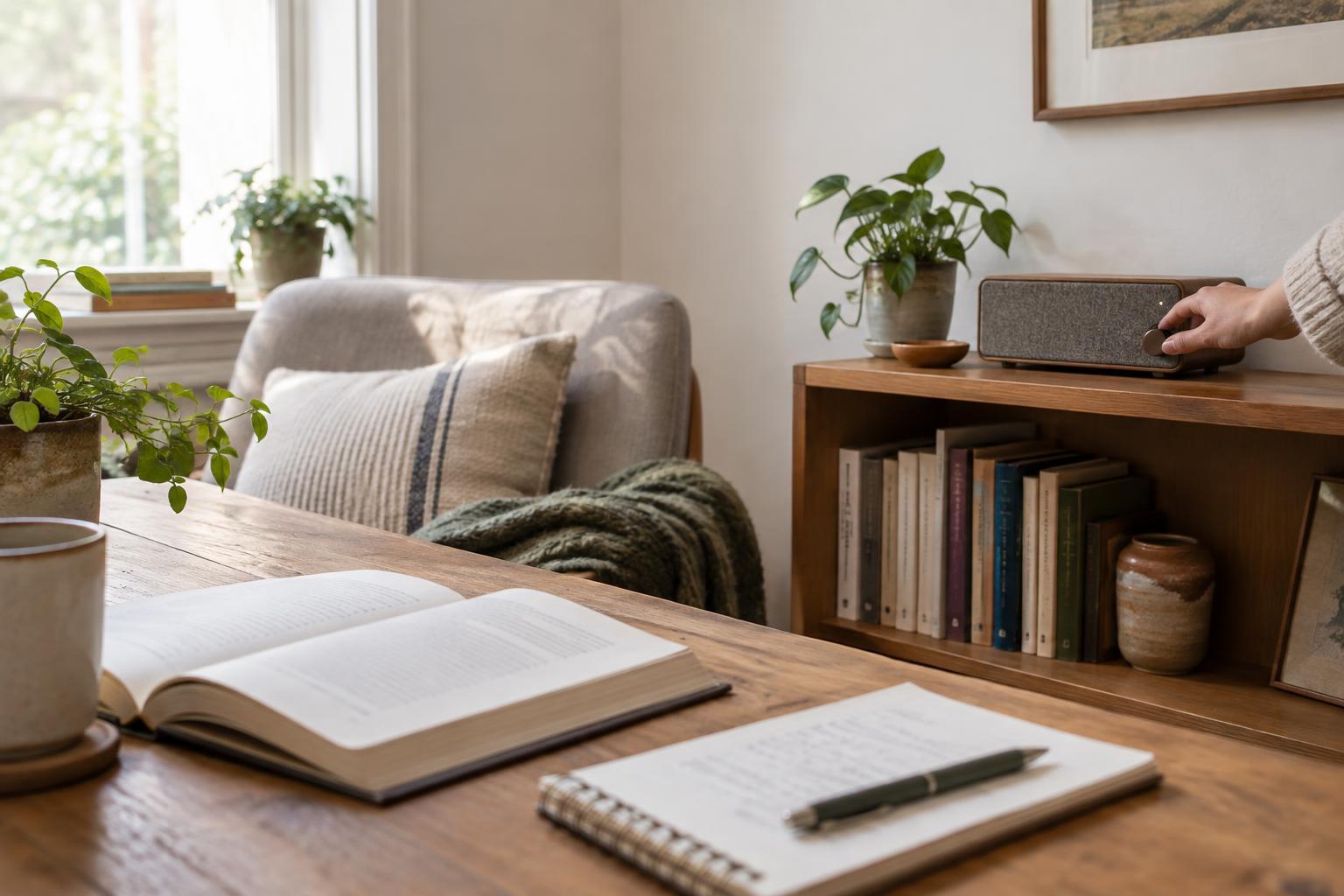
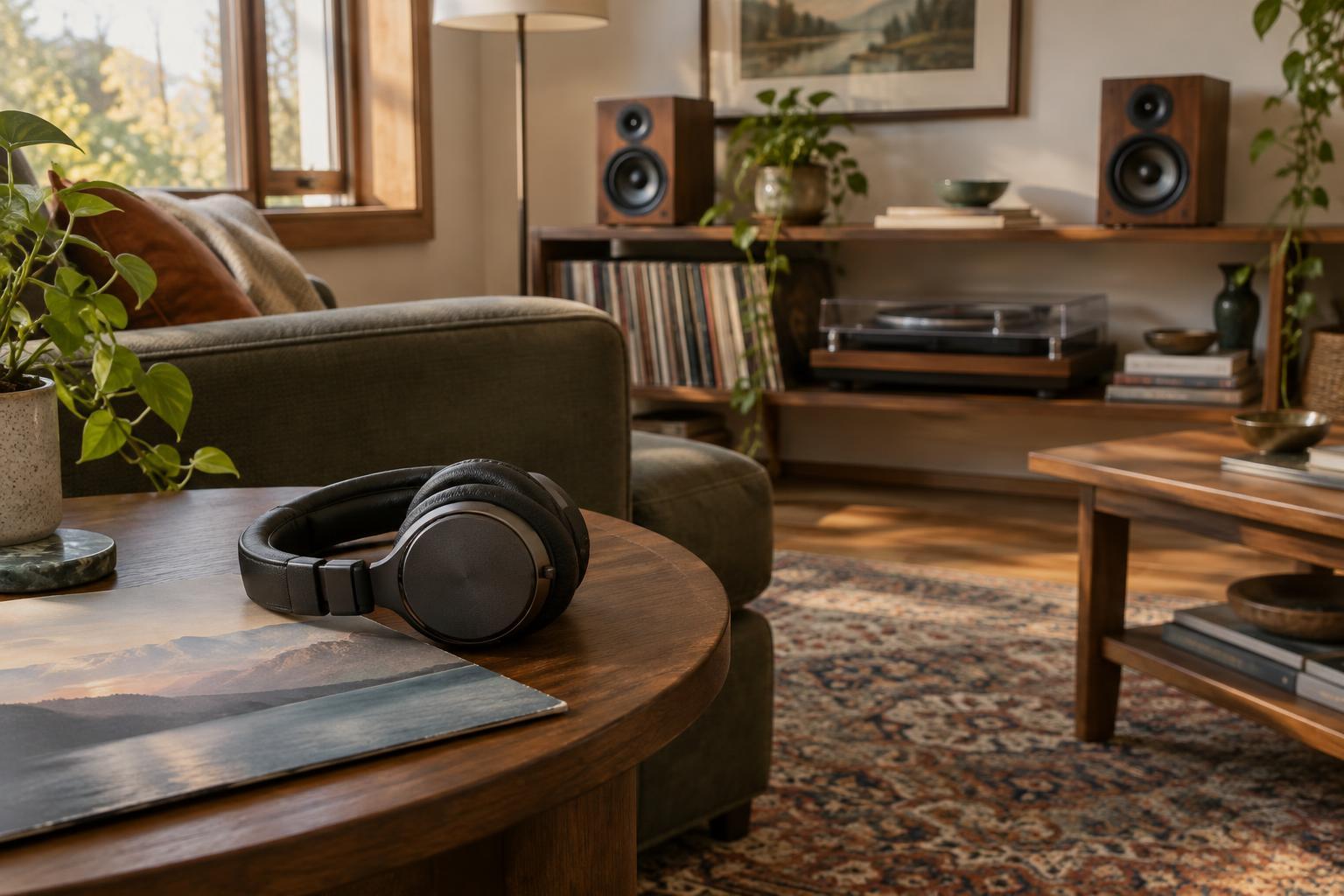
Speakers interact with their surroundings. A reflective, sparsely furnished room may make some sounds seem sharper or less distinct, while a room with rugs, curtains and upholstered furniture may sound more subdued. Placement matters too. Speakers tucked into corners or crowded onto a shelf can sound different from the same pair set out with some breathing room. You do not need a specially designed room to enjoy them, but it helps to experiment before deciding that the speakers themselves are the problem.
Start with a familiar song and sit where you normally listen. Move the speakers a little, then listen again at the same volume. If you use two speakers, try to give each a similar relationship to your usual seat and avoid blocking either one with objects. Small changes can make vocals easier to follow or make the balance feel more natural. Once you find a position you like, remember that music may sound different when you stand up, cross the room or listen from the kitchen.
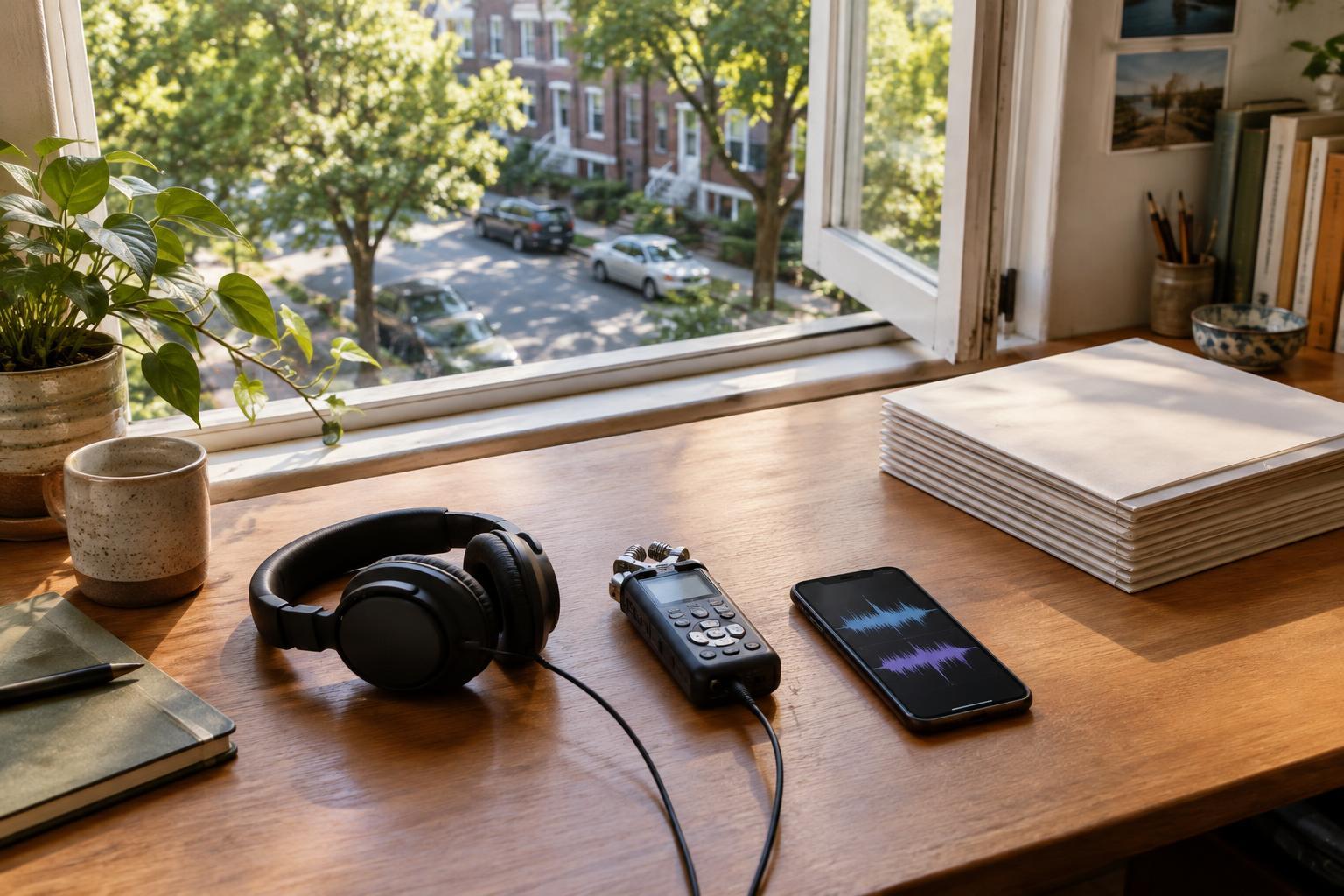
Headphones remove many of those room variables, which can be useful in a small or awkward space. They introduce their own variables, though: fit, ear-pad condition and how securely they sit can affect the sound. A pair that sounds impressive for a few minutes may be less appealing if you constantly need to adjust it.
Attention, privacy and company
Headphones are an easy choice when you want to listen without involving everyone nearby. They can help you stay with a long album, revisit a lyric or follow the sound design in a film scene. They also let someone else read, work or sleep in a nearby room without having to share your soundtrack. If you need to remain aware of what is happening at home, however, consider how much outside sound your headphones let through.
Speakers make listening more open. A song can accompany cooking, cleaning or a conversation, and another person can join in without borrowing your equipment. That openness can be part of the pleasure: you can point out a favorite instrument or let a playlist set the mood for an evening. It also means agreeing on volume and material with the people who share the space. A good home setup is one that works for the household, not just for the person pressing play.
Some recordings invite a deliberate choice. For a densely layered piece, try headphones when you want to trace individual sounds, then speakers when you want to hear how those parts work together in the room. For background listening, ask whether you want music to accompany what you are doing or become the main event.
Comfort matters over a whole album
An enjoyable listening setup should still feel inviting after several tracks. With headphones, pay attention to weight, pressure around your ears and whether the pads feel comfortable over time. Cables can be reassuringly simple at a desk but awkward when you move around; wireless models offer freedom of movement but need charging. Speakers avoid anything resting on your head, though they ask you to stay mindful of neighbors and other rooms.
Whichever you use, begin at a modest volume and turn it up only as much as you need to hear comfortably. If you catch yourself raising the level to compete with an appliance or street noise, it may be better to change where or when you listen. The goal is not to make every detail equally prominent at all times. A quiet song can be satisfying without filling the whole house.
Choose by routine, not by a single verdict
Before buying or rearranging equipment, picture three ordinary moments: listening closely to a new album, putting music on while you do a task and sharing a favorite track with someone else. If the first happens most often and privacy is important, headphones may earn the central place in your setup. If music usually accompanies life around the house, speakers may feel more natural. Many homes benefit from both, even if one option is simple and inexpensive.
Use music you know when comparing options, and keep the volume reasonably similar. Notice whether you can follow the parts you care about, whether the sound feels pleasant from your usual position and whether the setup fits your routine without fuss. The best listening choice is not the one that wins an abstract contest. It is the one that helps you return to music with curiosity, whether that means sitting close to every detail or letting a song travel across the room.