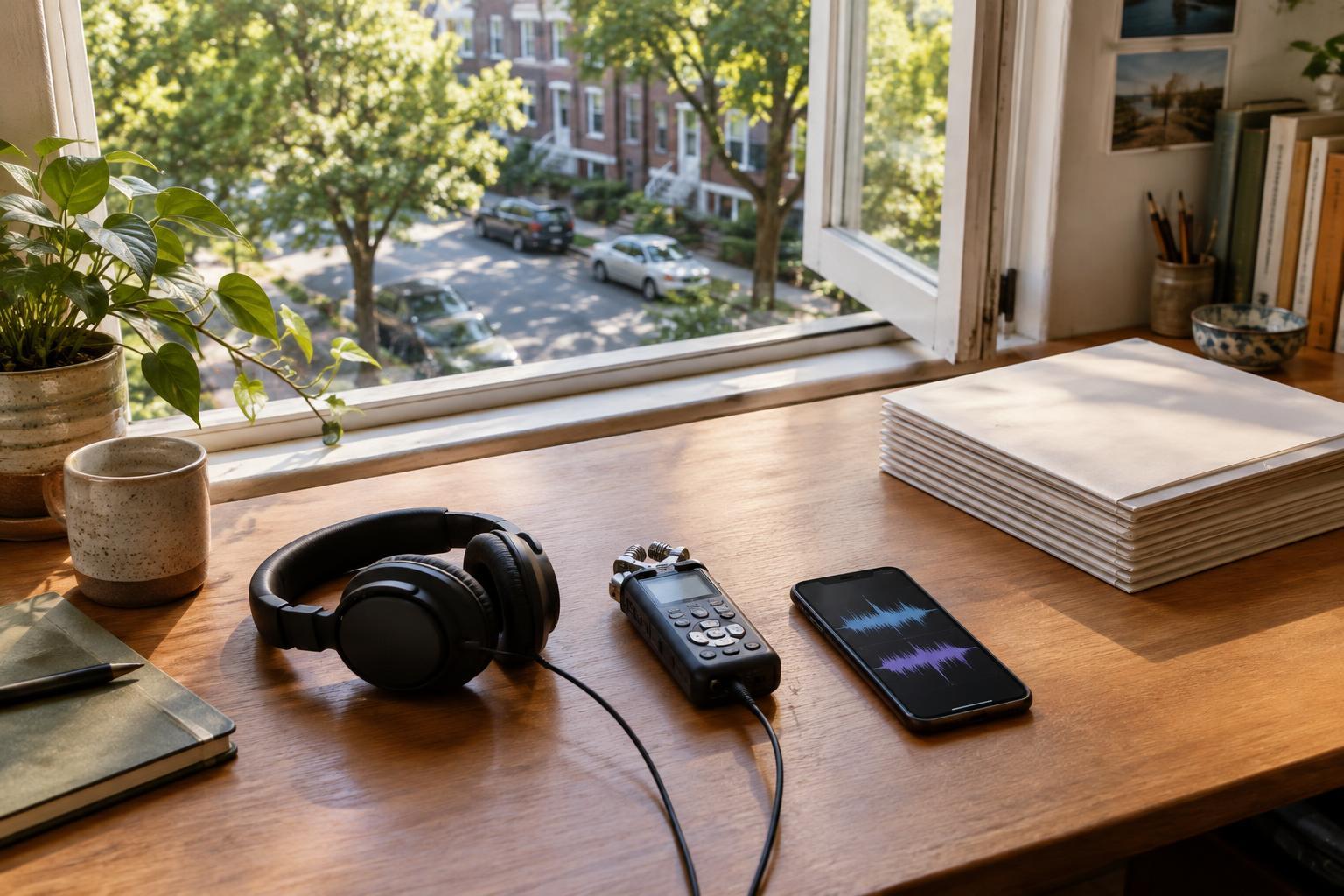
A soundscape has more than one layer
Imagine sitting at a kitchen table while someone tells you a story. Their voice is likely in the foreground: you follow the words, pauses and changes in tone. Behind it, a refrigerator hums, a spoon touches a cup, and traffic passes outside. Those sounds have not disappeared. They are part of the scene, even if you barely notice them.
Foreground and background describe your relationship to sounds, not permanent properties of the sounds themselves. A passing car may stay in the background while you talk, then become the main event when you wait for a quiet moment to cross the street. A spoon’s small clink may suddenly stand out after the conversation ends. What seems prominent can change even when you remain in the same place.
Attention is an active part of listening
The ear receives sound from many directions, but attention helps you select what to follow. You might focus on one speaker in a busy room, track a melody beneath a singer, or notice the rhythm of footsteps on a walk. Familiarity also plays a part. A steady fan may become easy to overlook, while a new rattle draws your attention because it differs from what you expected.
This does not mean background sound has no effect on your experience. The low wash of traffic can make a café feel different from a quiet library, even when neither sound is the subject of your attention. Equally, bringing that wash into the foreground may reveal individual details: a bicycle bell, tires on wet pavement, or a door closing across the street. Listening closely can turn what seemed like one continuous texture into several distinct events.
What changes when you shift your focus
Try listening to a familiar place for a minute without trying to identify every sound at once. First, choose one foreground sound, such as a voice, a clock or your footsteps. Notice its pace, volume and interruptions. Then let your attention move outward. What is the most constant sound? Which sounds appear only briefly? Are some close and crisp while others seem distant or muffled?
You can also reverse the exercise. Start with the broad atmosphere of a room or street, then pick out one detail and follow it. A sound that initially seems minor may have a pattern of its own, such as the uneven tapping of rain on different surfaces. If the setting is busy, you may lose track of the detail and find it again. That is part of the exercise: attention shifts, and the soundscape offers more than one possible path through it.
Why background sound matters to stories
Everyday listening can sharpen the way you hear a film, song or spoken story. A scene does not need a loud sound to establish a place. Soft wind beneath dialogue might suggest an open outdoor space; a faint appliance hum might make an interior feel lived-in. The same foreground action can feel different when its surrounding sounds change. Silence, too, may be noticeable when an expected background sound drops away.
Musicians and sound makers can use this relationship deliberately. A quiet repeated note may sit behind a melody until the melody pauses, allowing the repeated note to come forward. In a recording, a breath, a finger moving on a string, or a chair creak can remind us that a performance happened in a physical space. Whether those details feel welcome or distracting depends on the work and the listener, but noticing them offers another way into the story the sound tells.
Make room for more than the loudest sound
You do not need special equipment or an unfamiliar location to explore foreground and background. Listen from a window, on a routine walk, or while preparing a meal. If you want to remember what you heard, jot down three sounds: one you followed, one that stayed behind it, and one that unexpectedly caught your attention. On another day, listen in the same place and see whether you choose the same sounds.
There is no requirement to treat every noise as beautiful or meaningful. Some sounds are distracting, and some places offer little opportunity to listen calmly. The useful habit is simply to recognize that hearing a place and attending to it are not quite the same thing. When you shift your focus, you may find more detail in an ordinary moment—and a clearer sense of how its many sounds fit together.