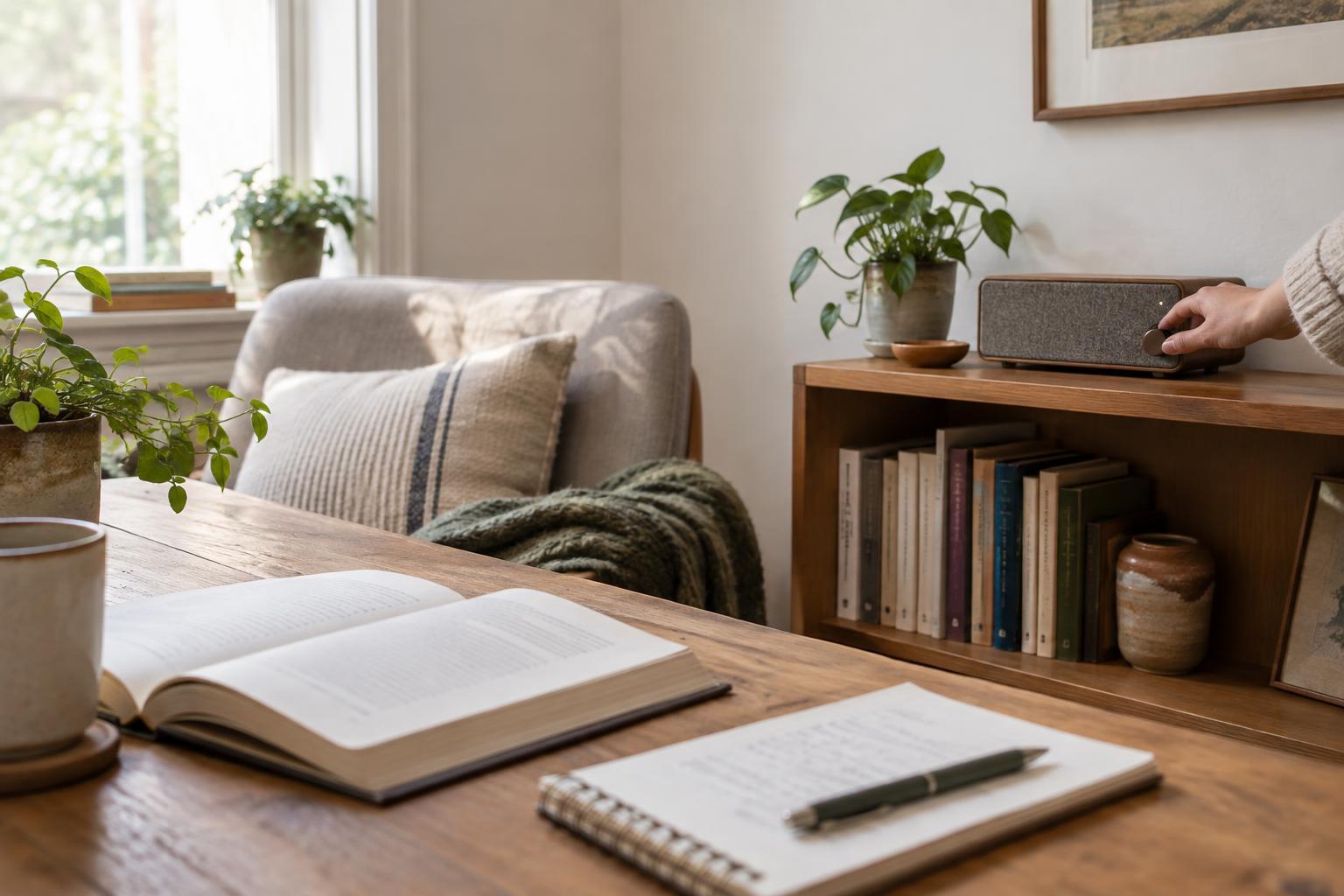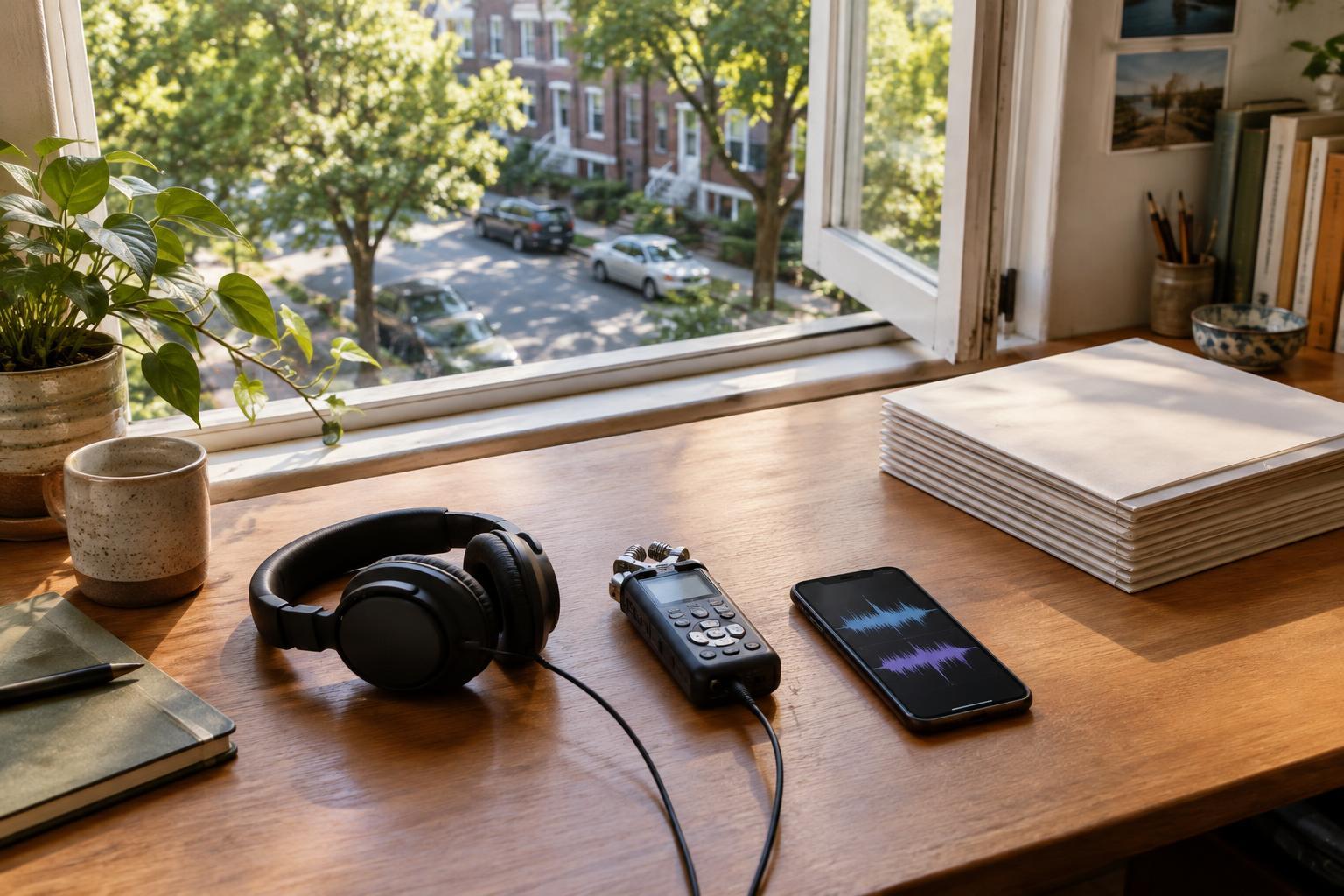
Start with the work, not the playlist
Before pressing play, ask what the next stretch of work requires. Sorting files, formatting a document or repeating a familiar physical task may leave plenty of attention available for music. Drafting a difficult paragraph, learning an unfamiliar idea or checking fine details may ask for more of it. The same song can feel welcome during one task and intrusive during another.
It helps to make the decision for a specific block of time rather than for the whole day. You might choose music while gathering materials, switch to silence while shaping an argument and bring music back for routine edits. This treats sound as part of the workspace: something you can adjust when the work changes.
Notice what competes for your attention
Words in a song can be hard to ignore when you are reading, writing or working with language. Even familiar lyrics may pull you toward a line you know by heart. Instrumental music removes that particular competition, though a dramatic melody, sudden change in volume or busy rhythm can still draw attention away from the page.
Predictability often matters more than genre. A steady piece you know well may settle into the background, while a new recording invites close listening. Shuffle can add another small demand: every track change asks you to take in a new mood and pace. If you want music to stay in the background, try a short selection with a consistent feel and a volume low enough that you do not have to listen over it.
Pay attention to the moments when you pause your work to follow the sound. That is not a failure of concentration; it is useful information. Perhaps the music deserves its own listening break, or perhaps the task needs a quieter setting.
Give silence a fair trial
Silence is not always easy to find, and a silent room is not necessarily free from distraction. A ticking clock, voices beyond a door or your own urge to check something else can become more noticeable when music stops. Still, a few minutes without a chosen soundtrack can show you what the task actually needs.
Try silence when you are holding several ideas in mind, deciding how to begin or reviewing work for errors. Rather than waiting until a song becomes irritating, turn it off at a natural stopping point and continue for a short block. Notice whether you reread less, lose your train of thought less often or simply prefer the space. If the room itself is distracting, a fan or other unobtrusive background sound may offer a middle option without asking you to follow a composition.
Use music to mark transitions
Music can be useful without playing throughout a work session. One song might accompany setting up a desk; another might signal a break after a demanding task. These small rituals can make the boundary between activities more distinct. They also let you enjoy a track fully instead of asking it to be both engaging and ignorable.
For work that benefits from momentum, consider an uninterrupted stretch of music followed by a deliberate pause. At the pause, ask whether you are still working comfortably or whether the soundtrack has become the main event. You can lower the volume, choose something simpler or stop playback. There is no need to keep a playlist running just because it helped you get started.
Build a flexible listening habit
A useful approach is to keep a few options ready: a familiar selection for routine tasks, a quieter instrumental choice for lighter thinking and silence for work that feels language-heavy or intricate. These are starting points, not rules. Your response can change with the task, the room and your familiarity with the music.
When you are unsure, run a simple comparison. Spend one work block with a chosen soundtrack and the next without it, using similar tasks if possible. Instead of judging by mood alone, notice whether you finish the step you intended, how often you restart and whether listening makes the work feel more or less effortful. Over time, those observations are more useful than a universal claim that music helps or hurts focus.
The best choice is the one that leaves enough room for both your work and your ears. Sometimes that means a song you love. Sometimes it means letting the room be quiet.