Choose a clip and watch before you play
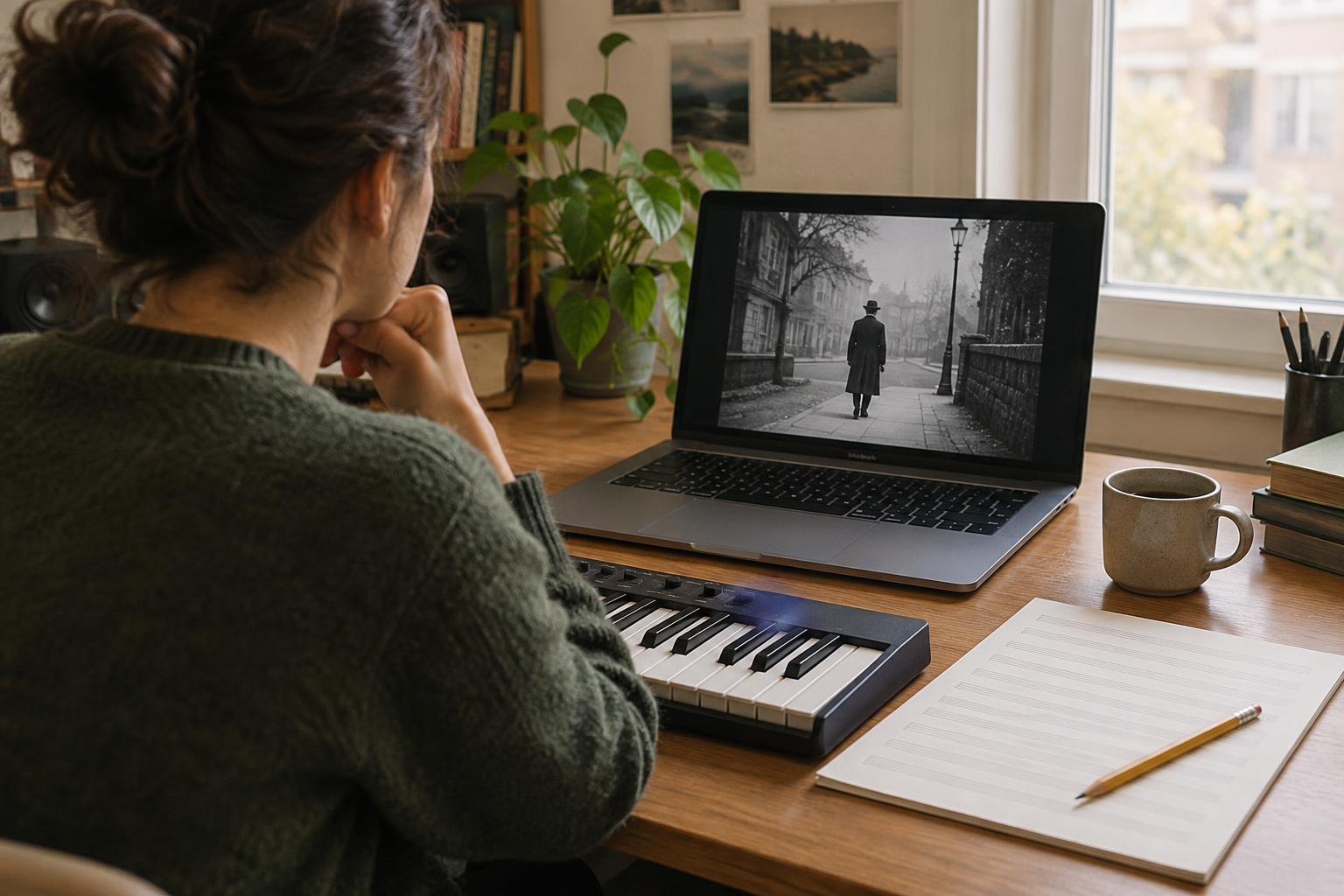
A film cue is a piece of music written for a particular stretch of picture. For a first attempt, choose a silent clip of roughly 30 to 90 seconds with a clear action or change: someone finds an object, waits for a visitor or decides whether to open a door. A short scene gives you enough to respond to without requiring a full score. If you plan to share your finished work, use footage you made or have permission to use.
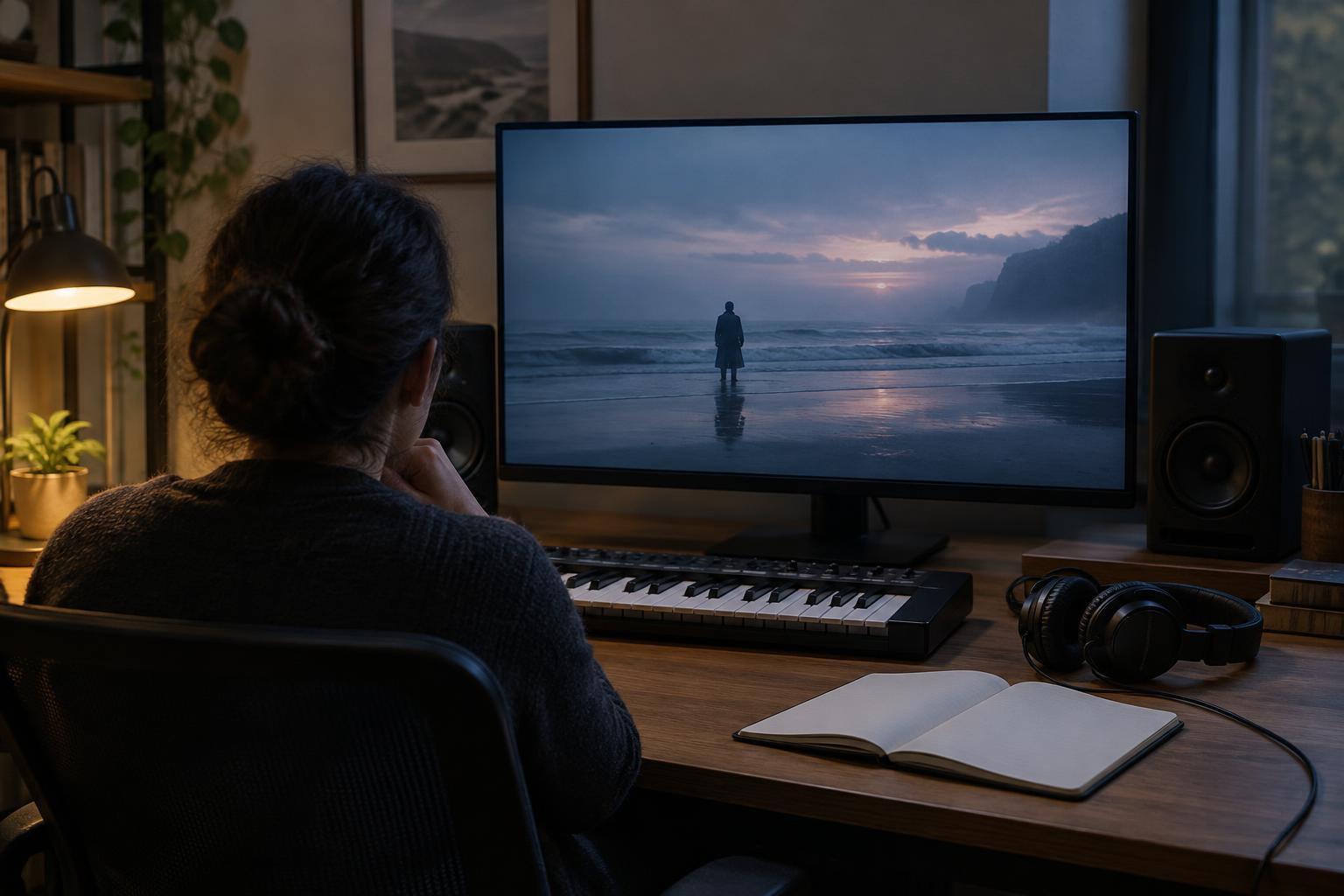
Watch the clip once without touching an instrument. Describe what happens in plain language, then ask what the viewer knows at the beginning and what has changed by the end. Notice the pace of the cuts, but pay equal attention to faces, gestures and pauses. A quick edit does not always call for quick music; the character’s reaction may be the real center of the scene.
Mark the moments that matter
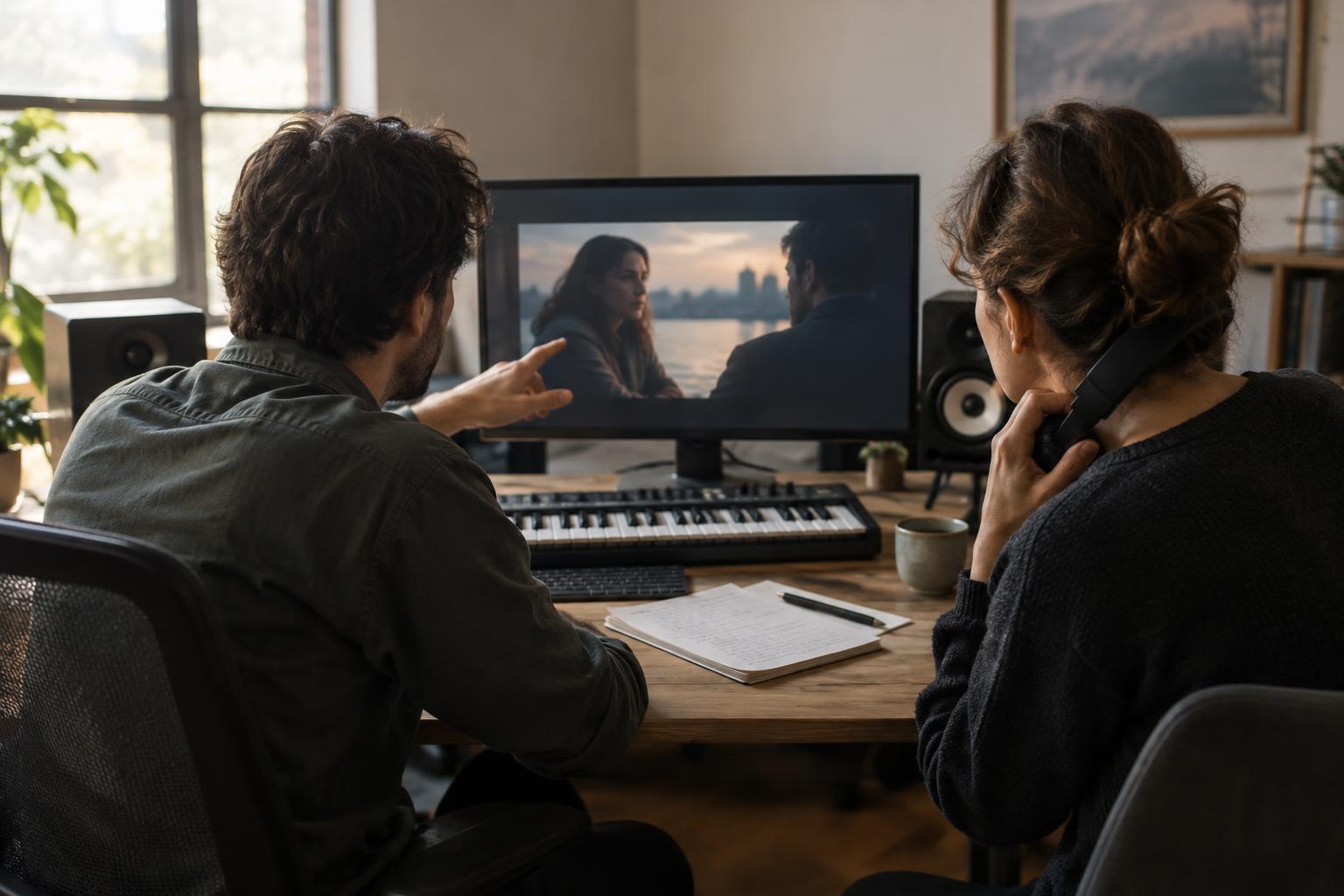
Watch again and jot down a few story beats with their approximate times. You might mark when a character notices something, when the meaning of it becomes clear and when the scene ends. These marks are often called hit points. You do not need to accent every one. Choose one or two that deserve a musical change, such as a new chord, a brief silence or the entrance of a melody.
Decide where the cue should begin and end. Starting before the main action can create anticipation; waiting until a character reacts can shift attention toward their feelings. Try watching the clip both ways. At the end, consider whether the music should resolve with the image, stop abruptly or leave a note hanging. Each choice suggests a different reading of the same scene.
Build one clear musical idea
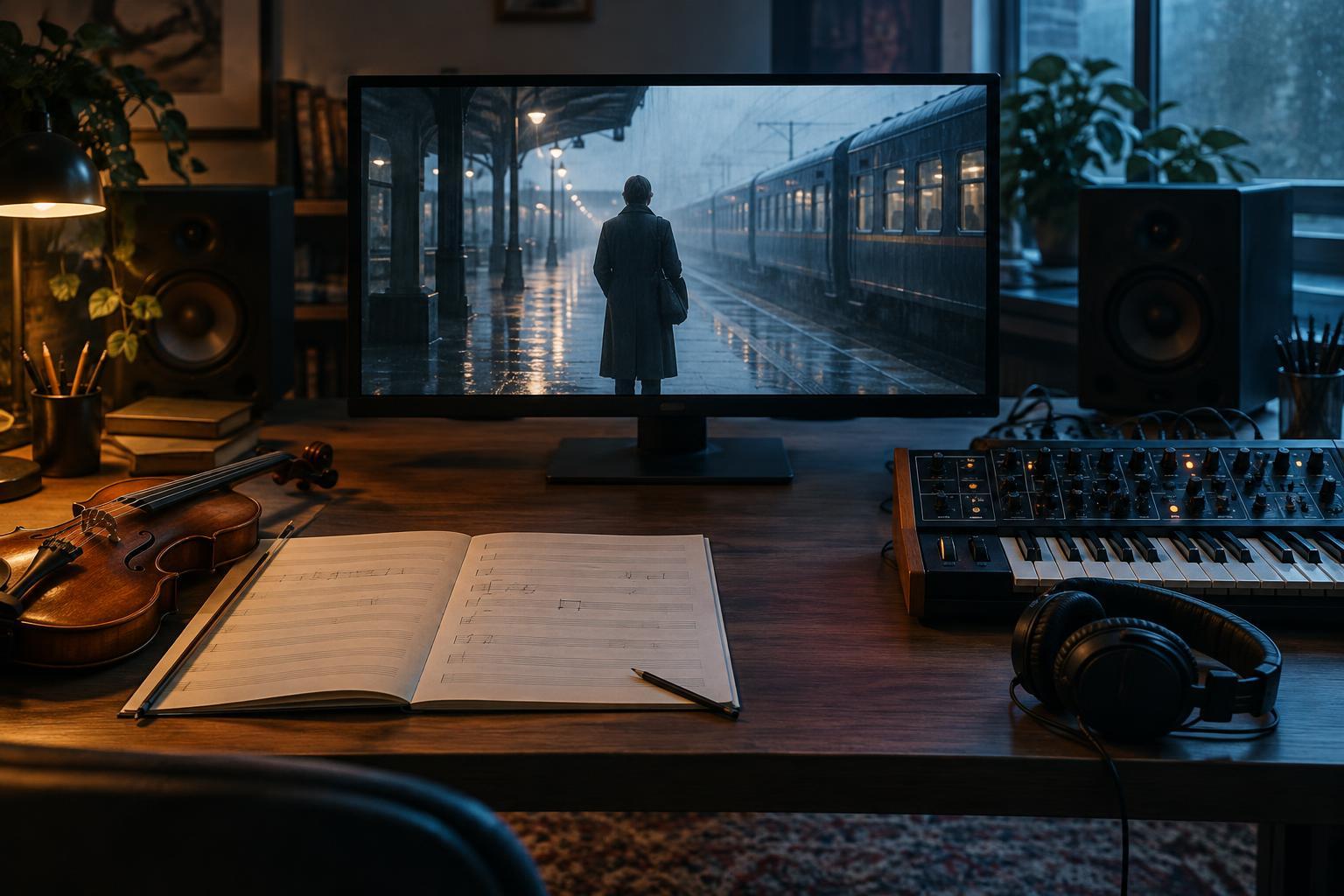
Pick a simple palette you can control: perhaps piano alone, a sustained synth sound with a few notes on top, or a softly plucked instrument. Limit yourself to a small motif, such as three or four notes with a distinctive rhythm. It can return unchanged when the scene feels steady, then shift register, harmony or spacing when something changes. A recognizable idea helps the cue feel connected even if it is brief.
Think about what the music should contribute rather than what emotion it should announce. Repeated low notes could suggest a slow approach, while widely spaced notes might leave room for uncertainty. Neither effect is automatic: register, timing, volume and the image all shape how a sound comes across. Test contrasting options against the clip before committing. If the picture already makes a moment obvious, a quieter musical response may be more interesting than a large one.
Sketch the cue against the picture
Set up your video in a music program if you have one, or play it alongside a recorder and a clock. Establish a pulse only if it helps you place events. You can count beats between hit points, but the tempo does not need to match every cut. First record a rough pass from beginning to end. Keep the harmony and texture simple enough that you can hear where the cue grows, pauses and changes direction.
Next, adjust the timing of your most important gesture. If a note lands exactly as a hand reaches for an object, the gesture may feel emphasized. Placing it just after the movement can make it feel like a response instead. Move the note, replay the scene and judge the effect. Leave breathing room around a revealing look or a held shot; filling every second may flatten the scene’s contrasts.
Review the story, then finish simply
Watch the clip with your cue at a comfortable level, then watch it without music. Ask whether your version supports the action, competes with it or changes its meaning in a way you intended. Pay particular attention to the opening and final few seconds. An entrance that feels late, or an ending that continues after the image has made its point, may need only a small edit.
Make one focused revision rather than adding more layers by default. You might remove a repeated note, soften a transition or give the final chord more space. Export the cue and play it back with the clip outside your editing setup to catch timing or balance problems. The goal is not to prove that you can fill a timeline with music. It is to make a few deliberate sounds feel inseparable from a short story.