Start by staying still
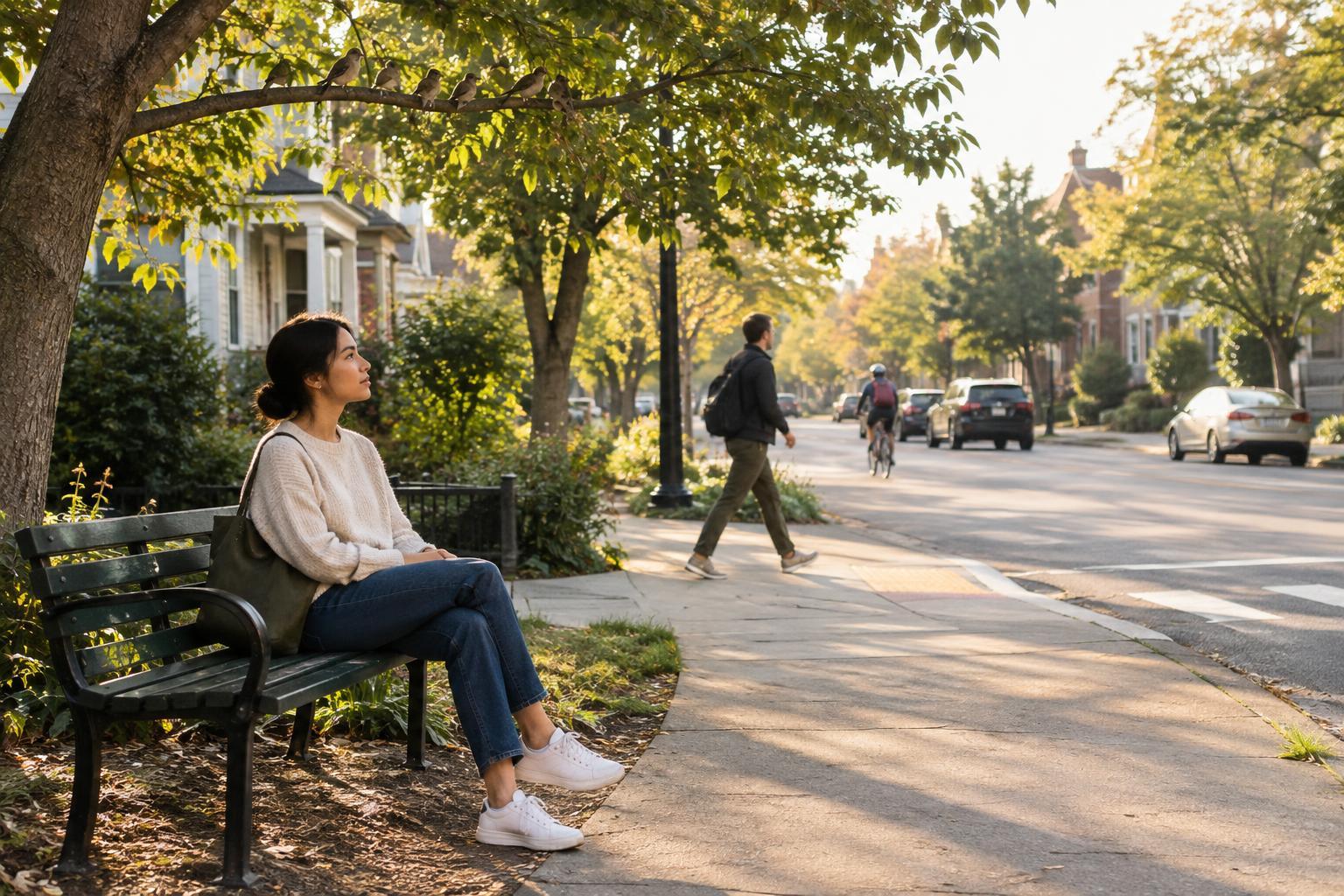
You do not need special equipment to listen to your neighborhood. Choose a comfortable place where you can pause for a few minutes: a front step, an open window, a park bench or a familiar corner on a walk. Put your phone away if you can, and let the sounds arrive without trying to identify every one immediately.
Begin with what is closest. You might hear your coat moving as you shift, leaves brushing a fence or dishes clinking through an open window. Then listen farther out. Perhaps a bus stops, someone calls from across the street or a dog barks behind a wall. Noticing distance gives the scene depth, much as foreground and background do in a piece of music.
There is no ideal neighborhood soundtrack. A quiet street may reveal small, intermittent details; a busy one may offer layers that overlap. The aim is not to judge the place by how peaceful it sounds, but to notice what is actually there.
Listen for patterns, not just individual sounds
Once you have noticed a few sounds, pay attention to how they relate. Which ones repeat? Which continue beneath everything else? Traffic may form a steady low layer while footsteps briefly cross it. A gate might click, pause and click again. Even sounds that do not have a musical beat can create a sense of rhythm through repetition and change.
Try listening for contrast. A bicycle bell can stand out because it is brief and bright; a ventilation fan may fade into the background because it hardly changes. Notice what happens when a prominent sound ends. Does another sound become easier to hear? This simple question can help you discover details that were present all along.
You can also compare the same spot at different times when it is convenient to do so. A route to a shop may sound different on the way home, even if you take the same path. Rather than trying to document every change, choose one feature to follow, such as footsteps, birds or the sounds of doors opening and closing.
Make a small sound map
A sound map is a quick way to remember a listening session. Draw a dot for where you stood, then place words around it to show roughly where sounds came from. Write “passing car” on one side, “voices” on another and “wind in tree” overhead. Arrows can show movement; a repeated mark can show a sound you heard several times. Artistic skill is not required.
If drawing does not appeal to you, make a short list in the order you noticed things. Add a few descriptive words: sharp, muffled, distant, uneven or continuous. These words can be more useful than a perfect label. You may not know what made a particular hum, but you can still describe how it sounded and where you heard it.
Keep the exercise brief enough to enjoy. A few minutes of attentive listening and a few lines of notes are plenty. Over time, these small records can show you which sounds you associate with particular routes or places.
Listen thoughtfully in shared spaces
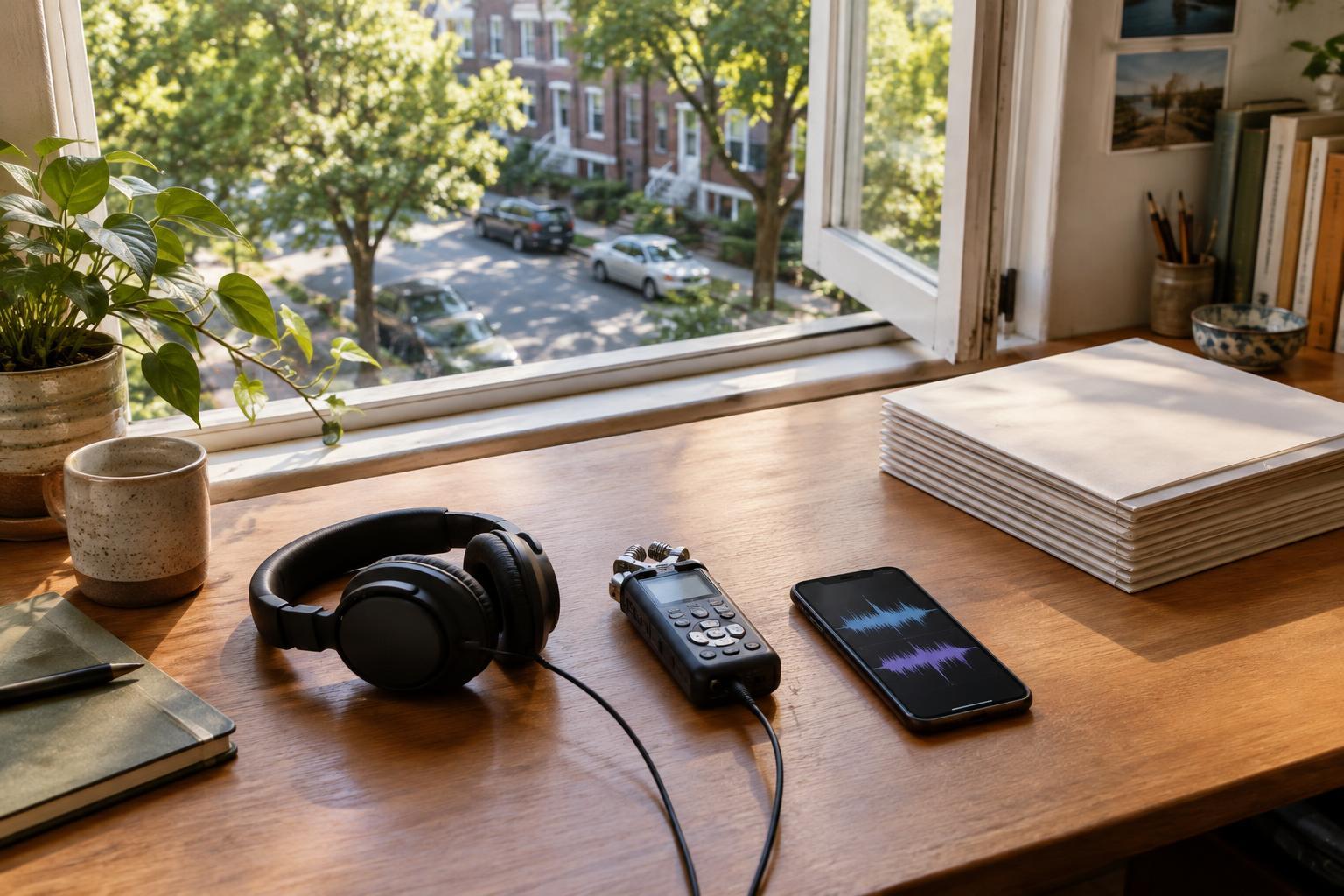
Neighborhood listening works best when it respects the people who live and work nearby. You can notice the rise and fall of conversation without trying to catch private words. If you decide to record audio, consider whether you have permission and whether the recording could capture someone who did not expect it. Notes and sketches are often enough.
Stay aware of your surroundings, especially near roads, crossings and cycle paths. If you use headphones for comparison, keep the volume low enough to hear what is happening around you, or save that exercise for a safe place at home. You can choose a different location or stop at any time if a spot feels uncomfortable or too loud.
Carry one sound home
After a listening walk, pick one sound that stayed with you. It might be the rolling rhythm of a suitcase, the pause before a crossing signal changes or the way rain sounded on two different surfaces. Describe it from memory without worrying about technical terms. What began it? How did it change? What else was happening around it?
That small observation can become a starting point for creative work. You could tap its rhythm on a table, write a few lines about the scene or imagine where it might fit in a film. You do not have to turn every listening session into a project, though. Sometimes the reward is simply recognizing a familiar place by the way it sounds.