Start with the feeling, then look for evidence
An abstract lyric tells us what a song is about: loneliness, hope, regret or love. A concrete image gives us something to picture or hear. “I miss you” is clear, but it could belong to almost anyone. “Your spare key is still beside the kettle” suggests a particular absence. Neither line is automatically better. The second simply gives the listener more to notice and interpret.
Before drafting a verse, write down the feeling you want the song to carry. Then ask what a person in the song’s world might do, see or leave untouched because of that feeling. If the subject is regret, perhaps someone walks past a familiar door without knocking. If it is anticipation, perhaps they keep checking whether the porch light has come on. These are possibilities, not universal symbols. Choose details that fit the character and situation you are writing.
Build a small, believable scene
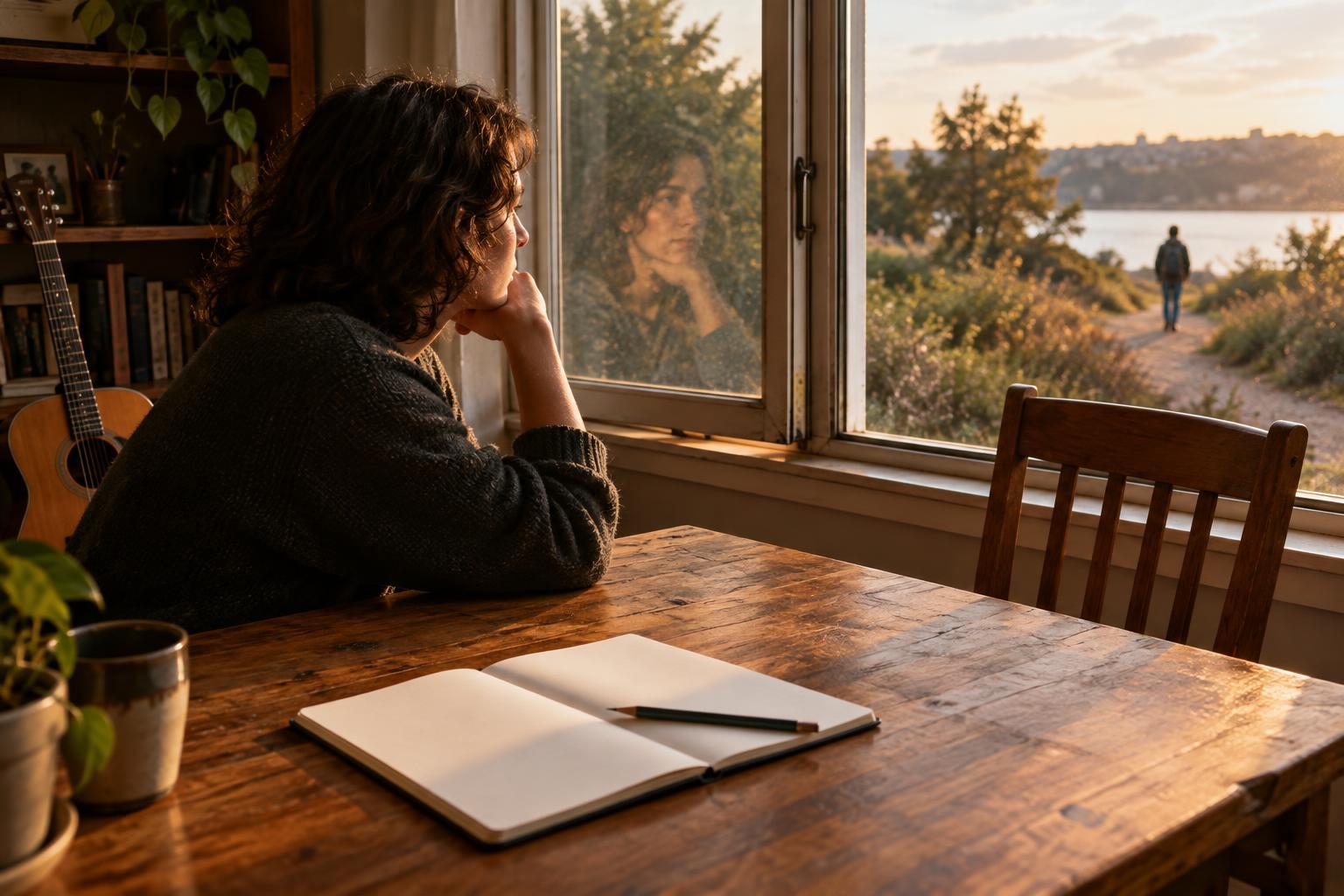
You do not need a complete story to write visually. A lyric can begin with one place, one object and one action. Picture a kitchen after a conversation, a bus stop before dawn or a rehearsal room once everyone has gone home. What remains? What changes? An action such as folding a note, turning down a radio or moving a chair can imply tension without explaining every part of it.
Specificity works best when the details relate to one another. A wet coat, a half-packed bag and a hand resting on the doorframe might suggest someone is reluctant to leave. Three unrelated striking objects may sound vivid but give the listener little to follow. Try writing a plain description of the scene first. Then select the details that reveal a choice, a contrast or a change.
Use more than the visual sense
Images in songs do not have to be pictures. A radiator clicking after the room falls quiet, a rough sleeve against a wrist or the smell of toast in an empty house can make a moment feel lived in. Sound can be especially useful in lyrics because it can interact with the music. A verse might describe a train passing while the arrangement briefly grows louder; the words and instruments can support the same moment without imitating it literally.
Resist adding sensory details simply to decorate a line. Ask what each detail contributes. Does the clicking radiator draw attention to silence? Does the passing train mark time or interrupt a thought? One purposeful detail often does more work than a list of colors, textures and noises.
Let concrete and abstract lines work together
Writing concretely does not mean banning words such as “love” or “afraid.” A direct chorus can be powerful after a verse has shown what those words mean to the speaker. You might place an image in the verse and let the chorus state the desire beneath it. You can also reverse that pattern: make a broad claim, then follow it with a detail that complicates or challenges the claim.
Consider the difference between a line that explains an image and one that trusts it. After “Your spare key is still beside the kettle,” a line such as “because I cannot let go” removes much of the listener’s room to interpret. A new action, such as the speaker sliding the key into a drawer but not closing it, may develop the idea instead. Clarity matters, though. If a listener cannot tell what is happening, a simple direct line may provide a useful anchor.
Revise for voice, rhythm and meaning
To revise an abstract draft, circle the words that name feelings or make broad claims. For each one, jot down several possible moments that could show it. Do not keep the first image just because it is concrete. Test whether it suits the song’s speaker: would this person notice that object, use that phrase or act that way? A familiar image can still work if it feels true to the voice; an unusual one can feel forced if it exists only to sound original.
Finally, sing the lines. Concrete details can be difficult to fit into a melody if they require too many syllables or awkward stresses. Shorten a description to its essential object and action, or move a detail to a line with more space. Read the verse without explaining it, then ask what a listener could reasonably understand from what is on the page. The goal is not to hide the feeling. It is to give that feeling a place to live.