The sound does not stop at the instrument
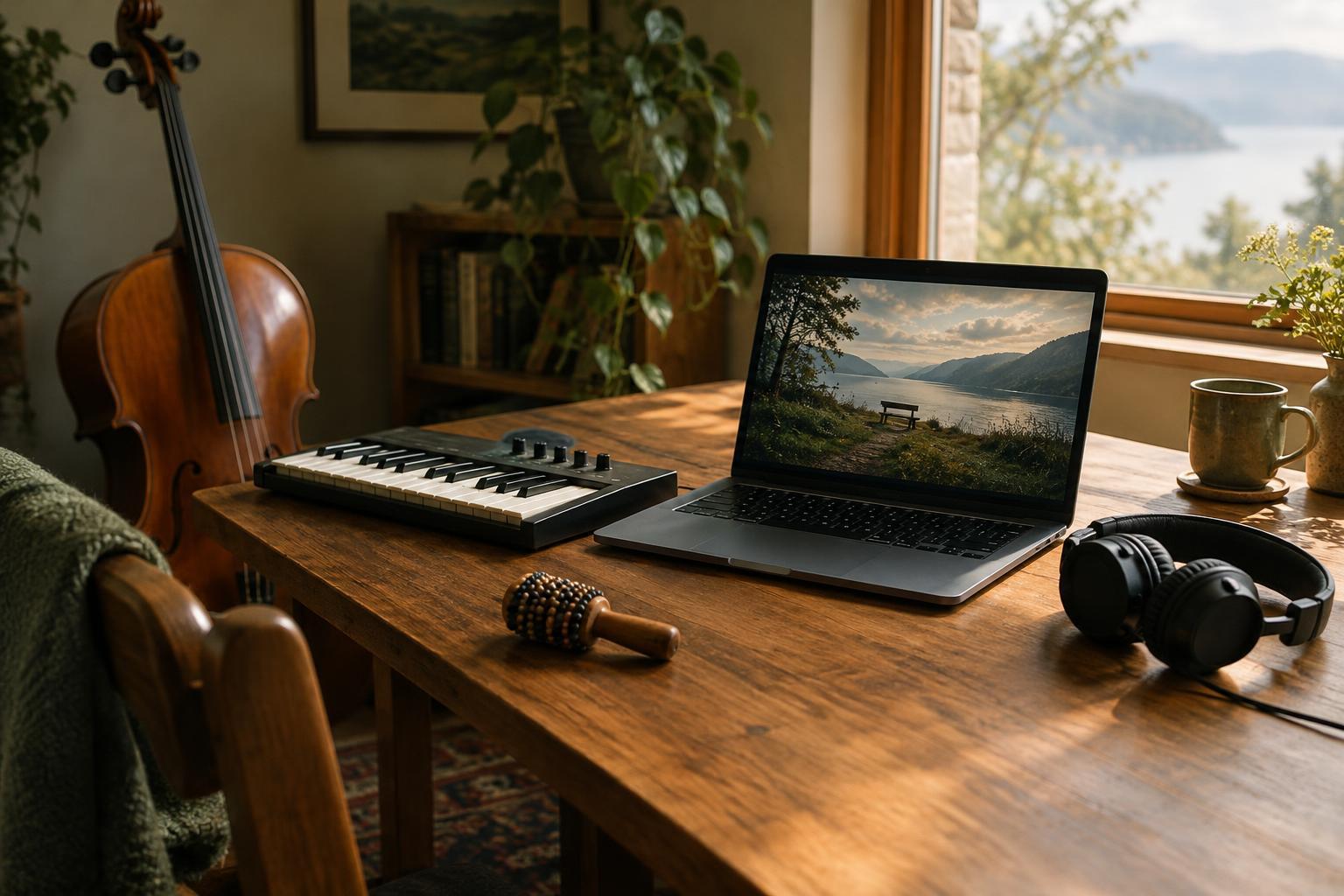
Play a note on an acoustic guitar, a trumpet, or a hand drum, and you hear more than the instrument alone. Some sound travels directly to your ears. Some reaches a wall, ceiling, floor, or piece of furniture first, then returns as a reflection. These paths meet as you listen, giving the note a different character from the one it might have outdoors or in another room.
A small, furnished bedroom may make an instrument seem close and dry, with a short audible tail after each note. A larger space with hard surfaces may let sounds linger and overlap. Neither result is automatically better. A lingering sound can make a slow melody feel spacious, while a drier room can make quick rhythms easier to distinguish. Knowing what the room contributes helps you decide whether to change the space, move the player, or simply play in a way that suits what you hear.
Reflections, absorption, and the shape of a note
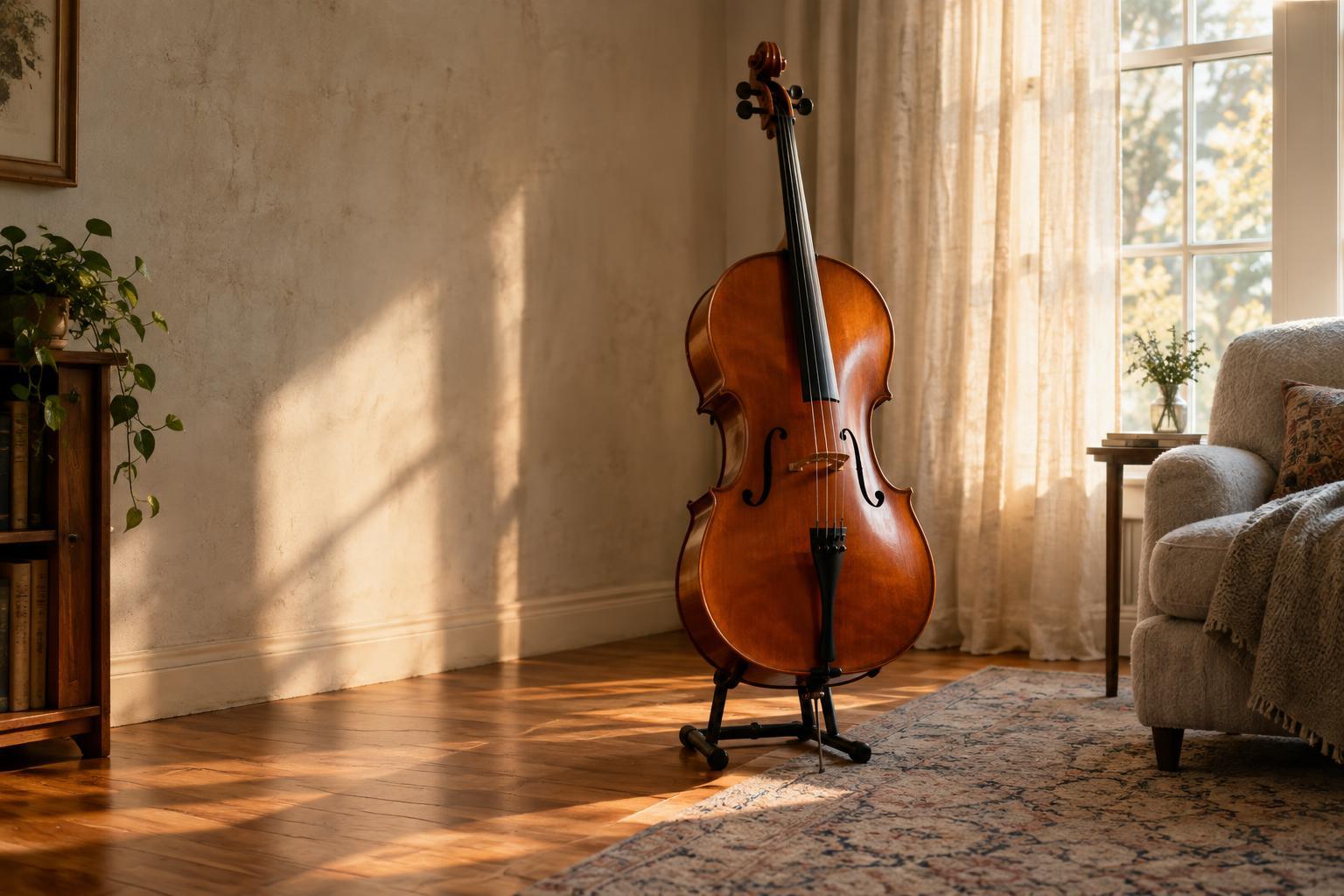
Hard surfaces such as bare walls and windows tend to reflect more sound than soft furnishings do. Rugs, curtains, and upholstered furniture can reduce some of the sound bouncing around a room, although their effect varies with the material and the pitch of the sound. Low notes and high notes may behave differently, so a room that softens a bright instrument may still leave a bass note sounding strong.
Listen especially to the space after a note ends. A single handclap, plucked string, or short sung syllable can reveal a quick flutter between nearby hard surfaces or a longer, smoother fade. Try the sound in two rooms without changing how you make it. You are not measuring which room is best; you are learning to notice whether the ending feels abrupt, gently sustained, or crowded by repeated reflections. That observation can be more useful than calling a room simply “good” or “bad.”
Placement changes what you hear
An instrument’s position matters because the room does not respond equally everywhere. Playing close to a wall can make the sound seem different from playing farther into the room. A corner may emphasize parts of the sound or make notes feel less balanced. Even turning to face another direction can change which reflections reach a listener most clearly, especially with instruments that project more strongly in some directions than others.
For a simple comparison, choose a short phrase and play it at roughly the same volume in three positions: near a wall, in a corner, and away from both. Ask a listener to stay in one place, then repeat the test with the listener moving while the instrument stays put. This separates two questions that are easy to confuse: how the room feels to the player, and how the performance sounds across the room. If you are playing with others, the clearest spot for one person may not be the clearest spot for the group.
Use the room as part of your musical choices
Once you hear the room’s character, try adjusting the music before changing the furniture. In a lively space, leaving a little more time between chords can give their endings room to fade. Shorter notes may keep a fast passage distinct. In a dry space, sustained notes or deliberate changes in volume can help a phrase feel connected. These are creative options, not rules: the right choice depends on the sound you want.
If you can alter the space, start with small, reversible changes. Move a rug, open or close a curtain, or try a different playing position, then repeat the same phrase and listen. Change one thing at a time so you can tell what made a difference. A room is not just a container for music; it shapes the sound that reaches you. Paying attention to that partnership can make practice more informative and performance choices more intentional.